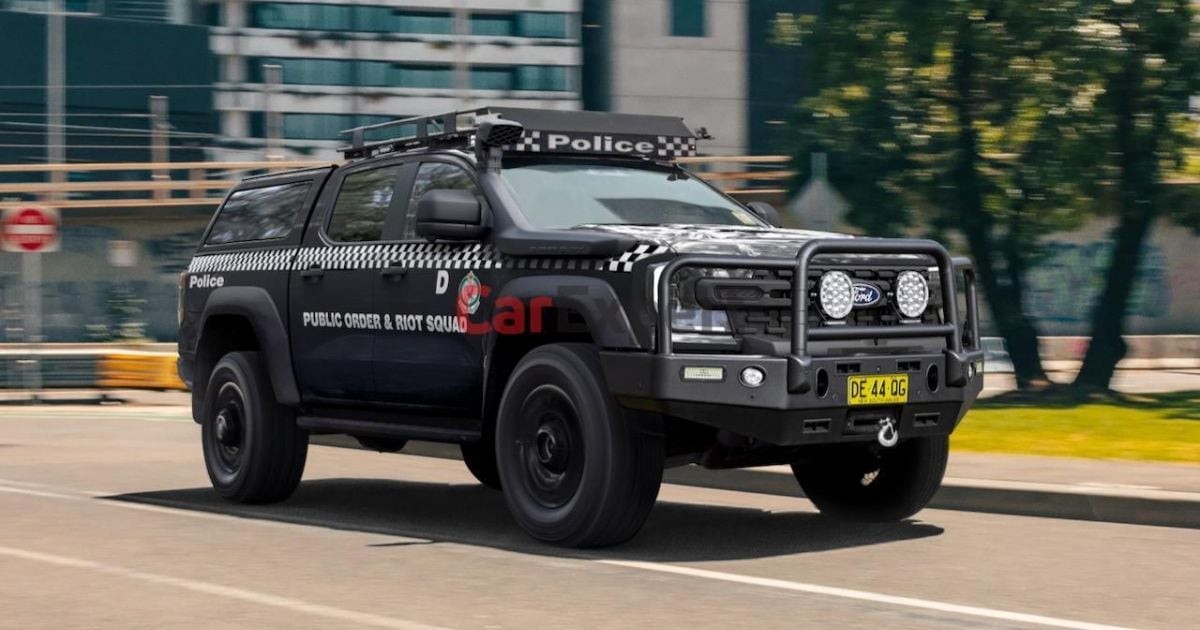
The newly launched Ford Ranger Super Duty in Australia isn’t just for industries like mining, forestry, or agriculture. While specifically engineered for heavy-duty fleet applications, its capabilities position it as a potential replacement for specialized vehicles used by tactical law enforcement and even the Australian Defence Force.
A Viable Alternative to Established Models
Currently, state police tactical units – such as Victoria Police’s Special Operations Group (SOG) and NSW Police Force’s Tactical Operations Unit (TOU) – rely heavily on the Toyota LandCruiser 200 Series. However, the Ranger Super Duty presents a compelling alternative, offering similar functionality with Ford’s backing for local design and engineering.
These units require vehicles capable of transporting at least four officers plus significant gear. The Ranger Super Duty is designed to meet these demands straight from the factory, offering increased payload, towing capacity, and off-road performance. Victoria Police declined to comment on the possibility of adopting the Ranger Super Duty for covert operations, but other divisions within the force already utilize standard Ford Ranger utes for operational tasks.
Engineered for Extreme Conditions: What Ford Says
Ford’s Australian branch developed the Ranger Super Duty based on direct feedback from heavy-duty fleet operators. According to a Ford spokesperson, “Customers told us they wanted the size, dependability, safety, and agility of Ranger with the heavy-duty capability that comes with Super Duty… a new mid-size truck engineered to conquer extreme conditions and demanding workloads.”
This isn’t just marketing. The Super Duty is built to handle challenging environments, making it suitable for roles beyond traditional industrial applications.
Future Defense Contracts: A Long-Term Opportunity
The Australian Defence Force currently relies on Mercedes-Benz G-Class Professionals, a contract slated for review in 2030. This presents a clear opportunity for Ford to bid for a long-term supply agreement. A spokesperson confirmed that “If the defence and security sector sees a benefit in its increased payload, towing, and off-road capability, we would be happy to work with them.”
However, securing such a contract would require Ford to commit to potentially two decades of vehicle supply and maintenance.
The Ranger Super Duty was designed with a diverse customer base in mind. If defense and security sectors see value in its capabilities, Ford is prepared to engage.
In conclusion, while the Ford Ranger Super Duty was conceived for commercial and industrial use, its robust design, payload capacity, and off-road capability make it a serious contender in the tactical law enforcement and defense markets. The question now is whether Ford will actively pursue these opportunities and challenge the established dominance of Toyota and Mercedes-Benz.