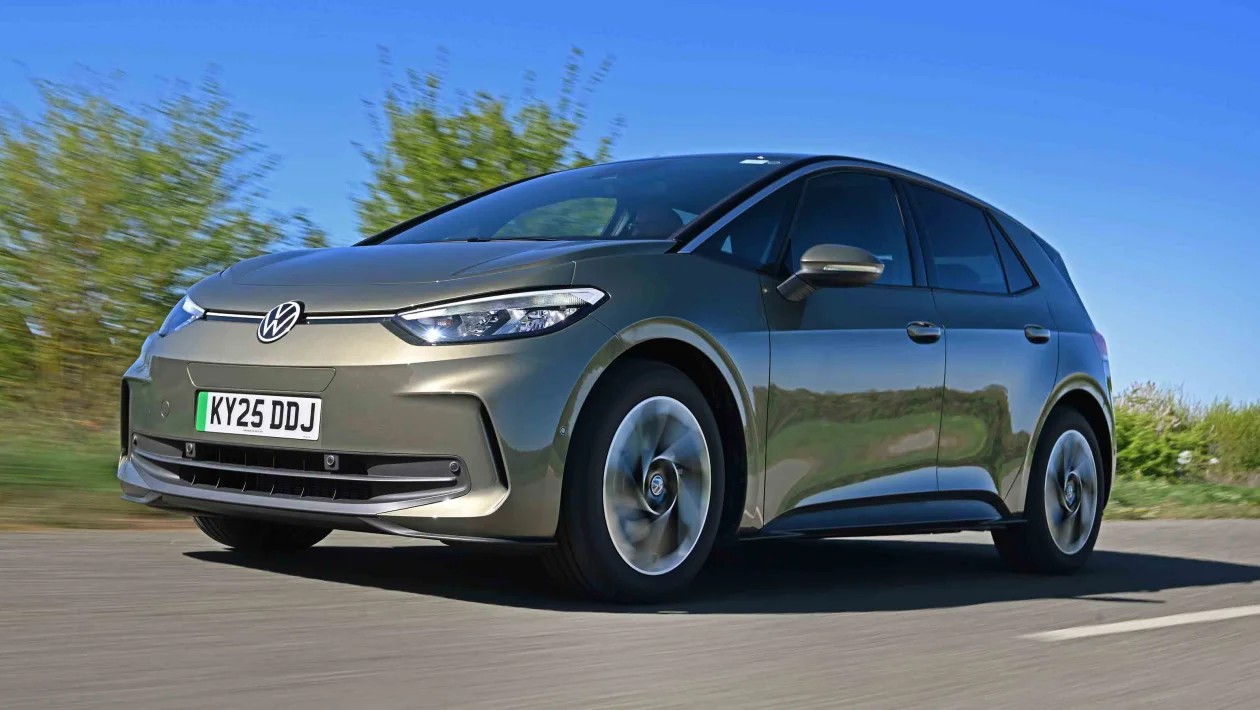
The Volkswagen ID.3 is essentially an electric version of VW’s iconic Golf, retaining the familiar traits and tech of its gasoline-powered sibling while delivering a practical range and composed driving experience. Although initial reception was mixed, updates in 2023 addressed key criticisms, enhancing cabin quality and refining the infotainment system. Despite improvements, the ID.3 still faces competition in the crowded electric hatchback market, particularly regarding value for money in higher trims.
The Evolution of an Electric Icon
Launched with the ambition of becoming VW’s next classic – akin to the Beetle or Golf – the ID.3 marked the beginning of the brand’s all-electric ID lineup. While it hasn’t achieved that legendary status yet, it served as a crucial stepping stone for electrification, paving the way for a broader range of EV models. The 2023 facelift was pivotal, introducing softer interior materials, a revised exterior design, and updated tech to address early shortcomings.
Pricing and Incentives
The ID.3 starts at around £35,700 for the base Pro Essential trim, with prices reaching almost £48,400 for the top-spec GTX Fire & Ice. Government incentives, such as the Electric Car Grant (ECG), provide a £1,500 discount upon purchase. Auto Express’s Buy a Car service can yield additional savings of up to £2,800, while used options and leasing deals further expand affordability.
Performance and Driving Experience
The ID.3 offers a balanced driving experience, characterized by responsive electric power and refined handling. Lower-spec models with the 59kWh battery deliver 201bhp and a 0-62mph time of 7.6 seconds, comparable to the MG4. The Pro S variant maintains 201bhp but takes 8.2 seconds for the same sprint due to a heavier battery; range is prioritized over acceleration in this trim. The high-performance GTX variant, with 322bhp, accelerates to 62mph in just 5.7 seconds, offering a noticeably quicker experience.
Rear-wheel drive provides stability without the risk of snap oversteer. Ride quality improves at higher speeds, with good refinement and body control. However, at lower speeds, the ride can feel slightly unsettled.
Range, Charging, and Running Costs
The ID.3 comes with two battery options: 59kWh and 79kWh. The smaller battery offers a WLTP range of up to 269 miles, while the larger one extends to 350 miles for the Pro S and 371 miles for the GTX. Real-world testing showed the Pure model achieving an average of 4.1 miles per kWh, translating to around 213 miles of range. Rapid charging can replenish the battery from 10 to 80% in 24-26 minutes using a compatible DC charger. Home charging with a 7.4kW wallbox takes approximately nine hours for the 59kWh battery and twelve hours for the 79kWh.
Interior and Technology
The ID.3’s interior has seen improvements with the 2023 facelift, featuring higher-quality materials and a more refined design. A 12.9-inch touchscreen dominates the dashboard, offering intuitive control over vehicle functions, though some features are locked behind paywalls in lower trims. The removal of physical climate controls and reliance on touch-sensitive sliders remain a point of contention for some users.
Depreciation and Insurance
The ID.3 experiences moderate depreciation, retaining between 38% and 47% of its value after three years. Insurance groups range from 26 for the base Pro model to 34 for the GTX, aligning with performance levels. Electric vehicle tax benefits apply, with a 3% Benefit-in-Kind rate for company car users.
In conclusion, the Volkswagen ID.3 is a solid electric hatchback that offers a blend of practicality, performance, and refinement. While it may not be the revolutionary model VW hoped for, it remains a competitive option in the rapidly expanding EV market.