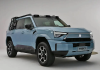
Ford is preparing to launch a new, smaller plug-in hybrid (PHEV) SUV under the iconic Bronco nameplate for the European market. This expansion, confirmed by industry sources, represents a strategic move to bolster Ford’s presence in a competitive segment while further distancing the brand from traditional mass-market offerings.
New Bronco: Size and Platform
The upcoming Bronco will be built at Ford’s Valencia, Spain, plant alongside the Kuga (formerly Escape) from 2027. It will be slightly smaller than the Kuga, but unlike North American Broncos, it won’t use a body-on-frame chassis. Instead, it will share the C2 monocoque platform with the Bronco Sport and Maverick, ensuring compatibility with European safety and emissions standards. This move marks a departure from the rugged ladder-frame approach favored in the US, where the larger Bronco is based on the same T6 platform as the Ranger pickup.
Why Europe, Not Australia?
This expansion highlights a growing divergence in Ford’s global strategy. While the full-size Bronco remains exclusive to North America, the European model aims to compete directly with compact off-road SUVs like the Dacia Bigster and Jeep Compass. However, despite being designed for markets including the UK (right-hand drive), it’s unlikely to reach Australia due to import costs and competition from cheaper Chinese rivals.
Ford’s Changing Strategy
The introduction of the European Bronco aligns with Ford’s broader shift away from broad-based auto manufacturing towards a focus on a select few “hero” models. Following the discontinuation of popular nameplates like the Focus, Fiesta, Mondeo, and even the Falcon and Territory in Australia, Ford is consolidating its portfolio. In Australia, the company now offers only the Ranger, Everest, Mustang, Mustang Mach-E, Tourneo, F-150, and Transit vans—leaving a gap in the crucial medium SUV segment.
The PHEV Focus
Ford’s decision to prioritize PHEV powertrains for the European Bronco reflects the region’s evolving regulatory landscape. While an all-electric version isn’t planned, the availability of both plug-in hybrid and traditional hybrid options will cater to a wider range of consumer preferences. This mirrors Ford’s broader electrification strategy, which includes the all-electric Explorer and Mustang Mach-E for Europe.
The Bronco’s European launch signifies a calculated move by Ford to leverage brand recognition while streamlining its global operations, focusing on high-margin models in key markets.
The decision to skip Australia underscores the economic challenges of importing European-built vehicles, given the rising competition from low-cost Chinese automakers. Ford’s future in Australia appears increasingly tied to utility vehicles and select high-performance models.