


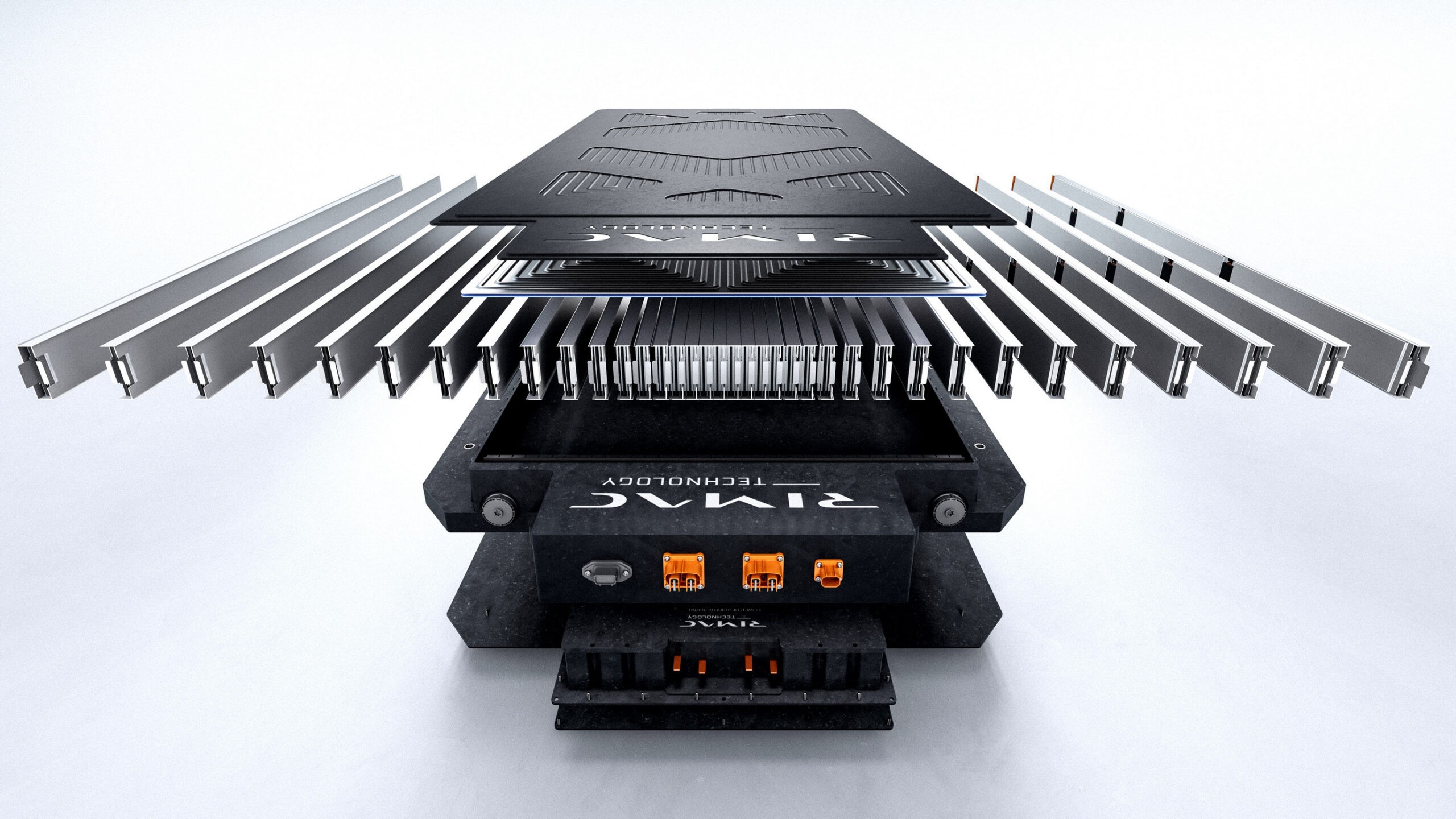
Rimac Technology, a rising force in EV component development, is quietly preparing groundbreaking technologies that could redefine Bugatti’s future. The company is pursuing a next-generation solid-state battery system and high-performance e-axles, aiming to deliver significant weight reduction, increased energy density, and broader application across several high-end automotive brands.
Solid-State Battery Breakthroughs
Rimac is collaborating with Mitsubishi for composite materials and ProLogium for solid-state cell development, pushing towards a 100 kWh battery pack that is approximately 30 kg (66 lbs) lighter than current equivalents. This new battery promises a 20-30% increase in energy density with a long-term goal of matching the cost of conventional NMC cells by 2035. The technology is slated for testing soon, with a potential debut in a mid-volume Bugatti model around 2030 – a vehicle positioned alongside the Tourbillon rather than as a variation of the V16.
This shift towards solid-state batteries is critical as current lithium-ion technology nears its theoretical energy density limits. Solid-state batteries offer higher energy storage, improved safety, and faster charging times, but have historically struggled with scalability and cost.
Lightweight E-Axles for Performance and Efficiency
Beyond batteries, Rimac is also innovating in e-axle design. The company’s new integrated e-axles combine motors, gearboxes, and electronics into a single package, offering flexibility for front, rear, or all-wheel-drive applications. These units can deliver between 200 hp and 470 hp, catering to a wide range of performance vehicles.
Major automakers like Porsche and BMW are already sourcing e-axles from Rimac, demonstrating the technology’s immediate appeal. The Saudi startup Ceer , in partnership with Foxconn, will feature a Rimac rear e-axle delivering performance comparable to the Nevera (1,288 hp) but weighing 66 kg (145 lbs) less.
Rimac is also developing a smaller, 48 kg (106 lbs) e-axle capable of producing 500 horsepower, further expanding its portfolio. These advancements are not just about raw power but about optimizing weight and efficiency – a crucial factor in high-performance EVs.
The Future of Bugatti and Beyond
Rimac’s rapid innovation suggests a significant shift in the automotive landscape. The company’s technologies have the potential to reshape not only Bugatti’s lineup but also the performance EV sector as a whole. By focusing on lightweight solutions and energy-dense batteries, Rimac is positioning itself as a key supplier for automakers pushing the boundaries of electric vehicle technology.
The convergence of these developments signals a future where high-performance EVs are lighter, more efficient, and capable of exceeding current limitations. Bugatti’s integration of these innovations in 2030 will be a pivotal moment, setting a new standard for luxury electric vehicles.


