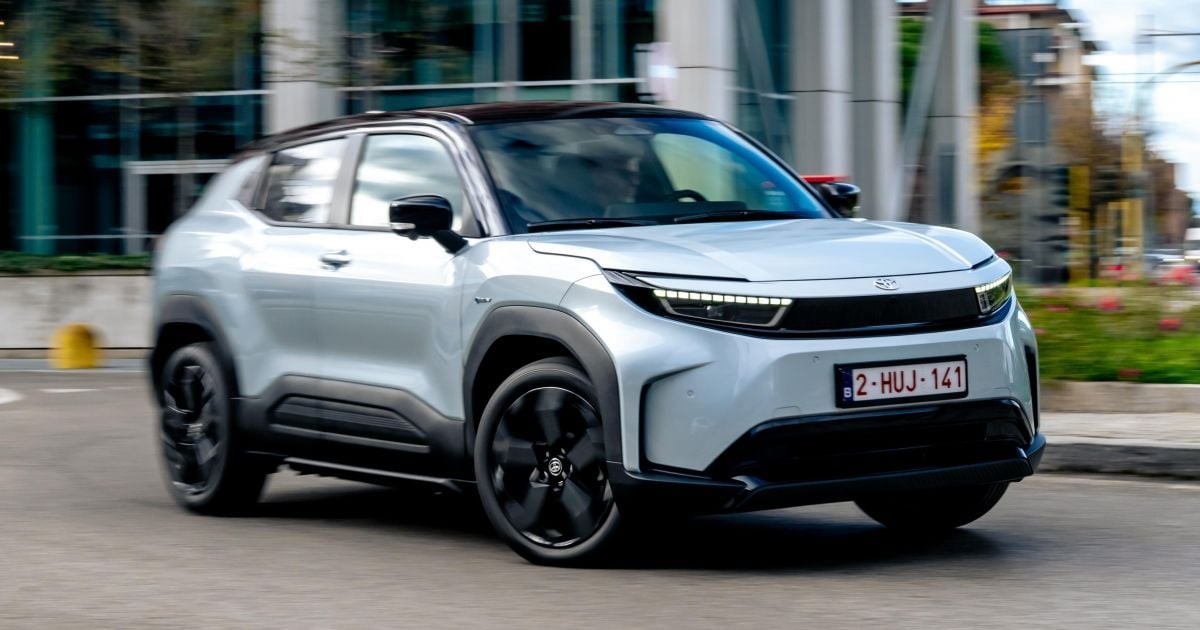
The 2026 Toyota Urban Cruiser is essentially a rebadged Suzuki e-Vitara, a fact that raises immediate questions about Toyota’s commitment to delivering a competitive electric vehicle. While Toyota has ambitious EV plans, the Urban Cruiser feels like a placeholder rather than a significant step forward. The underlying issue is simple: the e-Vitara wasn’t impressive to begin with, and Toyota hasn’t done enough to fix its flaws.
Pricing and Availability
Toyota Australia hasn’t confirmed whether the Urban Cruiser will even be sold locally, leaving pricing a mystery. However, in Europe, it’s priced competitively alongside the Suzuki, suggesting a similar positioning between the Yaris Cross, C-HR, and Corolla Cross if it comes to Australia. Toyota recently slashed prices on the bZ4X, but the Urban Cruiser doesn’t benefit from that momentum.
Interior and Technology
The interior is nearly identical to the e-Vitara, with only minor Toyota branding on the steering wheel. While build quality is decent, the infotainment system is frustratingly clunky. Adjusting basic functions like heated seats requires five screen taps, and disabling driver-assistance features is overly complex. The rear seats slide for added flexibility, but the boot space is small (238-310L) with no front trunk (frunk) for extra storage.
The infotainment is mediocre, the seats are awkward to control, and the cabin feels uninspired. It’s a stark contrast to Toyota’s typically intuitive ergonomics.
Powertrain Options
The Urban Cruiser comes in three variants:
- Single-Motor FWD (49kWh): 106kW/193Nm, 0-100km/h in 9.6 seconds, 344km range.
- Long-Range FWD (61kWh): 128kW, 0-100km/h in 8.7 seconds, 426km range.
- Dual-Motor AWD (61kWh): 135kW/307Nm, 0-100km/h in 7.4 seconds, 395km range.
Charging is slow at 70kW DC, taking 45 minutes for a 10-80% top-up. AC charging at 11kW takes six hours, and 7kW takes 9.5 hours. The electrical system is a clear limitation shared with the Suzuki.
Driving Experience
The ride quality is shockingly poor. Even on mild roads, the Urban Cruiser amplifies bumps and feels noisy. The suspension isn’t up to the task of dealing with real-world urban environments. Handling is unremarkable, with excessive body roll and vague steering.
The electric efficiency is also disappointing, with real-world consumption reaching 25kWh/100km – far from the claimed range. The single-motor variant feels underpowered, and even the AWD version doesn’t deliver a compelling driving experience.
Toyota has failed to improve the fundamental flaws of the Suzuki platform. This car is simply not as refined as competitors in the same segment.
Safety and Reliability
The Urban Cruiser hasn’t been independently tested by ANCAP, relying on the Suzuki e-Vitara’s Euro NCAP rating (four stars). Toyota includes standard ADAS features, but the overall safety score is questionable. Toyota’s standard warranty covers five years/unlimited km, extendable to seven years with servicing, and the battery is covered for eight years/70% capacity.
The Verdict
The Toyota Urban Cruiser is a missed opportunity. It fails to differentiate itself from the Suzuki e-Vitara, delivering a subpar driving experience, poor ride quality, and mediocre efficiency. While Toyota has a long-term EV strategy, this vehicle feels like a rushed rebrand rather than a genuine improvement. If Toyota doesn’t address these flaws, the Urban Cruiser will struggle to compete in the crowded EV crossover market.
Toyota could have easily refined the chassis or powertrain, but instead, they released a car that feels out of step with their own quality standards. For most buyers, better options exist elsewhere.