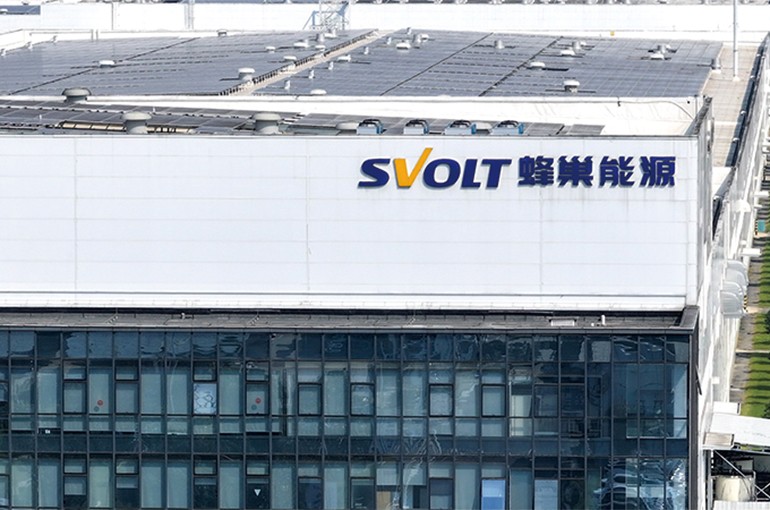
The race to commercialize all-solid-state batteries (ASSB) has hit turbulence, with a high-profile executive alleging fraudulent claims from a Finnish startup. Yang Hongxin, chairman of Svolt, a major Chinese battery manufacturer, publicly dismissed Donut Lab’s recent announcement of a “production-ready” ASSB as a deliberate deception.
Donut Lab’s Bold Claims
At CES 2026, Donut Lab unveiled a battery boasting industry-leading specifications: 400 Wh/kg energy density, 5-minute full charging, over 100,000 cycles with minimal degradation, and operation between -30°C and 100°C. The company further claimed gigawatt-hour (GWh) scale production capacity, positioning itself to supply global markets. Crucially, Donut Lab has declined to disclose core technical details, citing proprietary technology that avoids rare earth metals or lithium, and aims for cost parity with lithium iron phosphate batteries. Their stated current capacity is 1 GWh, with ambitions to reach 20-30 GWh next year.
Why This Matters: A Race Fraught With Challenges
The aggressive claims are unusual because ASSB technology remains largely in the lab. Despite years of research, no company has demonstrated a truly mass-producible, high-performance ASSB. The industry consensus is that significant hurdles remain in scaling production while maintaining stability, energy density, and cost-effectiveness.
Yang Hongxin’s harsh assessment reflects this skepticism: “That battery doesn’t even exist in the world… Any person with even a basic understanding of the technology would think it’s a scam.” The accusation highlights a broader concern about excessive hype in the battery industry, where inflated promises can attract capital but ultimately disappoint investors and consumers.
Industry Timelines: A Decade Out?
Established giants are taking a more cautious approach. Toyota aims for mass production by 2030, while BYD targets demonstration vehicles by 2027 and CATL small-batch production by the same year. These companies acknowledge that large-scale manufacturing is unlikely before the end of the decade. Svolt itself is in the process of scaling semi-solid-state batteries, with 270 Wh/kg cells entering production in 2026 and 400 Wh/kg cells in development. The Chinese government has also stepped in to regulate terminology, renaming “solid-state” batteries to “liquid-solid” to avoid misleading consumers.
Svolt’s Position and Background
Svolt originated from Great Wall Motor’s battery division in 2012, spinning off as an independent entity in 2018. The company manufactures full battery systems, including cells, modules, and management systems. Its aggressive push into semi-solid-state batteries reflects a broader trend in the Chinese industry to rapidly iterate on battery technology.
The current conflict underscores a critical point: while innovation is accelerating, true breakthroughs in ASSB technology require more than just bold claims. The industry will need verifiable data, transparent processes, and realistic timelines to justify the hype.
Conclusion: The dispute between Svolt and Donut Lab highlights the immense technical and commercial challenges in solid-state battery development. Until proven otherwise, skepticism regarding rapid commercialization remains warranted, as industry consensus suggests that large-scale production is still years away.