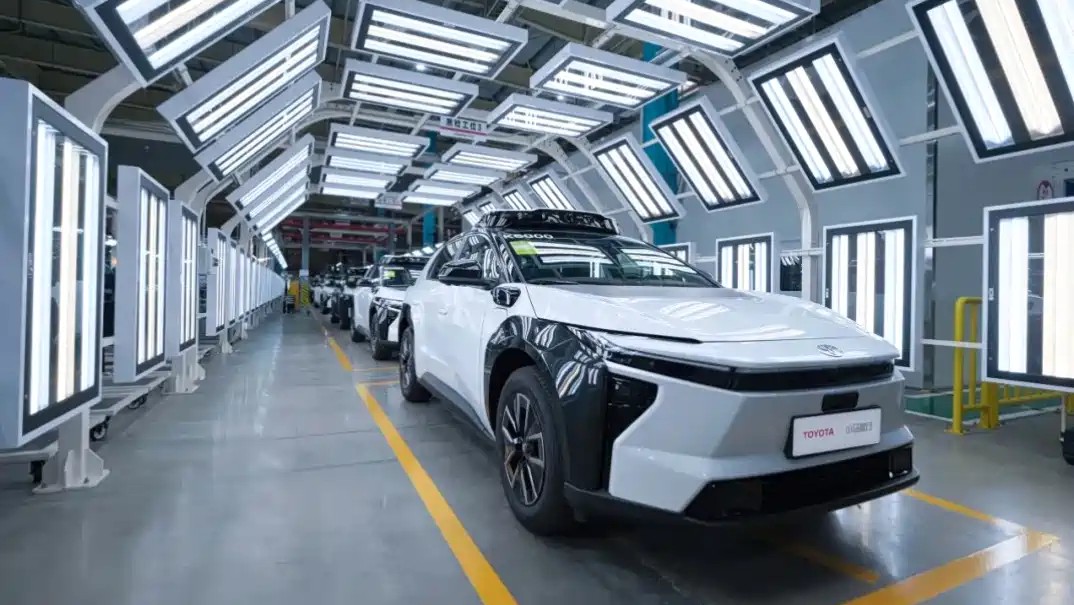
GAC Toyota has begun production of the first fully autonomous robotaxi based on its bZ4X electric vehicle (EV). The rollout signifies a major step toward commercial self-driving services, leveraging the latest seventh-generation autonomous system from Pony.ai. This development highlights a growing trend: automakers and tech firms joining forces to accelerate the deployment of robotaxis.
Vehicle Specifications and Design
The new robotaxi features a refined bZ4X design, including distinctive C-shaped daytime running lights. The vehicle maintains the current production model’s dimensions – 4690mm long, 1860mm wide, and 1650mm high, with a 2850mm wheelbase. Both single-motor (163 kW/219 hp) and dual-motor all-wheel-drive configurations are available, ensuring versatility for urban driving conditions.
The transition to a dedicated EV platform for robotaxis is crucial; EVs offer smoother integration with autonomous systems due to their simpler mechanical components and quieter operation. This contrasts with earlier generations of Pony.ai’s robotaxis, which used combustion engines in Lexus RX450h and Toyota Sienna models.
Autonomous System and Operational Expansion
Pony.ai’s autonomous driving system has been refined through real-world testing in major Chinese cities like Beijing, Shanghai, Guangzhou, and Shenzhen. This extensive validation is vital for ensuring safety and reliability in complex urban environments. The system has been optimised for a wide range of scenarios, including traffic congestion, pedestrian crossings, and varying weather conditions.
A joint venture between Pony.ai, Toyota China, and GAC Toyota aims to deploy thousands of bZ4X Robotaxis by 2026. Fleet size has grown rapidly; from over 200 vehicles in 2024 to nearly 1,000 by the end of 2025, with plans to reach 3,000 by the end of 2026. Pony.ai projects it will operate 100,000 robotaxis by 2030, anticipating profitability before then.
Investment and Long-Term Outlook
Toyota first invested $400 million in Pony.ai in 2020, recognising the potential of autonomous technology. The bZ4X Robotaxi represents a continuation of this partnership, building on earlier collaborations that tested self-driving systems in vehicles like the Lexus RX450h and Toyota Sienna.
“We anticipate reaching a fleet size of 100,000 vehicles by 2030, which suggests the company will achieve breakeven status before 2030.”
— Wang Haojun, Pony.ai CFO.
The launch of the bZ4X Robotaxi signals a move beyond testing and towards widespread commercial deployment of autonomous ride-hailing services, and marks a significant milestone in the race to bring self-driving vehicles to mainstream consumers.