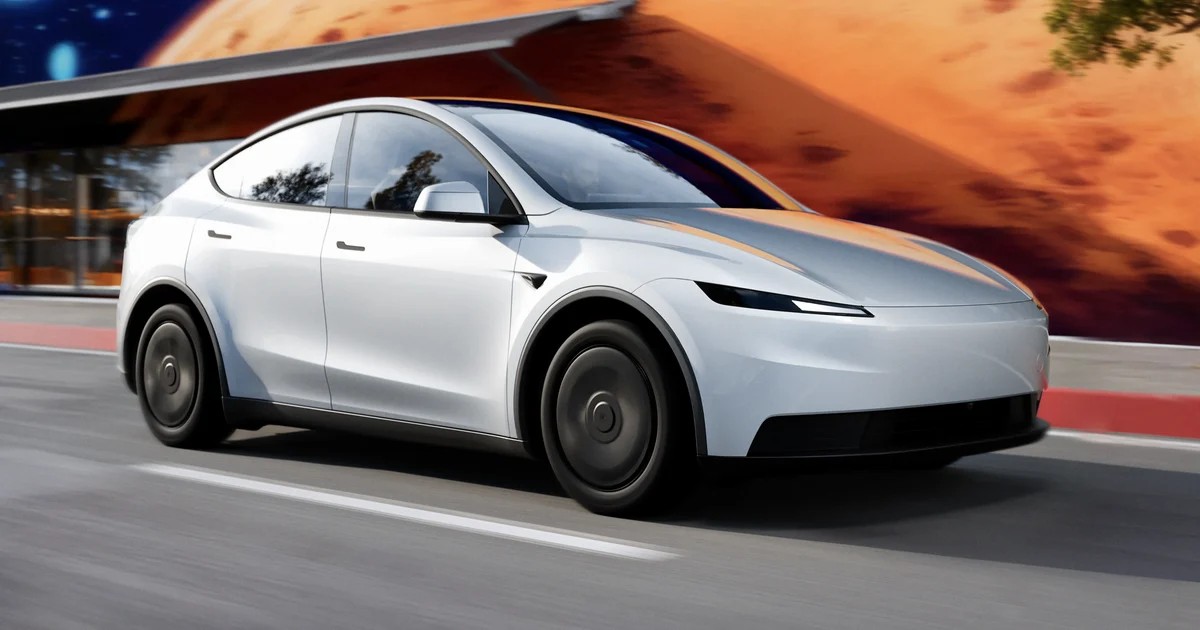
Tesla has introduced a lower-priced version of its popular Model Y, dubbed the “Standard,” to broaden its appeal to budget-conscious EV buyers. While this variant sacrifices some range and premium features, it remains a viable choice for those prioritizing affordability. This review details the key differences and driving experience of the Standard model, based on a test drive conducted in Ireland.
What Makes the Standard Different?
The Model Y Standard represents a deliberate cost-cutting effort. Exterior options are limited, and it lacks the distinctive LED light bars found in higher trims. Inside, the focus is on streamlining expenses: the center console is simpler, storage is reduced, and some premium materials are replaced with more basic alternatives. Notably, the glass roof is covered, creating the illusion of a de-contented feature – a potential tactic to encourage upgrades.
Key differences include:
- Reduced Range: The Standard model’s battery (likely the same 60kWh LFP unit as the RWD) provides a less extensive range than other Model Y variants.
- Lower Performance: Acceleration from 0-100km/h takes 7.2 seconds, slower than the RWD’s 5.9 seconds.
- Fewer Features: The rear touchscreen is absent, the stereo has fewer speakers, ambient lighting is removed, and the advanced HEPA filter is replaced with a standard particulate filter.
Pricing and Availability
Currently, Tesla Australia offers the Model Y RWD starting at $58,900 before on-road costs, with higher trims costing significantly more. If introduced to the Australian market, the Standard could potentially retail around $50,000, making it a competitive entry-level EV. However, the existing Chinese-made RWD already has limited range, so the Standard’s market fit remains unclear.
Interior and Technology
The Standard’s interior reflects its budget orientation. While retaining the standard 16-inch touchscreen, it lacks certain luxury touches. The wireless phone charger feels more plastic, cupholders are always exposed, and the rear seats omit the touchscreen found in higher trims. Despite these cuts, the cabin remains functional and modern, though less refined than its counterparts.
Tesla’s signature tech features are still present, including over-the-air updates and access to the Supercharger network. The reliance on the touchscreen for functions like climate control and drive selection remains a point of contention for some drivers.
Driving Experience
The Standard delivers a typical Tesla driving experience – smooth, quiet, and responsive. Despite being the slowest Model Y, its electric powertrain provides instant torque, making it feel adequately quick in everyday traffic. The steering is precise, and the ride quality is surprisingly comfortable, thanks to basic passive shock absorbers that may actually outperform the more complex systems in higher trims.
However, the brake pedal lacks feel, requiring drivers to rely on visual cues for modulation. Road and wind noise are slightly more noticeable due to the lack of acoustic glass, but overall refinement remains high.
Safety and Reliability
The Model Y Standard received a five-star safety rating from ANCAP, ensuring it meets high protection standards. Standard safety features include automatic emergency braking, lane departure warning, and advanced speed assistance. Tesla’s battery warranty covers eight years or 160,000km, providing peace of mind.
Cost to Run
In Europe, the Standard achieves a WLTP-rated energy consumption of 13.8kWh/100km, offering a range of up to 505km. Real-world efficiency varies, with observed figures ranging from 9kWh/100km in optimal conditions to 21kWh/100km in harsh weather.
Verdict
The Tesla Model Y Standard is a compelling option for buyers seeking an affordable electric SUV. While it compromises on some features and range, it retains the core Tesla experience – performance, technology, and a growing charging infrastructure. If Tesla introduces this variant to Australia at the $50,000 price point, it could disrupt the market and solidify its position as a leading EV manufacturer.