


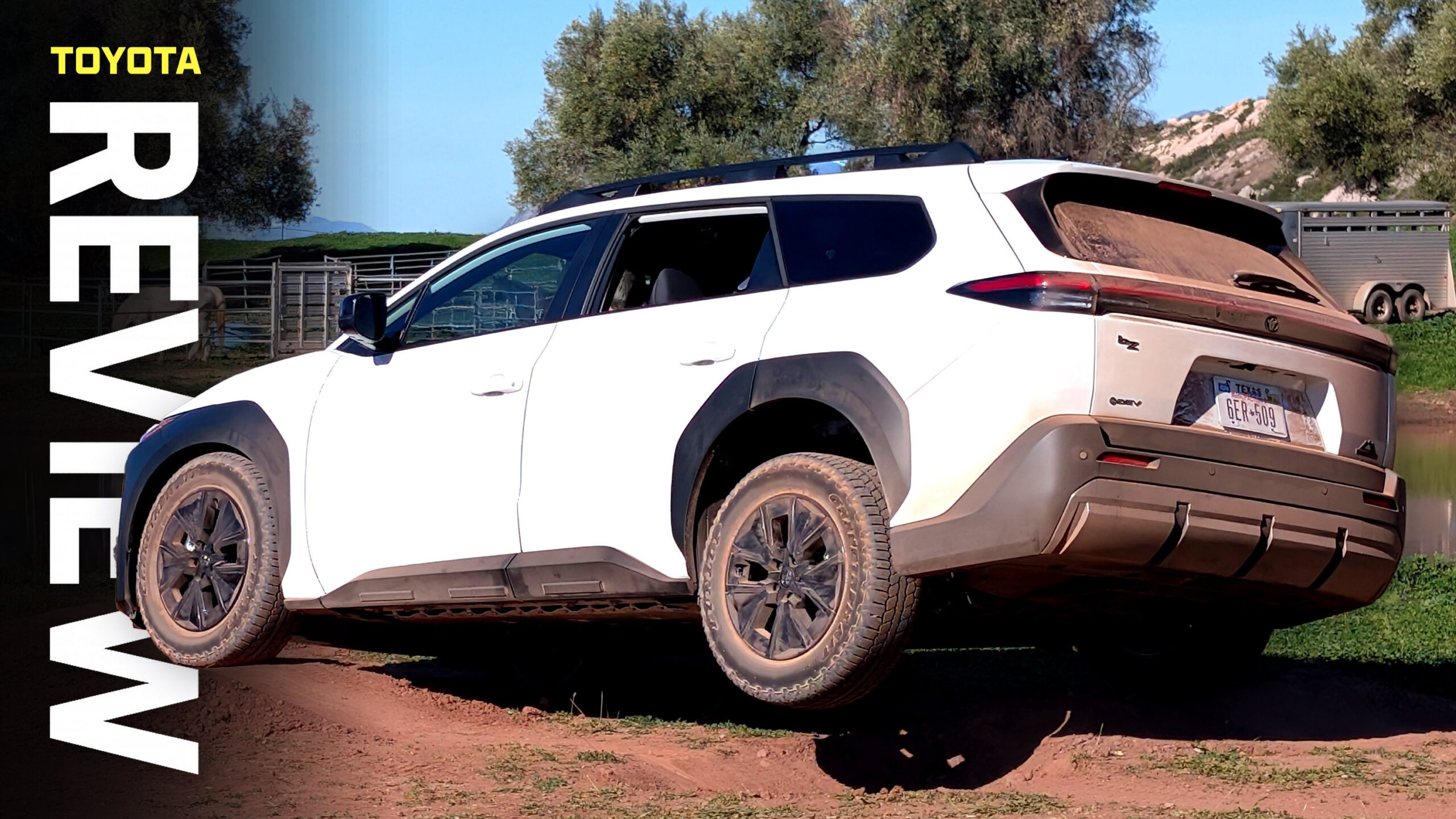
Toyota has long been known for delivering reliable, practical vehicles. However, the brand’s electric vehicle (EV) offerings have yet to fully capture that same spirit – until now. The new bZ Woodland isn’t just another EV trim; it’s a compelling crossover that blends surprising performance with real-world utility, bridging the gap between eco-consciousness and enthusiast appeal.
Beyond the Cladding: Unexpected Performance
The bZ Woodland appears at first glance to be a standard SUV with some rugged styling cues. But beneath the black plastic cladding and roof rack lies a vehicle that outpaces many expectations. With 375 horsepower and a 0-60 mph time of just 4.4 seconds, it’s quicker than a GR Corolla, a fact Toyota isn’t shy about advertising. This isn’t just about speed; it signals a shift in Toyota’s EV strategy, one that prioritizes performance alongside efficiency.
The Woodland is 6 inches longer than the standard bZ SUV, featuring standard all-wheel drive and 8.4 inches of ground clearance – almost matching a base Tacoma. This combination positions it squarely in the conversation for buyers seeking both on-road comfort and off-road capability.
Design and Interior: Familiar Yet Refined
The exterior design leans into understated ruggedness, adopting Toyota’s hammerhead nose (popularized by the Prius) and full-width LED lightbars. While some may find the cladding a bit much, it’s a cohesive package that avoids the overly aggressive aesthetic common in other crossovers. Notably, the bZ Woodland shares its underpinnings with the Subaru Trailseeker, but Toyota’s design appears more polished overall.
Inside, the cabin strikes a balance between rugged and refined. Materials aren’t luxurious, but thoughtful touches like textured dashboard edges elevate the space. The dominant 14-inch infotainment screen is fast and intuitive, complemented by physical controls for key functions. However, the interior remains largely monotone, with black dominating unless opting for Stone Brown. The cabin is functional but lacks visual drama.
Ergonomics and Usability: Small Trade-offs for Functionality
The bZ Woodland isn’t without its quirks. Shorter drivers may struggle to see the entire gauge cluster due to the steering wheel’s limited adjustability, forcing a compromise between road visibility and instrument readings. The unconventional rotary shifter, requiring a press-and-turn motion, is also an odd choice. Despite these minor drawbacks, the vehicle excels in usability, offering dual wireless chargers and a spacious cargo area.
With 74.9 cubic feet of space with the seats folded, the bZ Woodland easily accommodates a full-size mountain bike without removing the front wheel – a testament to its practicality. It can also tow up to 3,500 pounds, making it a versatile choice for active lifestyles.
Real-World Performance and Range
The bZ Woodland doesn’t just perform well on paper; it delivers in real-world conditions. During testing in California, the vehicle achieved 3.5 miles per kWh with all-terrain tires, translating to a potential range of 261 miles on its 74.7 kWh battery. This is a competitive range for an EV crossover, especially considering the vehicle’s capabilities.
Charging is streamlined with a North American Charging Standard (NACS) port, providing access to a wide network of fast chargers. Toyota claims a 10% to 80% charge in around 30 minutes, with battery preconditioning and Plug & Charge capability for added convenience.
Competition and Positioning
The bZ Woodland faces direct competition from the Subaru Trailseeker, which shares the same underpinnings but starts around $5,000 cheaper. Other contenders include the Rivian R2, Tesla crossovers, Ford, Chevrolet, and Honda SUVs. However, none offer the same combination of off-road capability and Toyota’s established brand reputation. The Woodland’s 3,500-lb towing capacity also sets it apart from many competitors.
Final Verdict
The Toyota bZ Woodland isn’t just another EV; it’s a well-rounded crossover that delivers on its promises. While the rear seat may be tight for taller passengers and the shifter feels unconventional, the vehicle’s blend of performance, practicality, and real-world efficiency makes it a compelling option for buyers seeking an adventurous electric SUV. Toyota has finally injected some of its signature DNA into its EV lineup, and the result is a vehicle that is both capable and genuinely useful.


