


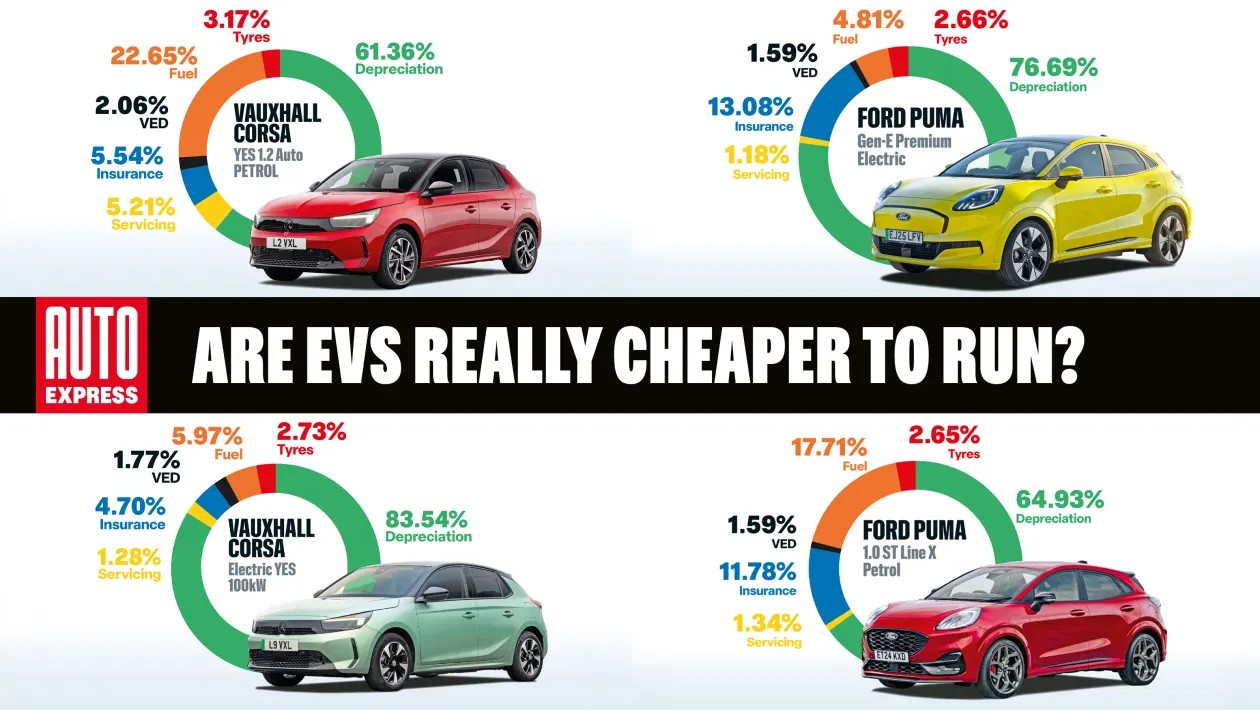
For years, electric vehicles (EVs) have been marketed as a cheaper alternative to petrol cars, promising savings on fuel and taxes. However, a recent analysis reveals the reality is more nuanced: simply switching to electric doesn’t automatically mean lower running costs. While electricity is cheaper than petrol, other factors like depreciation, insurance, and road tax can quickly erode those savings.
The Core Trade-Off: Fuel vs. Everything Else
The fundamental advantage of EVs remains their lower “fuel” cost. Charging an electric car is demonstrably cheaper than filling a petrol car. For example, powering a Volkswagen ID.3 for 36,000 miles costs roughly £1,500 in electricity versus almost £3,900 in petrol. However, this advantage narrows if you rely solely on public charging networks, where prices can rival or even exceed petrol costs.
The bigger issue is the overall picture. EVs tend to depreciate faster than petrol cars. A Vauxhall Corsa Electric, for example, is projected to retain only 33% of its value after three years, compared to 47% for its petrol counterpart. This means buyers lose more money on resale.
The Hidden Costs: Beyond Fuel and Taxes
Several other factors contribute to higher EV ownership costs:
- Insurance: EVs often have higher insurance premiums due to their higher performance and repair costs.
- Tyres: Electric cars’ instant torque can lead to faster tyre wear.
- Road Tax (VED): The once-free EV exemption has been removed, meaning owners now pay vehicle excise duty like petrol car drivers.
- Servicing: Although EVs have fewer moving parts, servicing isn’t always cheaper, especially if specialized repairs are needed.
Leasing vs. Buying: A Different Calculation
Leasing shifts the depreciation burden to the finance company, making EVs more competitive. Some models, like the Skoda Elroq, can be cheaper to lease than their petrol equivalents. However, leasing doesn’t eliminate all costs; monthly payments, mileage limits, and potential damage charges still apply.
Why This Matters: The Shifting Landscape
The EV market is evolving. Government incentives have changed, and manufacturers are adjusting prices. The idea that EVs are always cheaper is outdated. Consumers must now carefully calculate total ownership costs before making a switch.
This shift is happening because the early adopters of EVs benefited from generous subsidies and tax breaks. As those incentives fade, the underlying economic realities come into sharper focus. The rising purchase prices of EVs, combined with depreciation, mean that savings depend heavily on the specific model, driving habits, and charging infrastructure.
The Bottom Line
While EVs offer long-term environmental benefits and a refined driving experience, they don’t guarantee lower running costs. The cheapest option depends on individual circumstances. Some EVs, like the Skoda Elroq, can be cheaper over three years, but others, such as the BMW i4, remain significantly more expensive to run than their petrol counterparts.
Buyers should always compare total costs, including depreciation, insurance, and servicing, before making a decision. The days of automatic EV savings are over.


