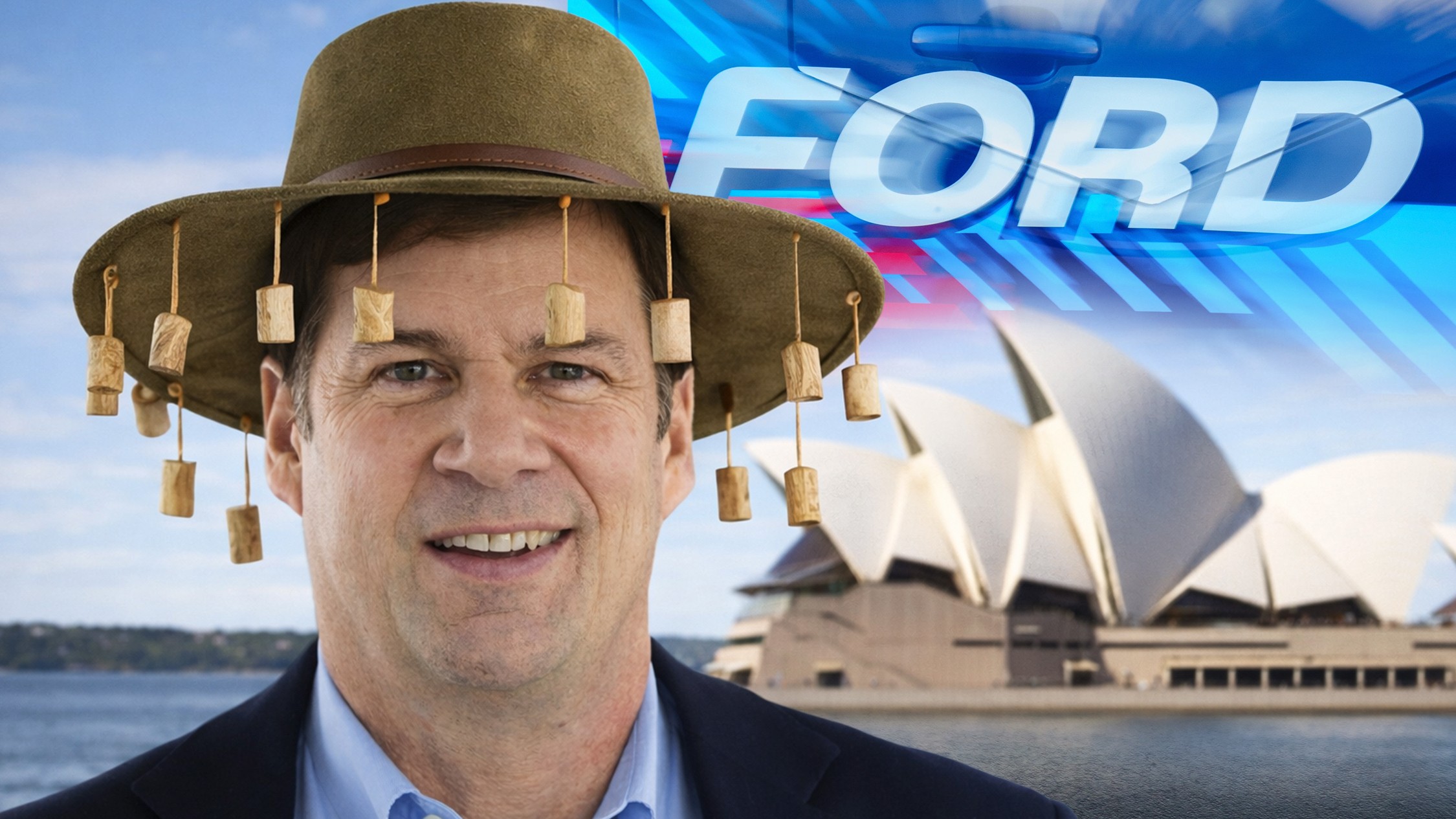
Ford’s CEO Jim Farley recently made a critical decision about the company’s global future in a market most people wouldn’t expect: Australia. While the US remains Ford’s largest market, Australia provides a unique testing ground for the automaker, blending US-style vehicle preferences with the intense competition of Chinese brands.
Why Australia?
Farley’s visit wasn’t a publicity stunt; it was a strategic move to evaluate Ford’s lineup and long-term direction. Australia stands out because it’s one of the few places where American-sized vehicles compete directly with Chinese automakers without trade barriers. This unfiltered environment allows Ford to assess its strengths and weaknesses against rivals in real-time.
The key takeaway: Australia isn’t just a market; it’s a proving ground.
The Rising Threat of Chinese Automakers
Chinese automakers have rapidly gained a foothold in Australia, capturing around 18% of the market share. They offer feature-rich vehicles at competitive prices, putting pressure on legacy brands like Ford. This isn’t a localized trend; it’s a global shift. Chinese automakers are actively challenging established players worldwide, and Australia provides a first look at this dynamic outside of China.
“Before I make a big decision I like to go and see with my eyes the problem and I like to play with the solution,” Farley said, emphasizing his hands-on approach.
Ford’s “Gemba” Approach
Farley’s methodology, inspired by his time at Toyota, involves immersing himself in the market. He drove competitor vehicles, spoke with dealers and customers, and gathered firsthand insights. This “gemba” approach prioritizes real-world observation over boardroom discussions.
The Ranger’s Success and Future Questions
The Ford Ranger remains Australia’s top-selling vehicle for the third year running. Its popularity underscores the global demand for mid-size trucks, especially in markets where larger pickups are impractical. However, even this success doesn’t guarantee future dominance. Ford faces critical questions:
- Will smaller pickups like the Maverick resonate globally?
- How will extended-range EVs perform in regions reliant on long-distance travel?
- Can Ford balance competitiveness with profitability in its EV division, which currently operates at a loss?
The Bigger Picture
Australia is a stress test for Ford’s future. The company’s EV division is losing billions, and upcoming products must be both competitive and profitable. If Ford can succeed in Australia, it stands a better chance of winning elsewhere, including the US when Chinese automakers eventually expand their presence.
In conclusion: Farley’s decision in Australia isn’t just about one market; it’s a strategic assessment of Ford’s global viability. The company’s future hinges on adapting to the changing automotive landscape, and Australia is where that adaptation is being forged.