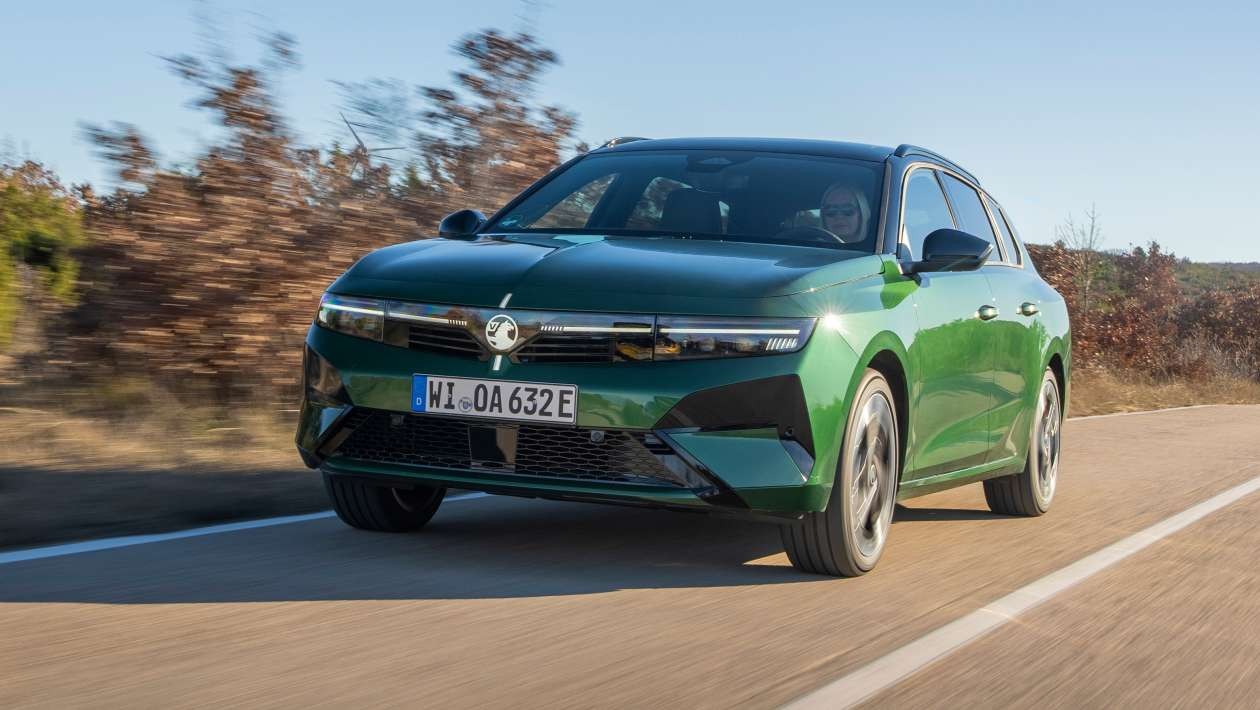
The updated Vauxhall Astra Sports Tourer Electric offers a compelling proposition in a rapidly expanding EV landscape. While not the flashiest option, it stands out as one of the few affordable electric estates available, making it a practical choice for buyers prioritizing space and value.
The Shrinking Niche of Electric Estates
Three years ago, all-electric wagons were a rarity. Today, while the overall EV market has boomed, the segment for affordable electric estates remains remarkably thin. With the MG5 discontinued, the Astra Sports Tourer Electric now competes primarily with its Peugeot e-308 SW sibling. This scarcity isn’t accidental; many automakers prioritize higher-margin crossovers and SUVs, leaving a gap for vehicles like the Astra to fill.
Pricing Parity: A Bold Strategy
Vauxhall’s decision to price the electric, hybrid, and plug-in hybrid versions of the Astra identically – starting at £29,995 for the Griffin trim, £31,495 for the GS, and £33,995 for the Ultimate – is a strategic move. This eliminates a common barrier to EV adoption: price premiums. The fact that the hatchback and Sports Tourer versions cost the same further simplifies the decision for buyers.
Practicality Prioritized
The Sports Tourer’s extra length (4,642mm vs. 4,374mm for the hatchback) translates into significantly more cargo space: 516 liters (expanding to 1,553 liters with the rear seats down) compared to the hatchback’s 352-1,268 liters. This is particularly important because EV battery packaging often reduces usable space. Choosing the estate version partially offsets this inherent EV trade-off.
Subtle Updates, Familiar Design
The facelifted Astra features minor exterior tweaks, including an illuminated badge and updated front bumper. While these changes are subtle, they align with Vauxhall’s evolving design language. However, the Astra’s overall styling remains understated compared to more aggressively designed rivals like the Kia EV3 and Skoda Elroq.
Improved Range, Unchanged Charging
The Astra Electric now boasts a 58kWh battery, increasing range to 276 miles (282 in the hatchback). This improvement puts it ahead of some competitors, such as the Skoda Elroq and Kia EV3 in their base configurations. While the 100kW charging speed remains unchanged, vehicle-to-load functionality has been added, allowing users to power external devices from the car’s battery.
Performance and Handling
The Astra Electric’s 154bhp electric motor delivers adequate performance, though it lags behind more powerful rivals like the EV3 and Elroq. Handling is predictable but not particularly engaging. The added weight of the larger battery contributes to a more composed ride compared to the hybrid and plug-in hybrid Astra variants.
Well-Equipped Interior
The Ultimate trim includes features like a head-up display, wireless smartphone charger, heated and massaging front seats, and adaptive headlights. While the headlights are functional, they don’t match the precision of systems from Volkswagen Group.
In conclusion, the Vauxhall Astra Sports Tourer Electric isn’t a revolutionary vehicle, but it’s a sensible one. Its combination of practicality, affordability, and improved range makes it a strong contender in a niche market that desperately needs more options. If you prioritize space and value over outright excitement, the Astra Electric is a logical and well-rounded choice.