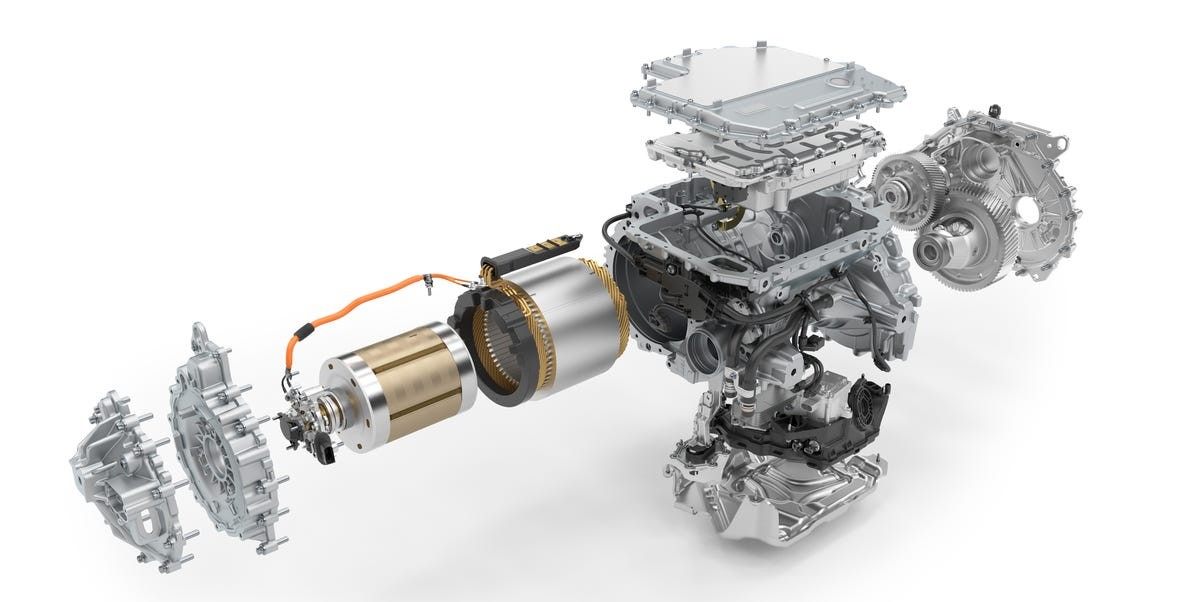
For over a century, the “rhythm” of the automobile has been defined by the internal combustion engine—the familiar cycle of intake, compression, power, and exhaust. As the automotive industry shifts toward electrification, drivers are being asked to trade their understanding of pistons and crankshafts for a new vocabulary of magnetic fields and currents.
While the transition may feel abstract, the mechanics are just as much about physics as traditional engines are about thermodynamics. To understand where electric vehicles (EVs) are headed, we must first understand how they move.
The Anatomy of an Electric Motor
Despite their complexity, almost all electric motors rely on two fundamental components:
- The Stator: This is the stationary outer shell of the motor, mounted to the vehicle’s chassis much like an engine block. It contains copper windings that create the magnetic forces necessary for movement.
- The Rotor: This is the central rotating element. Much like a crankshaft in a gas engine, the rotor converts magnetic energy into mechanical torque, which is then sent through the transmission to the wheels.
Transmission and Efficiency
Unlike internal combustion engines, which require complex multi-gear transmissions to stay within an efficient power band, most EVs use a single-speed (direct-drive) unit. Because electric motors provide instant torque, they can operate efficiently across a wide range of speeds with just one gear.
However, as EVs move into heavier segments like pickups and large SUVs, we may see a return to multi-speed transmissions. This would allow for better efficiency at highway speeds and improved range when towing—a trade-off currently balanced by the high cost and mechanical complexity of adding more gears.
How Motion is Created: The Role of Magnetism
The magic of an EV happens through a process called a Rotating Magnetic Field (RMF).
Batteries provide Direct Current (DC), but motors require Three-Phase Alternating Current (AC) to function. An onboard component called an inverter converts the battery’s DC into AC, which flows through the stator’s copper windings. This creates a magnetic field that “rotates” around the stator, pulling the rotor along with it.
The “Two-Way” Street: One of the most vital features of an EV motor is its ability to act as a generator. During regenerative braking, the wheels spin the rotor, creating a reverse magnetic field that sends electricity back through the system into the battery. While this is essential for extending range, it is important to note that “coasting” is actually more efficient than regenerative braking, as the latter involves energy losses during the conversion process.
The Three Primary Motor Technologies
Electric motors are generally categorized by how the rotor interacts with the stator’s magnetic field. Much like the distinction between a four-stroke engine and a rotary engine, these technologies offer different advantages and drawbacks.
1. Induction Motors (Asynchronous)
These are the “old guard” of electric propulsion, dating back to the 19th century.
– How they work: The stator’s magnetic field induces an electric current in the rotor (usually made of copper or aluminum), which then creates its own magnetic field.
– The Catch: Because the rotor’s field is induced, it always lags slightly behind the stator’s field (hence “asynchronous”).
– Pros & Cons: They are inexpensive and require no rare-earth magnets, making them environmentally friendly. However, they are less efficient at low speeds and can be difficult to cool under heavy, sustained loads.
2. Permanent-Magnet Motors (Synchronous)
This is currently the most common type found in modern EVs.
– How they work: The rotor has built-in magnets, meaning it doesn’t need an induced current to create a field. The rotor moves in perfect “lock-step” with the stator’s field (hence “synchronous”).
– The Innovation: To solve the problem of “back EMF” (magnetic drag at high speeds), many manufacturers use Internal Permanent Magnet (IPM) designs. By hiding magnets inside the rotor’s iron core, they can use “reluctance torque” to maintain efficiency at high speeds.
– Pros & Cons: They are incredibly efficient, especially at low speeds. However, they rely on rare-earth minerals, which raises concerns regarding mining ethics and supply chain costs.
3. Current-Excited Motors (The New Challenger)
A recent development, notably utilized by BMW, seeks to combine the best of both worlds.
– How they work: Like a permanent-magnet motor, the rotor moves in sync with the stator. However, instead of using permanent magnets, the rotor uses copper lobes energized by electricity via “brushes” and “slip rings.”
– Pros & Cons: This eliminates the need for rare-earth magnets and allows engineers to vary the strength of the magnetic field for optimization. The downside is that it requires energy to maintain the field, making it less efficient at low speeds, and there are lingering questions regarding the long-term durability of the brushes.
The Road Ahead
The rapid evolution of motor technology—from Tesla moving away from induction motors toward permanent magnets, to BMW experimenting with current-excited designs—proves that the industry is still in its infancy. We are witnessing a period of intense experimentation where the “correct” way to power a vehicle is still being decided.
Conclusion
The transition to electric vehicles is not just a change in fuel, but a total reimagining of mechanical engineering. As manufacturers continue to balance efficiency, cost, and environmental impact, the technology powering our cars will continue to undergo rapid, fundamental shifts.