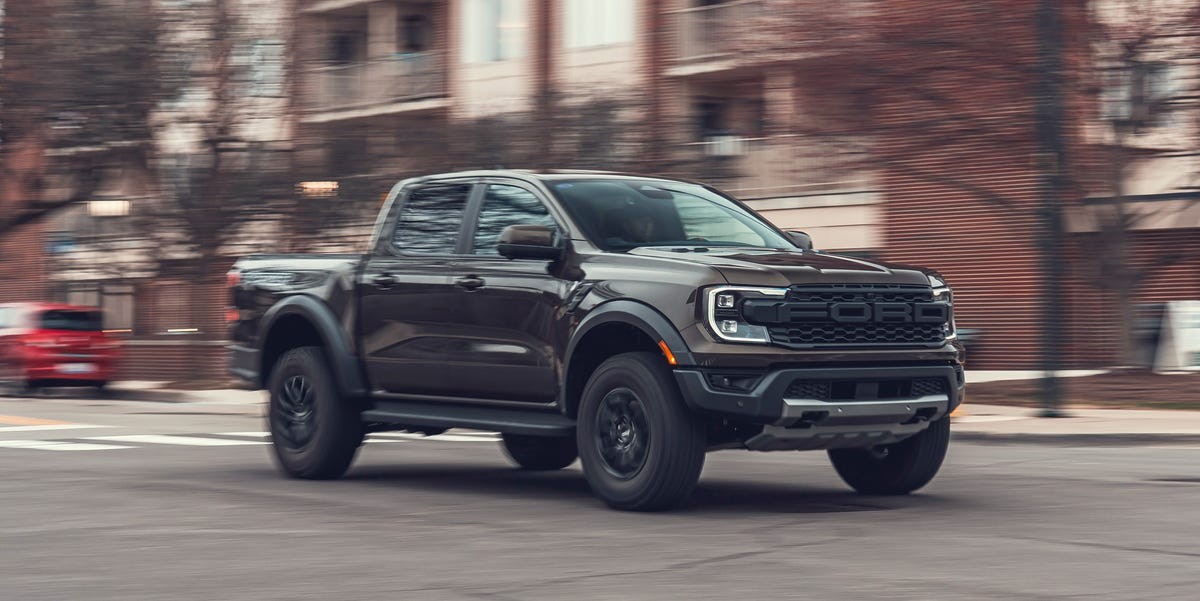
The “Raptor” nameplate has long been synonymous with high-performance, desert-racing DNA. Since its debut in 2010 with the F-150, the Raptor brand has expanded from a niche enthusiast truck into a dominant force across Ford’s lineup, influencing the Bronco and the Ranger. While the full-sized F-150 Raptor remains the flagship, the 2026 Ranger Raptor aims to deliver much of that same adrenaline at a significantly more accessible price point.
Value and Market Positioning
The Ranger Raptor occupies a unique “sweet spot” in the mid-size pickup market. It offers a high-performance alternative to traditional work trucks without the massive footprint or price tag of its larger siblings.
- Affordability: With a base price of $58,965, it undercuts the Toyota Tacoma TRD Pro (starting over $66,000) while offering more power than the Chevy Colorado ZR2’s standard turbo-four.
- Practicality: It is roughly $23,000 cheaper than the Bronco Raptor and significantly less than the F-150 Raptor, making it a viable choice for enthusiasts who need a daily driver.
- Size: Its smaller dimensions make it easier to navigate tight trails and urban environments, such as crowded parking lots or standard residential garages, compared to full-sized trucks.
Engineering for the Dirt
Don’t mistake the Ranger Raptor for a standard pickup with a trim package; it is a purpose-built machine. Ford has re-engineered much of the chassis to handle high-speed off-road abuse.
Suspension and Chassis
The truck features a fully boxed ladder frame protected by heavy-duty underbody armor. The suspension system is the centerpiece:
– Front: 2.5-inch Fox Live Valve adaptive dampers paired with long-travel forged aluminum control arms.
– Rear: Fox shocks with piggyback reservoirs to manage heat, utilizing a sophisticated Watt’s linkage and coil springs rather than traditional leaf springs. This setup significantly improves roll stiffness and stability.
– Tires: It comes standard with 33-inch BFGoodrich All-Terrain T/A KO3 tires, supported by a widened track (3.5 inches wider than the standard Ranger) to increase stability.
Performance and Handling
Under the hood lies a 405-hp twin-turbo 3.0-liter V-6. While it is more efficient than a heavy V-8, it remains a thirsty engine, with an EPA-estimated combined fuel economy of just 17 mpg.
Despite its off-road focus, the truck excels on pavement. Drivers can customize the vehicle’s personality—adjusting damping, steering, powertrain response, and exhaust volume—via steering wheel controls. Notably, the inclusion of paddle shifters for the 10-speed automatic transmission gives the driver more control than many of its direct competitors.
Performance Snapshot
| Metric | Result |
|---|---|
| 0–60 mph | ~5.2 seconds |
| Quarter-Mile | 13.9 seconds @ 98 mph |
| Combined MPG | 17 (EPA) / ~14 (Observed) |
The Verdict: A Versatile Daily Driver
After several thousand miles of testing, the consensus is clear: the Ranger Raptor is a “right-sized” performance tool. It manages to balance the ruggedness required for sand dunes with the comfort necessary to absorb Michigan’s potholes during a daily commute. While the fuel economy is a drawback, the truck’s ability to transition from a grocery getter to a desert racer makes it a highly compelling option in the mid-size segment.
Conclusion: The 2026 Ford Ranger Raptor successfully translates the high-performance Raptor ethos into a more maneuverable, affordable, and practical package for the everyday enthusiast.