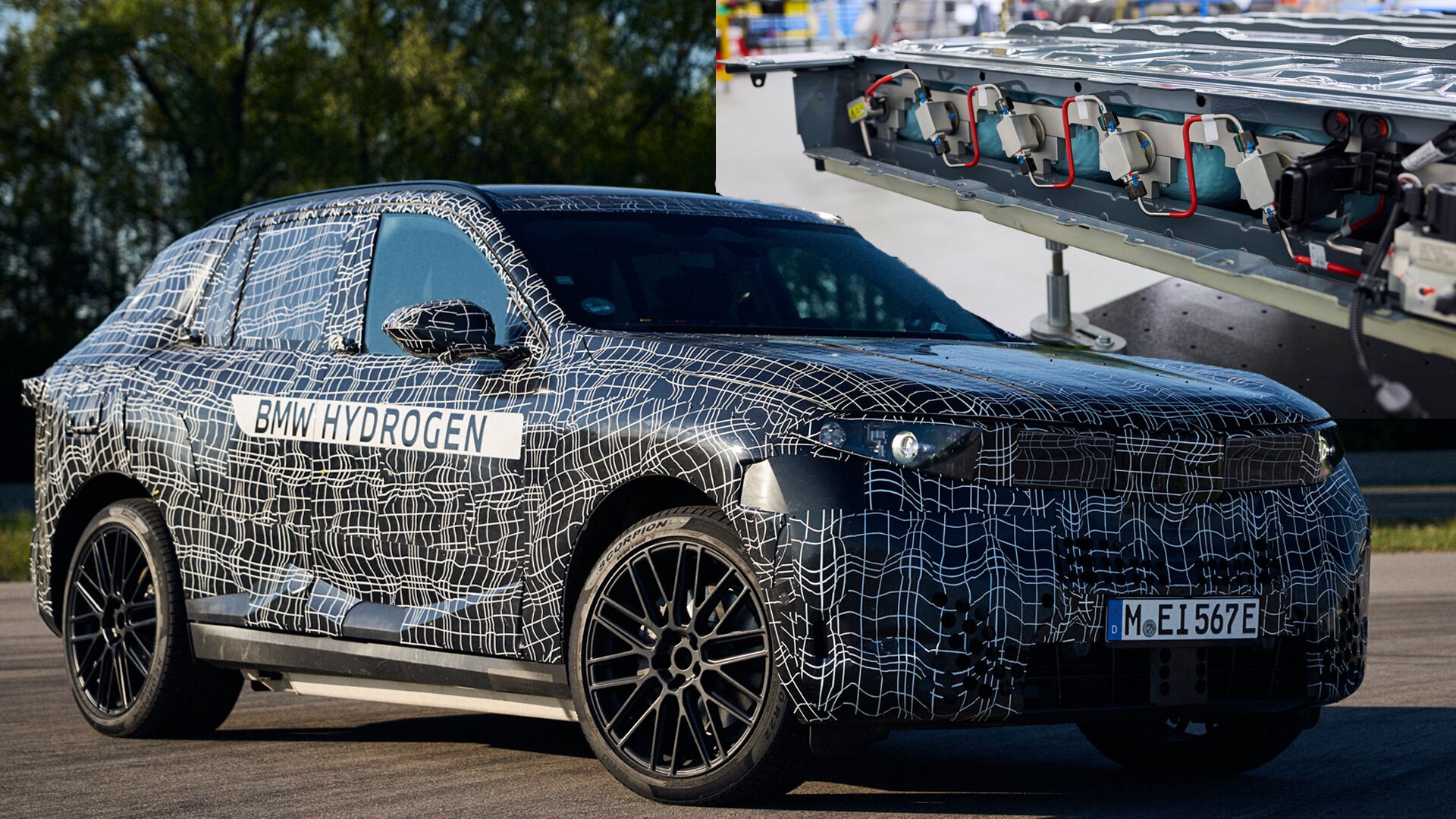
BMW is preparing to shake up the luxury crossover market with the iX5 Hydrogen, a fuel-cell variant of its popular X5 lineup. Recent technical details suggest that this vehicle aims to solve one of the biggest hurdles for green mobility: the trade-off between range and refueling speed.
Breaking the Range Barrier
Initial data indicates that the iX5 Hydrogen will boast a WLTP range of up to 750 km (approximately 385 miles). For many drivers, this range places hydrogen vehicles on a level playing field with traditional internal combustion engines and long-range battery electric vehicles (BEVs).
The impressive distance is made possible by a sophisticated new storage architecture. Rather than using bulky, cylindrical tanks that eat into passenger space, BMW has developed a flat storage system. This setup consists of:
– Seven high-pressure tanks made from carbon-fiber reinforced composite.
– A “sandwiched” design where the tanks are laid side-by-side between metal sheets.
– A single, enclosed unit that maximizes space efficiency.
Refueling: The Five-Minute Advantage
One of the most significant advantages of hydrogen over battery electric technology is the time spent at the “pump.” BMW reports that the iX5 Hydrogen can store at least 7 kg of hydrogen and can be fully refilled in less than five minutes.
This speed is a crucial factor for the mass adoption of hydrogen. While charging a large battery in an EV can take significantly longer, the hydrogen refueling process mirrors the convenience of a standard gasoline station, potentially reducing “range anxiety” for long-distance travelers.
Modular Engineering: One Line, Multiple Engines
Perhaps the most strategic move revealed by BMW is the modularity of their production process. The new flat storage system is designed to be interchangeable with BMW’s Gen6 high-voltage battery packs.
By ensuring that the hydrogen tanks and the battery packs occupy the same physical footprint, BMW can:
1. Simplify manufacturing: The same production lines can be used to build hydrogen models, battery electric models, and potentially hybrid versions.
2. Reduce complexity: This “plug-and-play” approach allows the automaker to respond quickly to market shifts—if hydrogen demand rises, they can pivot production without retooling entire factories.
Next-Generation Technology
While specific technical specs remain under wraps, the iX5 Hydrogen will be powered by a Gen3 fuel cell system and integrated with BMW’s upcoming “Neue Klasse” technology. This includes the “Heart of Joy” drivetrain and advanced chassis control software, signaling that this isn’t just a niche experiment, but a high-performance evolution of the BMW driving experience.
Why this matters: As the automotive industry moves toward decarbonization, the competition is no longer just between gas and electric. By mastering a modular platform that supports both batteries and hydrogen, BMW is hedging its bets against the uncertainty of which green technology will ultimately dominate the global market.
Conclusion
The iX5 Hydrogen represents a sophisticated attempt to marry the long-range benefits of fuel cells with the manufacturing efficiency of electric vehicles. If BMW successfully implements this modular approach, they may provide a viable high-speed refueling alternative for drivers not yet ready to commit to long EV charging sessions.