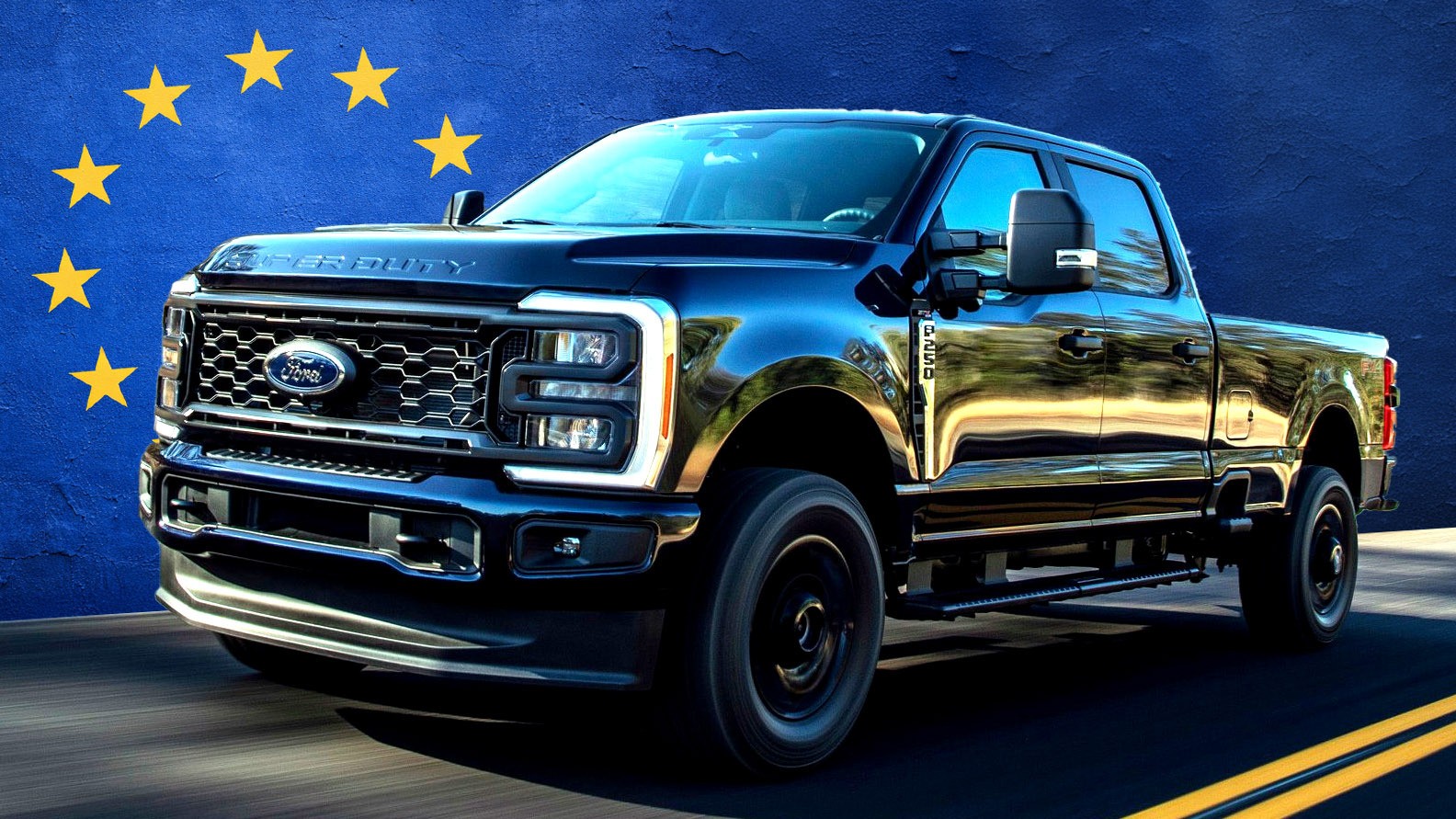
A growing friction between Detroit and Brussels is coming to light, centered on a debate over whether the European Union is unfairly blocking American-made pickup trucks. While U.S. industry representatives suggest Europe is limiting consumer choice, a closer look at the data reveals a much smaller—and more complex—regulatory dispute than the rhetoric suggests.
The Core of the Dispute: The IVA Loophole
At the heart of the controversy is the EU’s Individual Vehicle Approval (IVA) system. This regulatory mechanism acts as a “loophole” for low-volume or specialized vehicles, allowing them to be imported into Europe without meeting every single standard required for mass-market models.
Currently, this system allows a small number of American full-size pickups—vehicles not originally designed for European safety or emission standards—to enter the market. However, the European Commission is considering changes to this exemption starting in 2027. The Commission argues these changes are necessary to close loopholes and ensure all vehicles on European roads meet strict safety protocols.
Scale vs. Rhetoric: Putting the Numbers in Context
While U.S. officials and industry lobbyists have framed this as a major trade barrier, the actual volume of vehicles affected is statistically minute.
- In Europe: In 2024, roughly 7,000 vehicles were sold via the IVA scheme, representing less than 0.1% of the total European market. A significant portion of these—about 5,200—were Ram trucks.
- In the U.S.: To understand how small that number is, consider that Ford sells approximately 2,196 F-Series trucks every single day in America. It would take Ford just over three days of domestic sales to match the entire annual volume of American trucks sold in Europe under the current exemption.
Safety Concerns vs. Protectionism
The debate is not merely about trade numbers; it is also a debate over public safety. Advocacy groups, such as Transport & Environment, argue that massive American pickups pose specific risks to urban environments.
“Pickups such as the Ram 1500 pose greater risks to pedestrians and cyclists due to their size and visibility limitations,” argues the group, noting that high hood lines can obscure small children from a driver’s view.
While U.S. critics view the tightening of the IVA as a protectionist move designed to keep American products out, European regulators frame it as a necessary step to maintain uniform safety standards across the bloc.
The “Chicken Tax” and American Hypocrisy
The tension is further complicated by a long-standing irony in U.S. trade policy. While American officials complain about European “non-tariff barriers,” the United States has maintained one of the most significant protectionist measures in the automotive world for decades: the “Chicken Tax.”
Implemented in 1964, this policy imposes a 25% tariff on imported light trucks. This tax has fundamentally shaped the American landscape:
– It made importing foreign trucks prohibitively expensive.
– It forced manufacturers like Toyota, Nissan, and Honda to build factories within North America to bypass the tax.
– It led to creative “workarounds,” such as companies importing vans as passenger vehicles only to remove the seats after arrival to avoid the tariff.
Summary
While U.S. automakers view Europe’s proposed regulatory changes as a threat to trade, the actual impact is limited to a tiny fraction of the market. Ultimately, the dispute highlights a fundamental disconnect: the U.S. is criticizing Europe for tightening a niche safety exemption, even as America maintains a massive, 60-year-old tariff that serves as a much larger barrier to global trade.