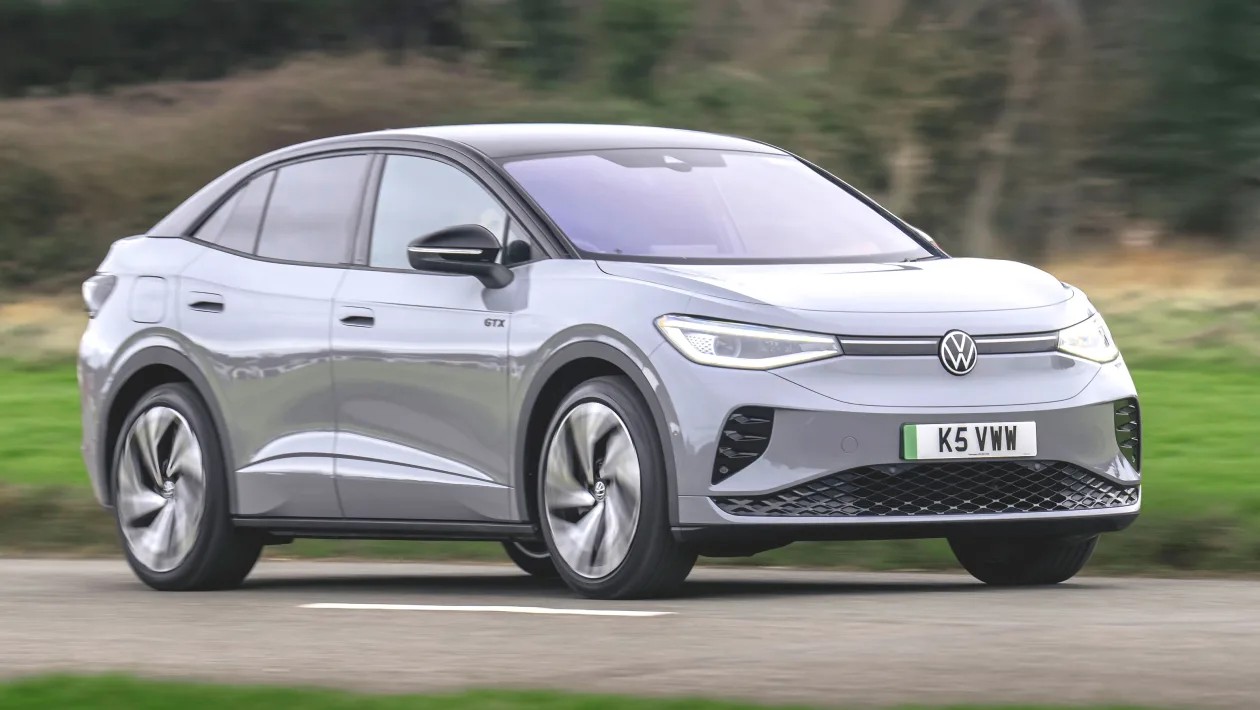
Volkswagen is moving to bolster the competitiveness of its electric SUV lineup with a significant mid-cycle refresh for the ID.4 and its coupe-styled sibling, the ID.5. By introducing larger battery capacities and increased power outputs, the German automaker aims to defend its market share against formidable rivals like the Hyundai Ioniq 5 and Toyota bZ4X.
These updates arrive at a critical juncture. While Volkswagen is already preparing for the next generation of electric vehicles, these enhancements ensure the current ID family remains a viable, modern choice for consumers during the transition period.
Battery and Performance Upgrades
The most notable changes lie beneath the surface, with Volkswagen adjusting battery sizes across several trim levels to squeeze out more mileage and efficiency.
Entry-Level Models: More for Less
For the base “Pure” specifications, Volkswagen has increased the battery capacity from 52kWh to 58kWh. This leads to a substantial jump in driving range:
– ID.4 Pure: Range increases from 222 miles to 265 miles.
– ID.5 Pure: Range increases from 227 miles to 272 miles.
– Power Boost: The rear-mounted motor has also seen an uptick, rising from 168bhp to 187bhp.
Crucially, Volkswagen has maintained the starting price for these entry-level models at £36,995, offering more value than the previous iteration.
Mid-Range and All-Wheel Drive
The “Pro” trims (including Essential, Match, and Black Edition) now utilize a 79kWh battery (up from 77kWh). While the ID.4’s range remains steady at 347 miles, the ID.5 sees a slight bump to 351 miles.
For those seeking all-wheel drive, the 4Motion variants have also received a performance boost. Despite retaining the 77kWh battery, the combined power of the dual motors has increased to 297bhp, extending the range from 325 to 341 miles. These Pro models carry a modest price increase of approximately £570.
The GTX Performance Models
In a somewhat counterintuitive move, the high-performance GTX models are actually moving to a slightly smaller 77kWh battery (down from 79kWh). However, Volkswagen claims that improved drivetrain efficiencies more than compensate for the smaller capacity. The result is a slight range increase (up to 326–331 miles depending on the model) while maintaining a consistent 335bhp output. These models will see a price increase of £655, starting at £52,900.
Addressing User Feedback: Hardware and Utility
Beyond the powertrain, Volkswagen has listened to long-standing criticisms regarding the user interface and practical utility of the ID series.
- Physical Controls: In a major win for ergonomics, the controversial haptic steering wheel controls—which were often criticized for being too sensitive and difficult to use—have been replaced with physical buttons.
- Bi-directional Charging: The new models now support Vehicle-to-Load (V2L) capabilities. This allows the car to act as a mobile power bank, capable of powering camping equipment, tools, or other electronics via a new optional 230-volt socket.
- Standard Features: Practicality has been boosted with an electric bootlid now becoming standard on the Pure Match trim and the introduction of new 19-inch steel wheels for the entry-level models.
Market Context and Incentives
The timing of these updates is strategic. As the electric vehicle market matures, consumers are increasingly prioritizing “range anxiety” solutions and intuitive interfaces. By addressing both, Volkswagen is attempting to bridge the gap until its next-generation platforms arrive.
Furthermore, Volkswagen is currently in the process of reapplying for the UK Government’s £1,500 Electric Car Grant for these updated models, which could significantly lower the effective cost for buyers once approved.
Conclusion
Through these updates, Volkswagen has successfully addressed key consumer pain points—specifically range, power, and interface usability. These refinements transform the ID.4 and ID.5 from mere transitional models into highly competitive, practical contenders in the crowded electric SUV segment.