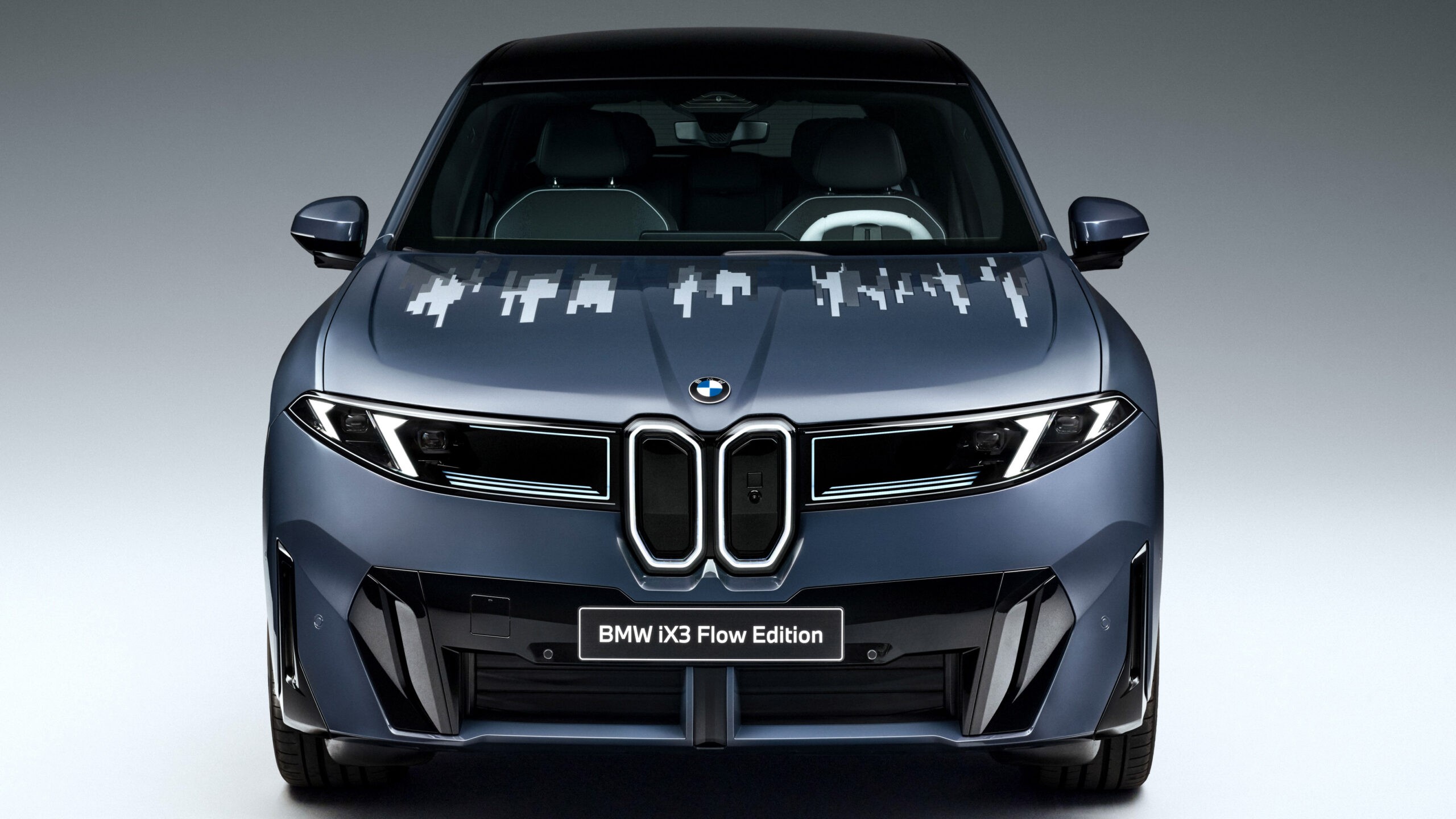
Automotive design is undergoing a fundamental shift. Lighting, once a secondary functional requirement for visibility, has become a primary tool for brand identity and aesthetic expression. From glowing kidney grilles to sweeping light bars, manufacturers are increasingly using light to make vehicles stand out. BMW is now pushing this trend toward its logical extreme: turning the car’s bodywork itself into a digital canvas.
From Concept to Reality: The iX3 Flow Edition
With the unveiling of the iX3 Flow Edition concept, BMW is demonstrating that programmable surfaces are moving out of the realm of “what if” and toward “when.” While the company previously teased similar ideas with the iX Flow in 2022, this new iteration represents a significant technical leap.
The standout feature is a hood integrated with E Ink technology. Unlike traditional LED screens that emit intense light, E Ink works similarly to an e-reader (like a Kindle), using microcapsules of pigment to create high-contrast images that require very little power to maintain.
Personalized Aesthetics and Digital Artistry
The iX3 Flow Edition allows drivers to transform the look of their vehicle through a variety of digital patterns. Key features include:
- Dynamic Animations: The hood can display up to eight different animated patterns.
- Complex Visuals: One notable example includes a moving silhouette of a Chinese skyline, where individual buildings can be illuminated with varying levels of brightness.
- Customization: The technology is designed to be “context-sensitive,” allowing the vehicle to reflect the driver’s personal style or mood through designs ranging from subtle accents to bold, expressive art.
By integrating the display into a large-scale bodywork element for the first time, BMW is proving that these digital skins can be seamlessly blended into the structural components of a car.
Why This Matters: The Future of Vehicle Identity
This development signals a shift in how we perceive car ownership and customization. Traditionally, changing a car’s appearance required physical modifications—wraps, paint, or body kits. E Ink technology offers a software-driven alternative, allowing a vehicle’s “skin” to change instantly without the need for physical parts or high energy consumption.
Furthermore, this technology opens new doors for communication. A car that can change its pattern could theoretically use visual cues to communicate with pedestrians or other drivers, though BMW’s current focus remains squarely on personalization and design.
This innovation moves automotive styling from a static state to a dynamic, programmable experience, bridging the gap between traditional industrial design and digital media.
**Conclusion