


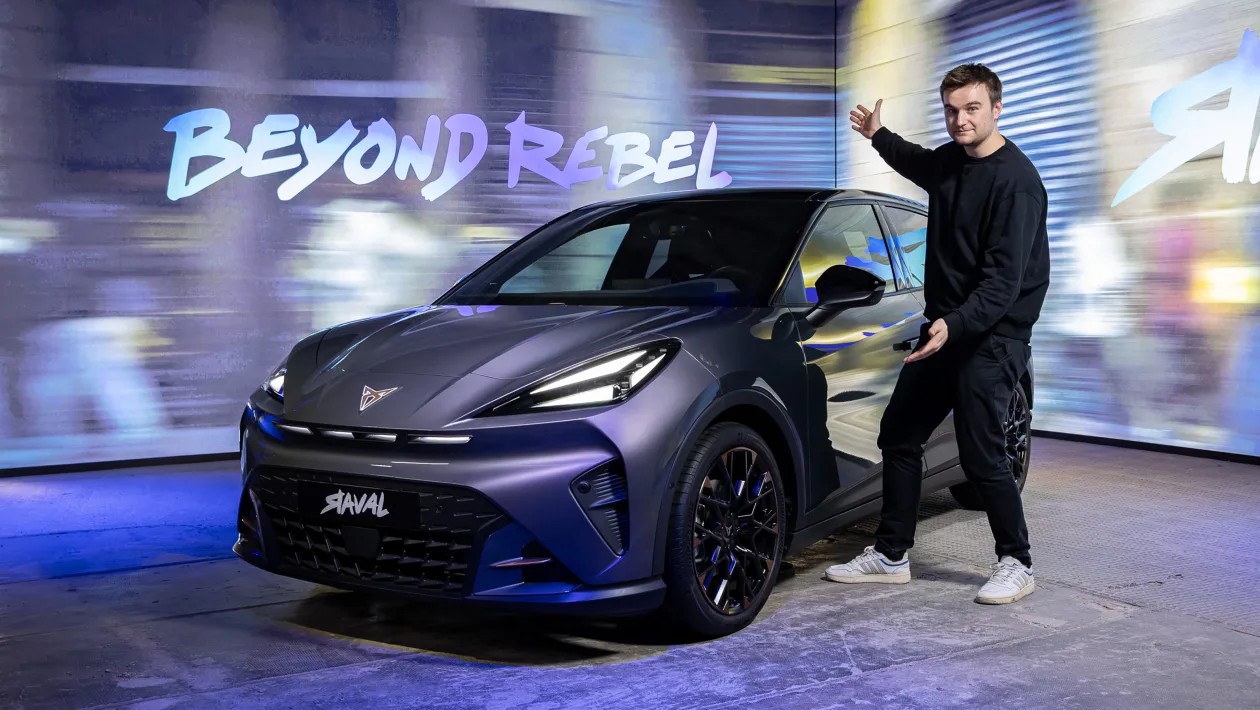
Cupra has officially announced the pricing for its highly anticipated all-electric supermini, the Raval. Positioned as a more spirited, driver-focused alternative to standard urban EVs, the Raval enters a fiercely competitive segment, aiming to balance affordability with the brand’s signature performance DNA.
Pricing and Market Positioning
The Cupra Raval will start at £23,785 for the entry-level ‘Origin’ trim. While this sits slightly higher than the Renault 5 (£21,495), Cupra is applying for the UK Government’s ‘Band 2’ Electric Car Grant, which could reduce the starting price by £1,500.
In the broader context of the electric vehicle (EV) market, the Raval is a strategic move to capture younger buyers. It is priced significantly lower than the larger Cupra Born and sits competitively against the Kia EV2. By leveraging the MEB Entry+ architecture, Cupra is able to offer a tiered pricing structure that caters to both budget-conscious commuters and performance enthusiasts.
Battery Options and Range
The Raval offers two distinct battery chemistries, a common trend in the industry to balance cost and performance:
- 37kWh LFP (Lithium Iron Phosphate): Found in the base ‘Origin’ trim, this battery is more cost-effective to produce. It delivers roughly 186 miles of range and is paired with a 114bhp motor.
- 52kWh NMC (Nickel Manganese Cobalt): Available in higher trims (V1, V2, VZ, and VZ Extreme), this pack provides more energy density. When paired with a 209bhp motor, it offers a range of approximately 279 miles, outperforming the Renault 5’s 252-mile maximum.
Charging Capabilities:
Efficiency is key for urban EVs. The 52kWh battery can charge from 10% to 80% in just 23 minutes via a 130kW DC fast charger, while the 37kWh version takes 27 minutes at a 90kW rate.
Performance: Driving Dynamics over Pure Utility
While many compact EVs focus solely on efficiency, Cupra has engineered the Raval with a “sport chassis.” This distinguishes it from its mechanical siblings, such as the Volkswagen ID. Polo, through several key upgrades:
– Lower Stance: A ride height reduced by 15mm.
– Wider Footprint: A 10mm wider track for improved stability.
– Enhanced Handling: A bespoke steering tune and a dedicated ‘Sport’ mode for traction control.
– E-Launch: A specialized launch control system that includes synchronized interior lighting and digital animations.
The top-tier VZ model is expected to sprint from 0-62mph in under seven seconds, marking it as a genuine “hot hatch” of the electric era.
Design and Aerodynamics
Visually, the Raval stays true to the Urban Rebel concept, featuring the brand’s signature “shark nose” and triangular matrix LED headlights. However, the design is driven by more than just aesthetics; the car features flush door handles, an active aero grille, and optimized wheels to achieve the lowest drag coefficient in Cupra’s current lineup.
Interior Technology and Practicality
The cabin is a blend of high-tech interfaces and distinctive styling:
– Digital Interface: A 12.9-inch central touchscreen powered by a new Google Android-based OS, complemented by a 10.25-inch driver display.
– Unique Features: The Raval introduces “projector lights” on the doors that illuminate the area around the armrests with dynamic patterns.
– Smart Packaging: Despite being 278mm shorter than the Cupra Born, the Raval offers a larger boot (430 litres ) because the electric motor is positioned under the bonnet rather than under the floor.
Note: Opting for the premium 12-speaker Sennheiser sound system will reduce boot capacity by approximately 20 litres due to the inclusion of a subwoofer.
Summary
The Cupra Raval represents a calculated attempt to bring “emotional” driving dynamics to the compact EV segment. By offering a range of battery sizes and performance tiers, Cupra is positioning the Raval as a versatile option that can compete with both budget-friendly commuters and more premium electric superminis.


