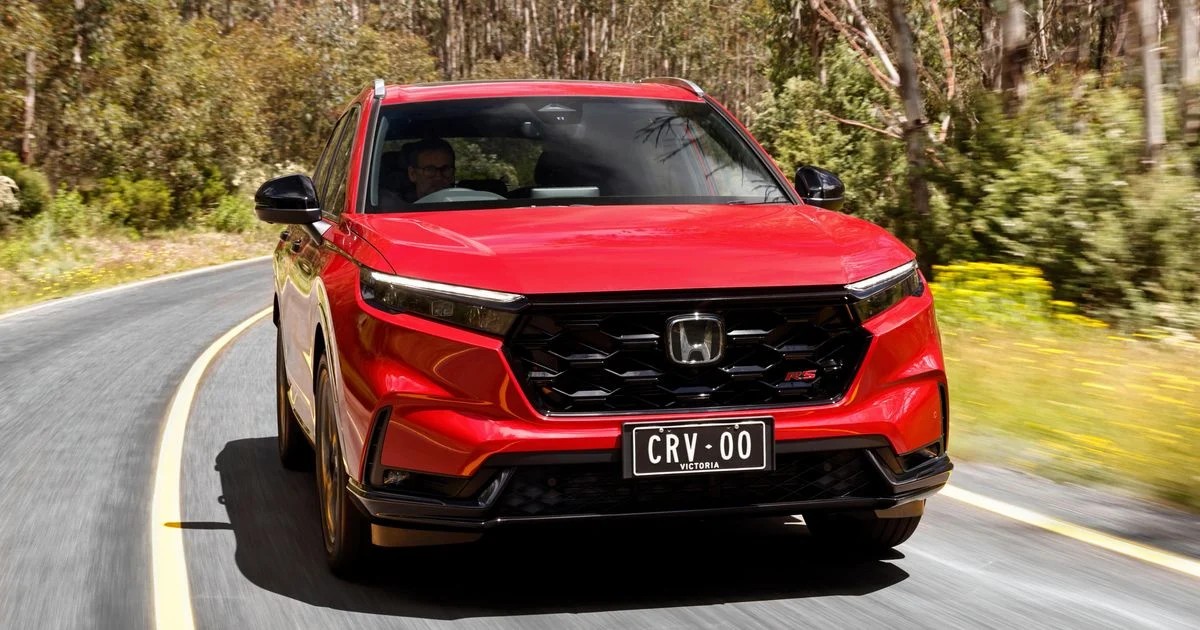
With over 13 million units sold since its inception 31 years ago, the Honda CR-V is a cornerstone of the mid-size SUV segment. For 2026, Honda has implemented a timely facelift that signals a decisive strategic pivot: the brand is moving aggressively toward electrification.
The most significant change in the new lineup is the expanded emphasis on hybrid technology. In Australia, the number of hybrid variants has jumped from one to four, largely at the expense of traditional petrol-only models. While this reflects the global automotive trend toward lower emissions, it also changes the math for buyers, as the entry price for a hybrid is now more competitive than previous years, even as some petrol options disappear.
Pricing and Lineup Shifts
The 2026 reshuffle has resulted in a slightly higher entry point, with the base price rising by $3,000. However, there is a silver lining for those looking to go green:
– Hybrid Accessibility: The new e:HEV X starts at $49,900 drive-away—$7,000 cheaper than the entry-level hybrid available in 2025.
– The Seven-Seat Trade-off: For families requiring maximum capacity, the options have narrowed. The VTi X7 petrol model has been axed, leaving only the VTi L7 hybrid as the seven-seat choice ($54,900 drive-away).
Interior: Function Over Flash
The CR-V’s cabin remains a bastion of practicality and tactile quality. While the design may lack the visual “wow factor” of some modern competitors—relying on straight lines and monochrome tones—it excels in user experience.
Unlike many rivals that are moving toward “all-screen” interfaces that can be distracting, Honda has retained high-quality physical controls. Dials, switches, and rollers provide positive feedback, making the vehicle easier to operate while driving.
Tech and Comfort Upgrades
The 2026 update brings much-needed digital modernization:
* Google Built-in: The 9.0-inch touchscreen now integrates Google Maps and Google Assistant, providing a seamless, familiar interface.
* Digital Displays: A 10.2-inch digital instrument cluster is now widely available, offering clear visuals and energy-flow data for hybrid enthusiasts.
* Premium Touches: The flagship e:HEV RS AWD has received significant luxury upgrades, including heated and ventilated front seats and a heated steering wheel, helping it compete with high-spec models from emerging Chinese brands.
However, space remains a consideration. While the seats offer excellent ergonomic support, the cabin is narrower than some competitors, and rear legroom and headroom may feel tight for taller passengers (those over 6’1″).
Driving Dynamics: Smooth, but Not a Speedster
The driving experience is defined by Honda’s e-CVT (electronic continuously variable transmission). Unlike some “drony” CVTs found in other vehicles, Honda’s system is refined and smooth, making it an excellent companion for long-distance cruising.
Performance on the Road
- Efficiency: On the highway, the e:HEV is impressively frugal, sipping roughly 5.0L/100km at steady speeds without needing a plug. While it may not quite match the legendary efficiency of the Toyota RAV4, it remains a top-tier contender.
- Handling: The CR-V offers a commanding driving position and excellent visibility. Its ride quality is generally soft and composed, absorbing road imperfections well.
- The Limits of Hybrid Power: The hybrid system produces 135kW and 335Nm. While this provides immediate electric torque for city driving and smooth highway merging, the engine can struggle under heavy loads or steep inclines, where the petrol engine may become noticeably loud as it works to maintain speed.
Safety and Assistance
Honda continues to lead with sophisticated semi-autonomous technology. The inclusion of adaptive cruise control and active lane-centering makes highway commuting much less taxing. The system is intuitive, utilizing physical buttons on the steering wheel rather than cumbersome touch-sensitive stalks, though drivers should note that the lane-keep assist can occasionally be sensitive to inconsistent road markings.
The Verdict: The 2026 Honda CR-V is a sensible, highly refined evolution of a classic. By prioritizing hybrid availability and tactile interior quality over flashy gimmicks, Honda has created a vehicle that feels reliable and “fit for purpose,” even if it isn’t the fastest or most spacious in its class.