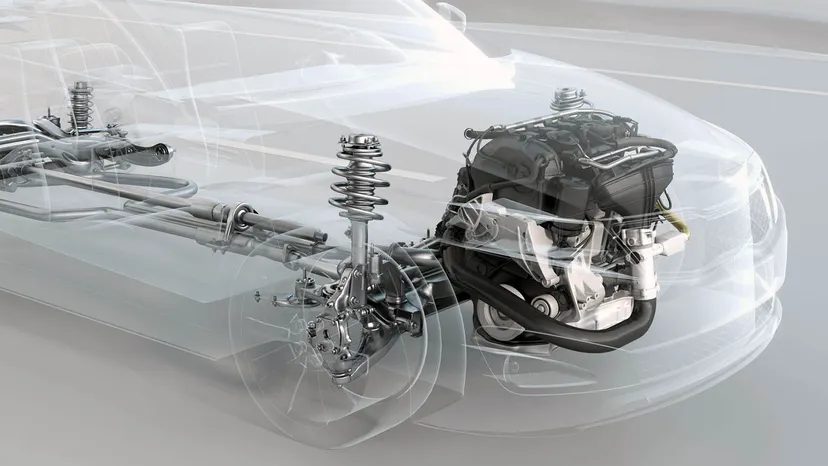
Diesels don’t just pump out torque; they run on a fundamentally different logic than the gas engines under most of your hoods. While both systems rely on internal combustion to turn fuel into motion, the mechanics that make it happen diverge in ways that explain why a 2.0-liter diesel can outperform a much larger V6. To understand why, you have to look past the piston and at the timing of the burn.
The roots of this technology are older than you might think. Nikolaus August Otto patented the four-stroke gasoline engine in 1876, creating what we still call the Otto Cycle. It was the backbone of early automotive movement, but it was inefficient. Steam engines fared no better. In those early days, only about 10 percent of the fuel actually moved the vehicle. The other 90 percent? Waste heat. That was a massive amount of energy just leaking out the exhaust.
Rudolf Diesel saw that waste and wanted to fix it. By 1878, he was working on a “combustion power engine” that squeezed more work out of every drop of fuel. He secured his patent in 1892. The result was an engine that didn’t rely on sparks. It relied on physics.
How Compression Ignition Changes Everything
In a gasoline engine, the process is straightforward. You mix air and fuel, you compress the mixture, and a spark plug fires. Simple.
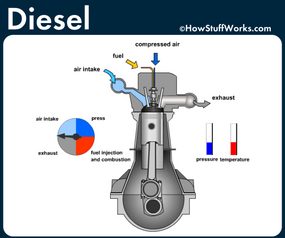
In a diesel engine, the order flips. The pistons compress only air. As that air is squeezed, its temperature spikes. Then, fuel is injected directly into that hot air. The heat from compression is enough to ignite the fuel without a spark plug. No electrical timing needed. Just thermodynamics.
This is why diesel engines have higher compression ratios. They can tolerate the stress because they aren’t worried about pre-ignition or knocking in the way a high-compression gas engine is.
Diesel Engines vs. Gasoline Engines: The Core Differences
On paper, both engines convert chemical energy into mechanical energy. They both use pistons, crankshafts, and cylinders. The linear motion of the pistons turns the crankshaft into rotary motion, which spins your wheels. But the “how” is where they split.
- Ignition Method: Gas engines use spark plugs. Diesels use compression heat.
- Fuel Delivery: Gas engines often mix fuel with air before compression (in carbureted setups or port injection). Diesels inject fuel into the cylinder after compression has begun.
- Efficiency: Because diesel fuel is energy-dense and the combustion process is more complete due to lean burn characteristics, diesel engines historically produce more miles per gallon than comparable gas engines.
The Reputation Problem
For decades, if you drove a diesel, you expected soot, clatter, and a cloud of black smoke. In Europe, that trade-off was worth it for the fuel economy. In the United States, the public largely rejected the technology. It felt industrial. Dirty. Loud.
Then came 2014. The Volkswagen diesel scandal didn’t just hurt one brand; it poisoned the well for the entire segment. When it was revealed that “clean diesel” marketing had masked software that cheated emissions testing, trust evaporated.
But the tech itself evolved. Modern diesel engines are quieter, cleaner, and more efficient than anything from the 90s. Direct injection, variable geometry turbochargers, and advanced emission controls have changed the driving experience. The market is slowly recovering, driven by the simple math of fuel cost.
What This Means for You
If you are considering a diesel, you are buying into a specific set of trade-offs. You get better fuel economy. You get high torque at low RPMs, which helps with towing and highway cruising. You give up some refinement compared to a modern gas engine, and you face stricter maintenance requirements for emission systems.
The four-stroke cycle remains the same structure: intake, compression, power, exhaust. But inside those strokes, the diesel engine does its magic differently. It is a machine built for efficiency first, performance second. And in the current fuel climate, that efficiency is becoming the primary selling point again.

How Diesel Compression Actually Works
Rudolf Diesel wasn’t guessing. He calculated that squeezing air harder would yield more power and better efficiency. The physics are simple but profound. When the piston compresses the air in the cylinder, it concentrates the molecules. Diesel fuel packs a massive energy punch, so those packed air molecules create a high-probability environment for reaction.
Think of it like this: when air molecules are forced into close proximity, fuel has a much better chance of reacting with oxygen. Diesel was right. Gasoline engines typically run at compression ratios between 8:1 and 12:1. Diesel engines push that to 14:1, with some hitting up to 25:1. That higher ratio is why diesel engines don’t need spark plugs. The heat from that compression ignites the fuel directly.
This leads us to the heart of the system: the injection process.
How Injection Methods Differ Between Diesel and Gasoline Engines
Gasoline engines mix things up. They run on a hybrid setup, switching between port injection and direct fuel injection depending on what the engine is doing. Port injection sprays fuel just outside the cylinder, right before the intake stroke. It’s stable. Good for idle. Good for low speeds. Direct injection hits the cylinder head-on. It’s aggressive, offering more power at higher RPMs and reducing the risk of knock, that annoying ping when the mixture ignites too early due to excessive compression.
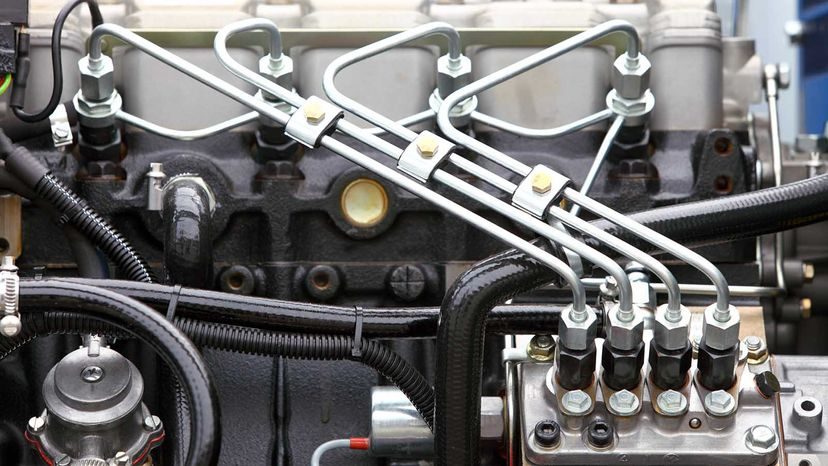
Diesels don’t play that game. They are strictly direct injection. The fuel goes straight into the cylinder, no detours.
Why the Diesel Injector Is the Hardest Part to Build
The injector is the crown jewel of the diesel engine. Also the most complicated. Engineers have spent decades tweaking where it sits, how it sprays, and how it survives the environment inside the combustion chamber. It has to withstand insane pressure and temperature while atomizing the fuel into a fine mist.
Getting that mist to mix evenly with air is a physics puzzle. If the fuel doesn’t swirl properly, combustion gets messy. That’s why you see pre-combustion chambers, special induction valves, or other flow-control devices on diesel heads. They force the air to swirl, ensuring the mist and air meet exactly where and when they should for efficient burn.
Does Your Diesel Actually Need a Glow Plug?
Maybe. Maybe not.
When a diesel engine is cold, the compression heat might not be enough to ignite the fuel. Enter the glow plug. It’s basically a thick, electrically heated wire, similar to the elements in a toaster. It warms the combustion chamber so the air is hot enough to catch the fuel spray.
Modern direct injection tech is so precise that you often don’t need a glow plug just to fire the engine. But manufacturers keep them in anyway. Why? Because that extra heat helps the fuel burn cleaner. It’s less about starting, more about efficiency and emissions.
The Fuel Itself: Diesel vs. Gasoline
The hardware isn’t the only difference. The fuel is a whole separate issue.
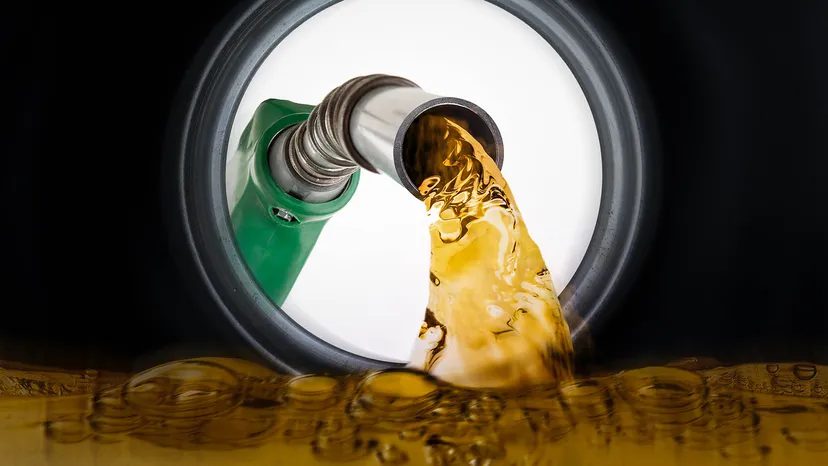
Why diesel fuel handles differently in an engine
Crude oil gets cracked down at refineries into specific streams. Gasoline, jet fuel, kerosene, diesel. They look similar in a jerry can, but the molecules don’t care about appearances. Diesel is heavier. Oilier. It doesn’t want to evaporate.
That slow evaporation rate comes down to carbon chain length. Diesel molecules are longer, packed with more carbon atoms than gasoline. The boiling point sits above water. This structural weight means diesel carries a higher energy density. One gallon (3.8 liters) of diesel holds roughly 139,000 BTUs. Gasoline manages 124,000 BTUs in the same volume.
That extra energy, combined with the thermodynamic efficiency of a compression-ignition engine, is why the truck pulls harder and goes further per gallon than its petrol twin. It is also why diesel used to be cheaper. It required less refining. According to the U.S. Energy Information Administration, diesel makes up about 24 percent of petroleum products in the U.S., while gasoline dominates at 56 percent.
How diesel powers the modern industrial machine
You see it on the highway. Class 8 trucks. But diesel is everywhere else.
- School buses
- City transit fleets
- Marine vessels
- Rail locomotives
- Construction cranes
- Agricultural machinery
- Emergency generators
The environmental profile is mixed. The good news: higher efficiency means less fuel burned per unit of work, resulting in lower carbon dioxide emissions per mile. The bad news: burning diesel releases high levels of nitrogen compounds. That drives smog, acid rain, and respiratory issues.
Why the 1970s diesel era failed (and what changed)
European manufacturers pushed diesel into passenger cars during the 1970s oil crisis. It was a flop for daily drivers. The engines were loud. The cars came home coated in black soot. That particulate matter is the same stuff choking city air.
Modern engineering fixed the noise and the soot, mostly. Direct injection is now governed by computer systems that monitor combustion in real time. Efficiency up. Emissions down.
Then came 2014. Volkswagen. The “clean diesel” marketing machine turned out to be a software cheat. The company used that same sophisticated computer control to detect test conditions and suppress emissions only during laboratory cycles. The fallout was massive. Billions in fines. Buybacks. Executives in jail.
The fuel itself also changed. Since 2010, all diesel fuel sold in the United States is ultra-low sulfur diesel (ULSD). Sulfur was a problem because it poisoned the catalytic converters and particulate filters designed to catch pollution. Remove the sulfur, and those devices work as intended. Modern diesel catalytic converters are about 90 percent efficient. No more black smoke clouds. No more sulfurous smell.
Does biodiesel replace petroleum diesel?
Not exactly. Biodiesel is an alternative or additive. It is chemically derived from plant oils or animal fats, not petroleum. Rudolf Diesel actually considered vegetable seed oil for his original engine design.
You can blend it with regular diesel. In some cases, engines run on 100 percent biodiesel with little to no modification. It burns cleaner in terms of particulates and carbon output. But it is distinct from the petroleum-based fuel that powers most heavy-duty fleets today.
Where diesel restrictions are heading next
Despite the 90 percent efficiency of modern aftertreatment systems, diesel still emits particulates. In dense urban areas, that remains a public health concern.
Several cities, states, and countries have mandated bans on diesel vehicles within the next decade. The technology got cleaner, but the policy environment got stricter. The question is whether the next generation of zero-emission powertrains can match the torque and range that diesel still delivers in heavy-duty applications.