


There’s an old saying in the PR world. “All publicity is good publicity.” Tell that to a manufacturer staring down the barrel of a safety recall. Recalls are nothing new. For decades, they have plagued everything from lead toys to contaminated food. However, the situation in the automotive industry has changed. In recent years, recalls have increased driven not by rusted bolts or cracked frames.
Take 2009 as an example. Volvo announced a recall when the vehicle’s software sent the wrong signal to the fuel pump. The result? Stalls. And stalls on a highway invite crashes. Yamaha also faced a similar problem around the same time as it pulling motorcycles in 2004-2005 due to a faulty throttle position sensor that could cause the engine to stall unexpectedly. Daimler Trucks wasn’t spared either, recalling of some Thomas school buses due to faulty LED wiring that reduced the driver’s visibility.
Then came the headline-grabber. Toyota did a big recall in 2009. Over the course of months, the company recalled more than 5.7 million vehicles. The charge was “unintended acceleration.” These cars were speeding out of control. The root cause was digital. The gas pedal does not have a direct mechanical cable connection to the engine. Instead, it relies on electrical signals sent through wires to control the throttle. A faulty sensor in the drive-by-wire system can cause the pedals to stick. Toyota is also recalling more than 400,000 Priuses because of engine computer software that can disable the anti-lock brakes.
These incidents highlight a growing tension. We see technology failures behind the scenes that put security at risk. The question lingering over the industry is simple: Does this digital integration make new cars less safe?
The Evolution of Automotive Electronics
High-tech systems are not born overnight. In the 1980s, the company gradually began to enter the automotive industry. Today, the car’s electronic systems and engine computers handle everything from fuel regulation to fault diagnosis. Most modern vehicles have between 30 and 80 individual electronic controllers.
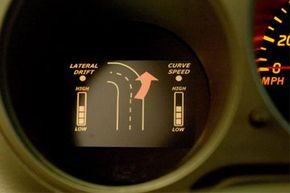
Some of these devices have a direct and obvious impact on safety. Adaptive cruise control slows the vehicle down when it detects traffic ahead. Lane Assist warns you if you deviate from your lane without signs. These features force us to ask uncomfortable questions. Is it wise to leave driving tasks to computers? Are we relying too much on automation? Most of these technologies are still too new to clearly explain how they affect long-term safety.
Other systems are less dramatic but just as common. The On-Board Computer allows drivers to control several devices from the cab. Take BMW iDrive for example. It uses a knob and screen to control audio, navigation, and HVAC. To use it, you have to take your eyes off the road for a long time. This interface is standard on most BMW cars. Audi and Mercedes-Benz use similar car electronics. Glancing at the screen seems to be acceptable on a free lot on a German autobahn. On the congested roads of the U.S., it presents a clear safety hazard.
The double-edged sword of sensors
Car sensors are everywhere now. A simple sensor can detect the outside temperature of the monitor, so any malfunctions are harmless. However, other sensors perform important tasks that directly affect traffic safety. The sensors measure the angle of your car and keep it in the right gear when accelerating. Some detect wheel slip in bad weather and activate the electronic stability control system.
It is possible (though unlikely) that the vehicle’s sensors or related hardware and software may malfunction and cause a safety risk. However, current data suggest that these systems do more good than harm. Stability control is very effective. The Insurance Institute for Highway Safety says this could reduce single-vehicle fatalities by as much as 51 percent. Also, if these electronic systems fail, a mechanical backup often fills the gap. For example, brakes are not completely dependent on digital signals.
When these systems fail, it’s big news. But context is important. Most of the recalls announced by the National Highway Traffic Safety Administration (NHTSA) still involve physical parts. Welds. Insulators. Tie rods. Mounts. Chip and software concerns are growing, but have yet to replace traditional mechanical failures as the leading cause of recalls.
The change is real. Complexity increases. The industry has already begun to move forward as we wait to see if reliance on digital outweighs the security benefits. One rhetorical question remains unanswered by the data alone. How do we balance the convenience of automation with the basic need for mechanical reliability? The answer is still being written, one update at a time.
The digital cockpit and the drive-by-wire dilemma
The transition to software-based vehicles is not only about convenience, but also about control. Let’s take BMW’s iDrive system as an example. It provides a unified user interface for everything from navigation to air conditioning and simplifies cluttered buttons and knobs. But as complexity increases, so does the risk of failure. When your screen freezes, you lose more than just entertainment. You will lose access to important features.
Then there’s the drive-by-wire revolution. Sounds futuristic, but it’s already here. By replacing mechanical connections with electronic signals, manufacturers have increased accuracy. They also acquire vulnerabilities. A faulty sensor can send wrong information to the throttle or brakes. Stuart Brown of the New York Times highlighted Toyota’s problem. A faulty sensor in the drive-by-wire system caused unintended acceleration problems. It wasn’t a bug in the code. It was a physical component that malfunctioned in the digital world.
KPBS’s Maureen Cavanaugh has tougher questions. Are car electronics too complicated? The answer seems to be yes. We put supercomputers in vehicles that are not designed for software updates. The result? Glitches. Recalls. Panic.
When the algorithm meets the asphalt
Active cruise control is a good example of this tension. Progressive Samuel Greengard argues that this is a wise and safe choice. It automatically keeps its distance. Reduces fatigue. But it depends on the sensors. Rain, debris and even sudden changes in direction can interfere with these sensors. If the algorithm misunderstands the road, the car behaves erratically.
This is not a theoretical matter. In early 2010, Toyota recalled 437,000 Prius and hybrid vehicles worldwide. Why? The brake system sensor is faulty. NHTSA documented these deficiencies in a September 2009 notice. Notification for October. Each feature is a reminder that electronic stability control (ESC), while innovative, is not foolproof. The IIHS offers a Q&A on ESC and explains how it uses wheel speed sensors to detect slippage and selectively apply the brakes. But what happens if these sensors fail? The system is useless.
The Limits of “Death-Proof” Engineering
汽车真的能防死吗? 不,但我们一直在努力。 碰撞测试提供数据。 Five videos from HowStuffWorks show steel meeting steel at 30 mph. 安全气囊展开。 Seats hold. But live human occupants? 不,我们使用假人。 拟人化的测试设备。 They’re imperfect proxies for real people.
红灯摄像机和激光测速枪又增加了一层。 激光枪通过汽车反射的光来测量速度。 简单的物理。 复杂的执法。 交通罚单变成了数字游戏。 但它们能让道路更安全吗? 或者只是更受监管?
自动停车汽车让我们得以一睹未来。 They handle the steering. 你处理分心的事情。 很方便。 这也是一种信任练习。 您相信汽车知道路边在哪里。 You trust the software to not mistake a bollard for a parking space.
Sources confirm the trend: electronics are central to modern automotive safety. But central doesn’t mean safe. Not yet.


