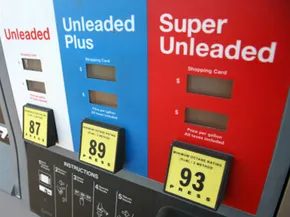
The pump is a minefield right now. Gas prices are jumping around, the economy feels shaky, and every driver is looking for a way to keep a few extra bucks in their pocket. The easiest win? Just grab regular unleaded. You save about 20 cents a gallon instantly compared to premium.
But here is the catch. In most states, premium gas means an octane rating of 91 or 92. Regular sits at 87. If you drive a luxury vehicle, the manufacturer probably tells you to use the expensive stuff. So, does putting 87-octane fuel into a high-end engine actually hurt it?
The answer isn’t a simple yes or no. Let’s start with the most obvious step: check your owner’s manual.
It is entirely possible that your car doesn’t care about premium fuel. Some luxury models from Ford and GM, like the 2009 Lincoln MKS and the Cadillac STS, are built to run on regular unleaded. If your car is one of these, using premium gas gives you zero advantage. In fact, using the higher-octane fuel might even be harmful to the engine over the long haul.
If your car takes premium, look closely at the wording. Does it “recommend” it or “require” it?
If the manual says the manufacturer recommends premium fuel, you can usually get away with regular. You might lose a little performance, but you won’t destroy your engine. This is the most common scenario.
If the manual says it requires premium, you have no choice. You pay the extra money every time you fill up. These engines are tuned precisely for that higher octane rating.
Why High-Octane Exists
High-octane gas isn’t better. It isn’t purer. It doesn’t go through a more refined process. And contrary to popular belief, it doesn’t keep your engine cleaner. Some people think premium fuel is somehow superior because of the price tag, but that’s a myth.
Premium fuel is simply a mixture of hydrocarbons that are slightly less combustible than those in lower-octane gas. This sounds counterintuitive. Cars use internal combustion engines. They need fuel to burn to move. So why pay more for gas that doesn’t ignite as easily?
The answer lies in how high-performance engines are built. Luxury cars often use engines designed for higher compression ratios and more aggressive timing. These engines generate more power, but they also generate more heat and pressure.
If the fuel ignites too early in the cylinder due to that heat and pressure, you get a problem called engine knock. This is when the fuel-air mixture detonates uncontrollably, causing a metallic pinging sound. It’s bad for the engine. High-octane fuel resists this premature ignition, allowing the engine to run smoothly under high load.
Regular gas burns faster. In a standard engine designed for it, that’s exactly what you want. In a high-performance engine, that fast burn can lead to knock. The engine’s computer detects the knock and retards the ignition timing to protect the engine. This reduces power and efficiency.
So, if you put regular gas in a car that requires premium, the car will still run. But it will be less efficient. It may feel sluggish. Over time, the repeated knock can damage pistons and bearings.
If you put premium gas in a car that only recommends it, you’re wasting money. The engine doesn’t need the extra knock resistance. It runs the same way, just with a heavier wallet.
What About Modern Cars?
Modern engines are smarter. They have knock sensors that adjust timing in real-time. If you put regular gas in a car that recommends premium, the computer will compensate. You’ll notice a slight drop in performance, especially when accelerating or towing. But you won’t hear the knock. The system prevents damage by backing off the timing.
This means you can technically use regular gas in many “premium-recommended” cars without immediate harm. But why pay for it if you’re not getting the performance benefits? The manufacturer tuned the engine for premium to maximize power and efficiency. Using regular means you’re not getting the full potential of what you paid for when you bought the car.
If your car requires premium, you cannot skip it. The engine is not designed to handle the knock that
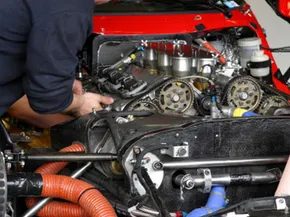
道路上几乎每辆汽车的心跳都是内燃机。 它采用四冲程奥托循环。 摄入量。 压缩。 燃烧。 排气。 这听起来很简单,因为从机械角度来说确实如此。 活塞在气缸内上下移动。 当活塞下降时,它会吸入燃料和空气的混合物。 它爬回来,将混合物挤压得越来越紧。 在峰值时,火花塞点火。 繁荣。 这种受控的爆炸用力驱动活塞向下。 然后活塞再次上升,排出燃烧后的气体。 循环重新开始。
但引擎并不总是正常运转。 有时,活塞本身的压力足以在火花塞有机会之前点燃保险丝。 这是提前点火 。 它会产生微小而微弱的爆炸,对抗活塞的动量。 你听到的是发动机爆震声。 引擎盖下发出的金属嘎嘎声或砰砰声不仅仅是噪音。 这是你的引擎告诉你它效率低下。 如果放任不管,它会造成损害。 它会降低性能。
通常的嫌疑人? 低辛烷值气体。 它在压力下太容易点燃。
那么,您是否应该向您加注的每个油箱中注入优质燃油? 未必。 答案在于压缩比。 该数字测量活塞处于最低点与顶部时的气缸容积。 更高的压缩比意味着更多的挤压。 更多的挤压意味着空气燃料混合物甚至在火花点火之前就更接近点火温度。
压缩比低的汽车? 他们不需要溢价。 过早点火的风险很小。 但高性能发动机呢? 它们具有高压缩比。 它们很容易提前点火。 对他们来说,优质燃料是真正的好处。 这适用于大多数专为速度而设计的豪华车和跑车。
然而,即使对于这些高度紧张的机器,溢价并不总是强制性的答案。 我们需要仔细研究到底是什么阻止了这种敲击。
辛烷值如何防止发动机爆震
The main function of fuel is to store energy, not to prevent 爆震. However, the octane number measures the self-ignition resistance of the fuel. This is the fuel’s ability to withstand compression without self-exploding. A higher octane number means better stability under pressure.
Using low octane fuel in a high pressure engine can cause the mixture to detonate prematurely. This is the root cause of engine knocking. The knock sensor detects this vibration. The engine control unit (ECU) then retards the ignition timing. Slow the ignition of the spark to avoid knocking. Delayed timing, however, reduces power and efficiency. Performance is reduced to save the engine.
Using high octane fuel allows the ECU to maintain optimal ignition timing. The fuel is burned at the right time to maximize power. For this reason, high-performance engines are often specified at a 高辛烷值燃油. It’s not about “cleaning” the engine or adding more energy. This keeps the engine running as intended.
Does 优质燃油 gasoline increase the power of all cars?
Many drivers believe that 优质燃油 fuel increases power. 确实如此。 But only if the engine is tuned to take advantage of it. If your car’s ECU is calibrated for regular unleaded gasoline, switching to 优质燃油 gasoline may result in zero 明显提升. Computers do not require additional 抗爆性. 它运行保守的映射程序。
However, some manufacturers can program their ECUs to detect fuel quality. 如果检测到高辛烷值,它会提前点火正时。 这能榨取额外马力 and improves fuel economy. This feature is included in some modern vehicles, even those not specifically marked as high performance. However, this is not a general rule.
Check your owner’s manual. Look for the “Fuel Requirements” section. If it says “Premium Recommended”, it might be useful. If it says “regular required” or “unleaded only”, stick with regular. Spending 优质燃油 on a 仅要求普通燃油的发动机 is a waste of money. It won’t hurt the engine, but it won’t help either.
哪些发动机最受益于优质燃油?
并非所有高压缩发动机都是一样的。 有些采用直接喷射。 有些使用涡轮增压。 这些技术显着增加了气缸压力。 尤其是涡轮增压发动机,很容易发生爆震。 强制进气将更多空气注入气缸。 更多的空气意味着更多的过早点火的可能性。
许多涡轮增压发动机,即使是主流品牌,也推荐使用优质燃油。 它允许涡轮增压器更积极地加速,而不会触发爆震传感器。 结果是更好的油门响应和持续的动力。
豪华轿车和跑车经常使用高压缩自然吸气发动机。 这些在很大程度上依赖辛烷值来维持高转速下的平稳运行

How Knock Sensors Change the Premium Fuel Debate
Modern internal combustion engines don’t just rely on driver intuition or manual adjustments to handle fuel quality. They use a knock sensor to monitor the cylinder for the specific rattling and vibration that signals preignition. When the sensor detects this abnormal combustion, it sends a signal to the Engine Control Unit (ECU), also known as the Engine Control Module (ECM). The ECU then retards the ignition timing—delaying exactly when the spark plugs fire—to mitigate the knock.
This feedback loop is highly effective. Because of it, vehicles equipped with knock sensors rarely suffer from destructive engine knock, even when you fill up with regular unleaded gasoline. However, there is a trade-off. To prevent the knock, the ECU adjusts the timing to be more conservative. This safety measure slightly reduces both performance and fuel efficiency.
Is the Performance Drop Actually Noticeable?
For the average commuter, the answer is likely no. Estimates suggest that running a car designed for premium fuel on regular unleaded will result in roughly a half-second increase in 0-60 mph acceleration time (about 0.8 seconds for 0-100 km/h). Unless you are lining up for a drag race, that quarter-second difference is imperceptible in daily driving.
Is that half-second critical? In most scenarios, no. But consider merging onto a fast-moving highway. That small delay might just be the difference between a safe merge and a near-miss. It is a marginal loss, but one that depends on how much you value reaction time versus fuel costs.
The Fuel Economy vs. Cost Calculation
Some automotive experts argue that the drop in fuel efficiency when using regular gas in luxury or high-performance vehicles is severe enough to negate the price savings of the cheaper fuel. If your car burns significantly more gallons to travel the same distance, the lower price per gallon becomes irrelevant. This point remains debatable, but it is a variable you should calculate based on your specific model and driving habits.
The Cleanliness Myth
Another common reason drivers choose premium unleaded is the belief that it keeps the engine cleaner. Marketing campaigns from major fuel brands often highlight special detergent additives in their highest-grade fuels. Here is the reality: U.S. Environmental Protection Agency (EPA) regulations mandate that all grades of gasoline contain detergents.
While premium fuels often contain a higher concentration of these detergents, lower octane fuels are still required to keep your engine clean under normal conditions. If you suspect your engine has developed unusual carbon buildup, you don’t need to buy premium gas. You can purchase a concentrated detergent additive at any auto parts store and add it to your tank yourself. It is a far cheaper solution than switching fuel grades.
The Bottom Line on Fuel Grades
Unless your owner’s manual explicitly states that your luxury or high-performance car “requires” premium fuel, you are not harming the engine by using regular. The knock sensor system protects the hardware, and the performance penalty is minimal.
The decision ultimately comes down to your personal valuation of the small performance and efficiency trade-offs against the extra cost of premium fuel. You get to decide if that marginal gain is worth the premium price tag.
Lots More Information
Related HowStuffWorks Articles
-
How does a gas pump know when my tank is full?
-
How Gasoline Works
-
How Gas Prices Work
-
How does oil speculation raise gas prices?
-
How Liquefied Petroleum Gas Works
-
What’s the difference between gasoline, kerosene, diesel fuel, etc?
-
How Fuel Cells Work
-
How Fuel Mapping Computers Work
Sources
-
Carty, Sharon Silke. “Luxury cars switch from premium to regular-gas diet.” USA Today. August 7, 2008. (March 31, 2009) http://www.usatoday.com/money/autos/2008-08-06-premium-gas-regular_N.htm
-
Fabin, James. “The Misguided Fear of Premium Gas.” MyRide.com. (March 27, 2009) http://www.myride.com/lifestyle/the_misguided_fear_of_premium_gas-412-page1.html
-
Harley, Michael. “More cars than ever require premium fuel.” Autoblog. April 17, 2008. (March 27, 2009) http://www.autoblog.com/2008/04/17/more-cars-than-ever-require-premium-fuel/
-
Woodyard, Chris. “More cars use pricier premium gas.” USA Today. April 17, 2008. (March 27, 2009) http://www.usatoday.com/money/autos/2008-04-13-premium-gas_N.htm