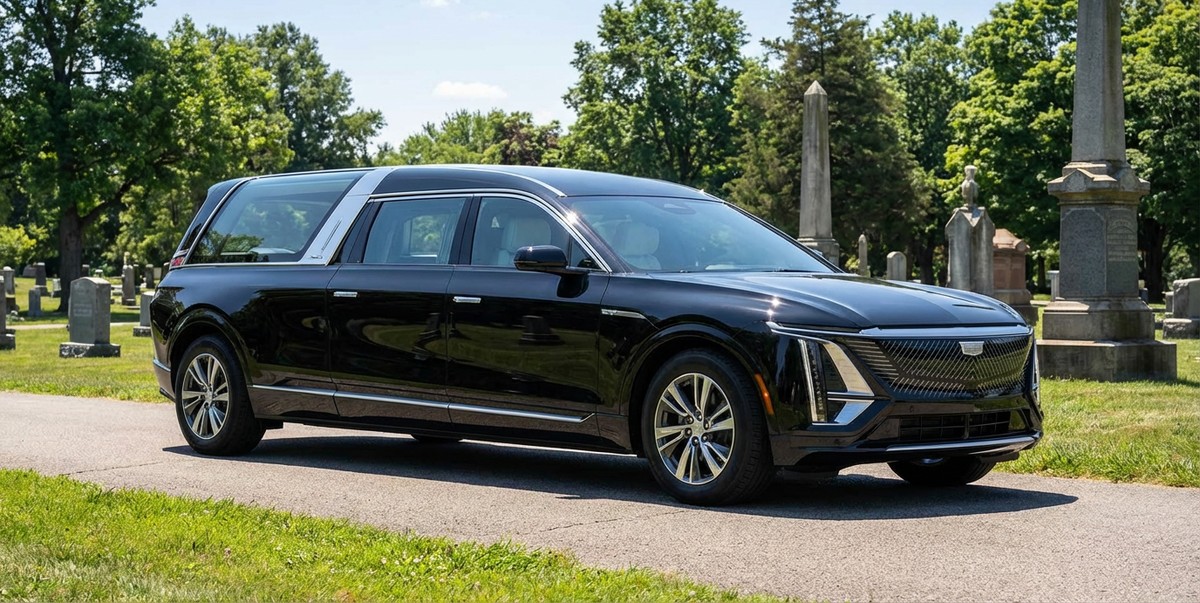
General Motors has officially expanded the reach of its Cadillac Lyriq platform into the funeral industry, offering a rear-wheel-drive professional-grade chassis to custom vehicle builders. This move marks a significant transition for a segment of the automotive world that has long relied on internal combustion engines, signaling that electric vehicles (EVs) are now viable for specialized, low-mileage, high-dignity applications.
### Un tocco moderno su una tradizione senza tempo
The partnership between GM and Wolf Coach Builders, a Florida-based firm with over thirty years of experience, brings the Lyriq to life in two distinct hearse configurations. Il Flagship Legacy offre un’estetica tradizionale e solenne con tetto nero rialzato e rulli interni per il posizionamento della bara. In contrast, the Panorama model features wraparound rear glass, designed for more public viewings or processions where visibility is desired.
This collaboration is not an isolated incident but rather the latest chapter in a decades-long relationship between Cadillac and the funeral industry. Since the 1950s, Cadillac’s commercial chassis served as the backbone for iconic hearses built by firms like Superior, Eureka, and Miller-Meteor. Questi veicoli non erano solo per i funerali; spesso fungevano anche da ambulanze prima che i servizi medici di emergenza venissero standardizzati alla fine degli anni ’70. In alcune piccole città, una sola Cadillac poteva trasportare un paziente all’ospedale e, tragicamente, al cimitero se l’esito fosse stato fatale.
Perché l’elettricità ha senso per i carri funebri
While the shift to electric might seem surprising for a niche market, the operational profile of a hearse makes it an ideal candidate for electrification. I carri funebri non accumulano un chilometraggio elevato, ma richiedono affidabilità a lungo termine e manutenzione minima.
Il propulsore elettrico del Lyriq offre diversi vantaggi distinti per i direttori di pompe funebri:
* Funzionamento silenzioso: L’assenza di rumore del motore contribuisce a creare un’atmosfera più serena e rispettosa durante le processioni.
* Low Maintenance: With fewer moving parts than a traditional internal combustion engine, the vehicle requires less routine servicing, reducing downtime.
* Immagine professionale: Il design elegante e moderno del Lyriq proietta un senso di dignità e discrezione contemporanee.
Impatto culturale e patrimonio iconico
Il carro funebre Cadillac occupa un posto unico nella cultura automobilistica, simboleggiando dignità e rispetto piuttosto che un semplice trasporto. Questa associazione si estende oltre l’uso del mondo reale nella cultura popolare. L’esempio più famoso è l’Ecto-1 di Ghostbusters, originariamente un carro funebre Miller-Meteor Duplex bianco del 1959. The vehicle’s iconic status highlights how deeply embedded these cars are in the public imagination, serving as symbols of both the solemnity of death and the whimsy of fiction.
While other cultures have their own unique funeral transport traditions—such as Japan’s ornate, temple-like hearses or the Isle of Man’s motorcycle sidecar coffins—the American preference for the Cadillac remains strong. Il carro funebre elettrico Lyriq garantisce che questa tradizione continui ad evolversi, fondendo il rispetto storico con la tecnologia moderna.
Conclusione
L’introduzione del carro funebre Cadillac Lyriq rappresenta un’evoluzione logica e rispettosa per il settore funerario. By combining the brand’s historic association with dignity and reliability with the practical benefits of electric propulsion, GM is providing a solution that is both functional and fitting for the final journey. As the automotive landscape shifts toward electrification, even the most traditional sectors are finding new ways to honor the past while embracing the future.