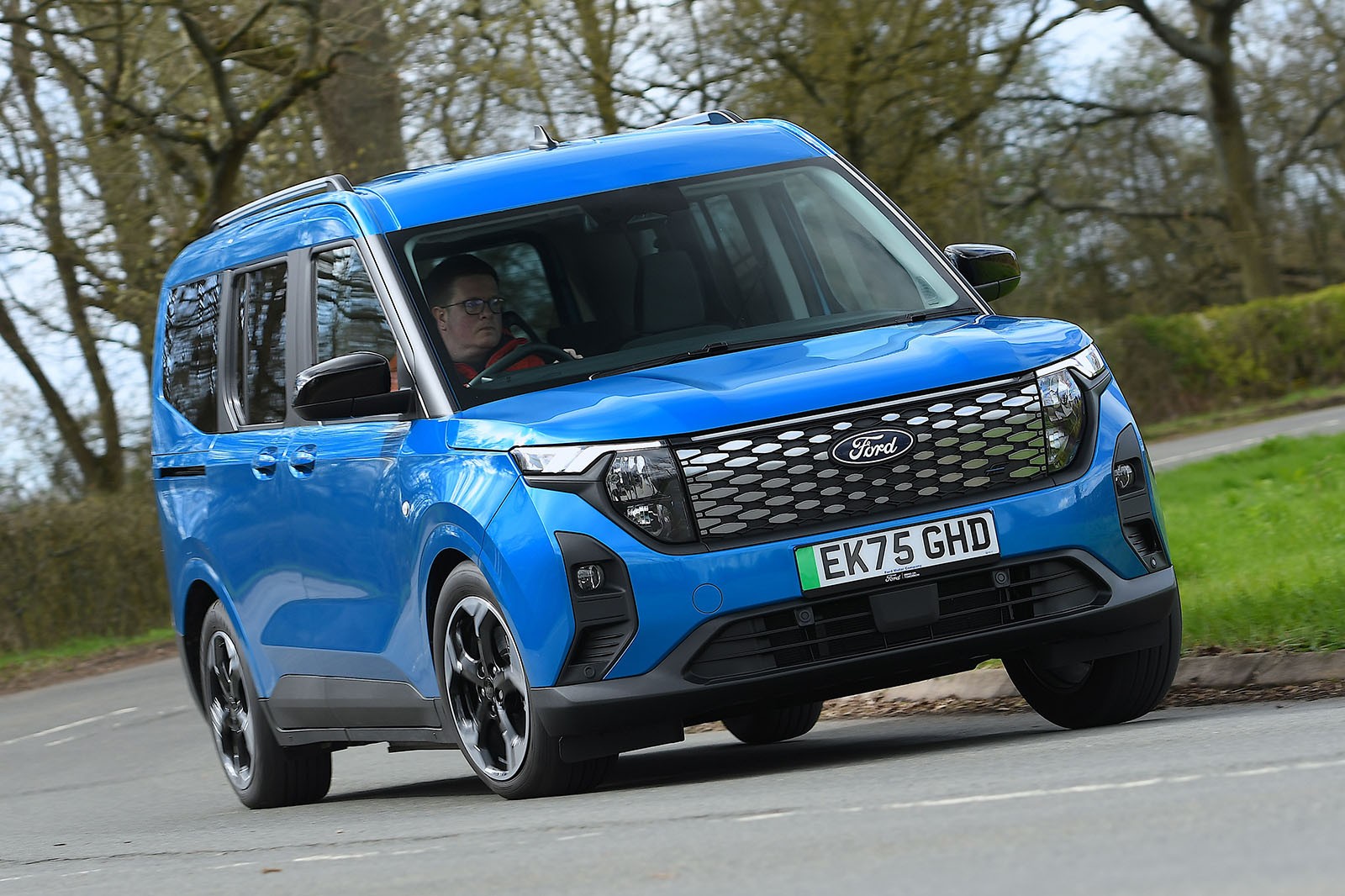
The Ford e-Tourneo Courier represents a distinct evolution in the compact commercial vehicle market. Unlike its larger siblings, the Transit and Tourneo Connect, which are co-developed with Volkswagen, the Courier is built on Ford’s proprietary “Global B-segment” platform. This chassis, a veteran of Ford’s small car lineup since the 2002 Mk5 Fiesta, has been stretched and reinforced to support a boxy, all-electric body.
For businesses and families needing a versatile small van, the e-Tourneo Courier offers a compelling mix of urban agility and electric efficiency. However, it makes specific compromises in cargo versatility and range that buyers must weigh against its superior driving dynamics.
Powertrain and Range: The 2026 Update
The heart of the e-Tourneo Courier is its all-electric powertrain, sharing technology with the Ford Puma Gen-E. The vehicle utilizes a nickel-manganese-cobalt battery pack mounted beneath the cabin floor.
Key Technical Specifications:
* Battery Capacity: The 2025 model year featured a 43.6 kWh usable capacity, offering a WLTP range of 178 miles.
* 2026 Upgrade: Ford has increased the usable capacity by approximately 10%, boosting the claimed WLTP range to 198 miles. New factory orders will receive this updated battery, though dealer stock may still hold older units.
* Performance: The electric motor produces 134 bhp and 214 lb ft of torque. While slightly detuned in peak power compared to the Puma, it retains the same robust torque output, ensuring strong low-end acceleration.
Why this matters: The 198-mile WLTP range is modest by modern EV standards but practical for urban deliveries and short-haul logistics. The increase in usable capacity addresses early criticisms of the original model’s range anxiety, making it more viable for daily commercial use without frequent charging stops.
Interior: Comfort Over Cargo Cleverness
The e-Tourneo Courier is designed primarily as a five-seat passenger vehicle with a high roof and square proportions. While it offers a spacious cabin, it lacks the modular flexibility of key rivals like the Citroën Berlingo or Vauxhall Combo Life.
Cargo and Seating Limitations:
* Fixed Wheelbase: Ford offers only one wheelbase length and a maximum of five seats, missing an opportunity to cater to larger families or specialized cargo needs.
* Loading Area: The rear seats fold and tumble forward, but they do not create a perfectly flat floor. Additionally, there is no option to fold the front passenger seat flat for extra-long items.
* Boot Access: The cargo area is tall and wide, featuring a built-in side compartment for tools or accessories. A raised false floor is available for easier loading of bulky items like mountain bikes. However, the roof-hinged hatchback can be difficult to open in tight spaces, and there is no separate rear window.
A Note on Design Flaws:
The recharging port is located on the nearside rear wing. This placement renders the adjacent sliding door unusable while the vehicle is plugged in—a significant oversight for users who need to access the rear while charging.
Cabin Technology and Ergonomics
The front cabin has been modernized for the electric era, offering a more comfortable and tech-focused environment than its petrol predecessor.
- Digital Interface: A new all-digital instrument cluster and a larger 14-inch “Sync 4” touchscreen dominate the dashboard.
- Ergonomics: The “squircle” steering wheel (flattened top and bottom) improves thigh room for drivers. The center console is modular, allowing users to configure cupholders and tray inserts.
- Comfort: Front seats are firm but supportive, providing adequate adjustability for long drives.
Driving Dynamics: Agile and Responsive
Despite weighing 271 kg more than the petrol-powered Tourneo Courier, the electric version feels significantly quicker and more responsive. The instant torque of the electric motor eliminates the need for gear changes, resulting in smoother acceleration.
Performance Highlights:
* Acceleration: The e-Tourneo Courier reaches 60 mph over a second faster than the 1.0-litre Ecoboost petrol model. It also outperforms the larger Kia PV5 in urban acceleration tests.
* Urban Driving: The vehicle is “nippy” in city traffic, easily pulling away from stops and merging into gaps.
* Highway Performance: Acceleration remains stout up to 50 mph. While it loses some responsiveness above this speed, it handles motorway slip roads competently (50–80 mph in 11.3 seconds, comparable to the petrol version).
Regeneration and Handling:
Drivers can choose between a one-pedal driving mode via the touchscreen or a standard “L” gear for increased regenerative braking when towing or hauling. The lack of manual regen controls is not a drawback; the system is intuitive and predictable.
The suspension tuning is firmer than typical for a utility van, providing excellent body control in corners. While this can result in a slightly choppy ride on uneven roads, it prevents excessive body roll and maintains stability even when heavily loaded. The mechanical grip, provided by 17-inch wheels and Goodyear EfficientGrip tyres, is modest but sufficient for everyday driving without frequent traction control interventions.
Conclusion
The 2026 Ford e-Tourneo Courier is a refined electric vehicle that excels in urban environments. With its improved battery range and agile handling, it serves well for city-based deliveries and daily commuting. However, potential buyers must accept its limitations in cargo flexibility and rear access. It is not the most versatile small van on the market, but it is one of the most enjoyable to drive.