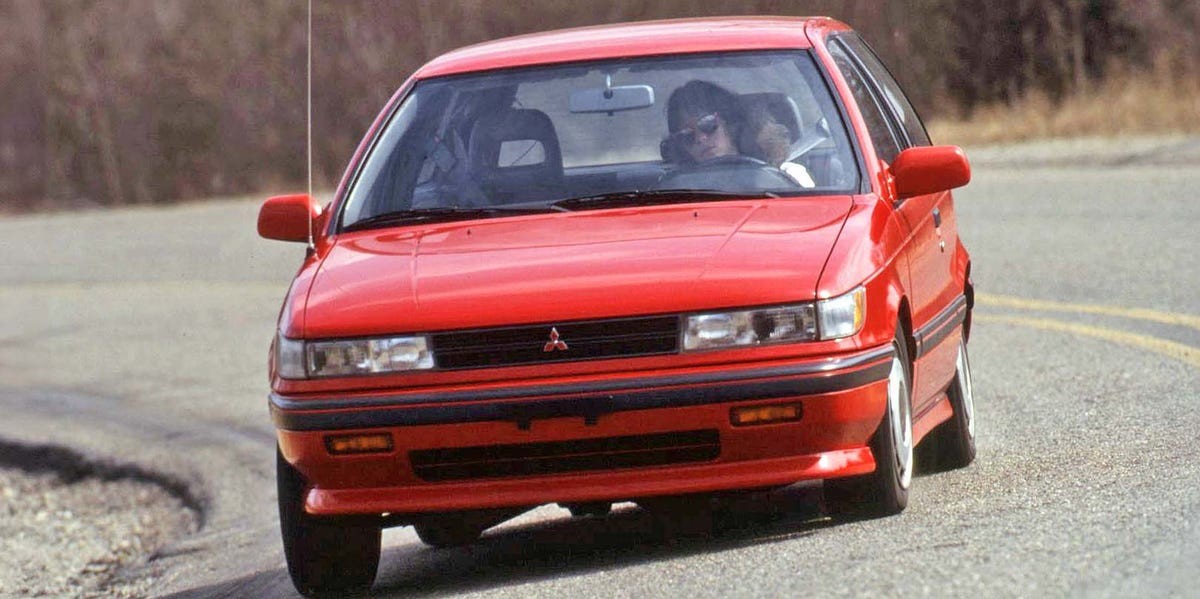
In 1989, Mitsubishi quietly released a vehicle that defied expectations: the Mirage Turbo. This unassuming hatchback wasn’t just a competent performer; it was a class leader, often outperforming more celebrated rivals like the VW GTI 16V, Toyota MR2, and Nissan 240SX. The car’s brilliance lay in its understated design and potent engine, yet it remained largely unknown to enthusiasts. Why? Simply because it wasn’t hyped.
The Mirage Turbo’s appeal wasn’t about flashy aesthetics. Its bodywork was clean, modern, and didn’t rely on aggressive spoilers or decals. Under the hood, however, lay a turbocharged 1.6-liter four-cylinder engine producing 135 horsepower and 141 lb-ft of torque. This translated into impressive performance figures: 0-60 mph in 7.8 seconds, a quarter-mile in 15.9 seconds at 87 mph, and a top speed of 121 mph. These numbers weren’t just good for its class; they were best-in-class at the time.
What made the Mirage Turbo truly special was its balance. The chassis, tuned for sporty handling, provided a responsive and forgiving experience. It gripped the road with 0.78 g of force on the skidpad, yet remained composed even when pushed hard. The steering was precise, and the car exhibited minimal torque steer—a common issue with front-wheel-drive performance cars.
Inside, the Mirage Turbo offered a surprisingly refined cabin. The instrument panel was well-designed, with clear analog dials. The seats were comfortable and supportive, and the overall layout was practical and well-executed. It wasn’t luxurious, but it felt thoughtfully crafted, a rarity in its price range.
The Mirage Turbo’s value proposition was undeniable. With a base price of $11,969 (around $13,550 with options), it undercut many competitors while delivering superior performance. Mitsubishi’s lack of brand recognition in the US at the time likely contributed to its obscurity. Enthusiasts simply weren’t aware of what they were missing.
The Mirage Turbo wasn’t just a fast car; it was a well-rounded package that prioritized driving enjoyment. It was a testament to Mitsubishi’s engineering prowess, yet it remained a hidden gem. The car’s success underscores a simple truth: exceptional performance doesn’t always require aggressive marketing or a loud reputation. Sometimes, the best cars are the ones you have to discover for yourself.
Today, the Mirage Turbo stands as a reminder that greatness can exist in unexpected places. Its story is a testament to the power of understated brilliance, a performance car that earned respect without demanding it.