Mitsubishi has provided dealers with a timeframe for the arrival of its highly anticipated next-generation Pajero (potentially also marketed as the Montero or Shogun internationally), with a global reveal expected in the third quarter of this year. Deliveries could begin before the end of 2024. However, the US market remains a question mark, despite recent trademark re-registration of the Montero name.
Production Timeline and Regional Branding
According to reports from Mitsubishi dealers in Australia, the new Pajero is slated to debut in August or September. Pre-orders are expected to follow shortly after, with initial customer deliveries potentially starting in December. The vehicle will largely retain the Pajero name in most markets, while the UK may see a return of the Shogun badge. The US has been left out of the loop, though Mitsubishi’s recent trademark filing suggests a potential, though unconfirmed, launch in North America.
Shared Platform and Powertrain Details
The new Pajero will utilize the same ladder-frame chassis as the Triton/L200 pickup truck and the new Nissan Navara, a cost-effective move given Mitsubishi’s recent 7.5% dip in global sales last year. This platform will include an advanced all-wheel drive system with selectable drive modes optimized for various terrains: Normal, Eco, Gravel, Snow, Mud, Sand, and Rock.
The engine is expected to be a 2.4-liter twin-turbo diesel producing 201 hp and 347 lb-ft (470 Nm) of torque. Mitsubishi may opt to detune the engine by removing one turbocharger to meet Australian New Vehicle Efficiency Standards (NEVS), though towing capacity should remain consistent at 3,500 kg (7,716 lbs). Electrified powertrains are also a possibility, potentially appealing to family-oriented markets.
Design and Styling
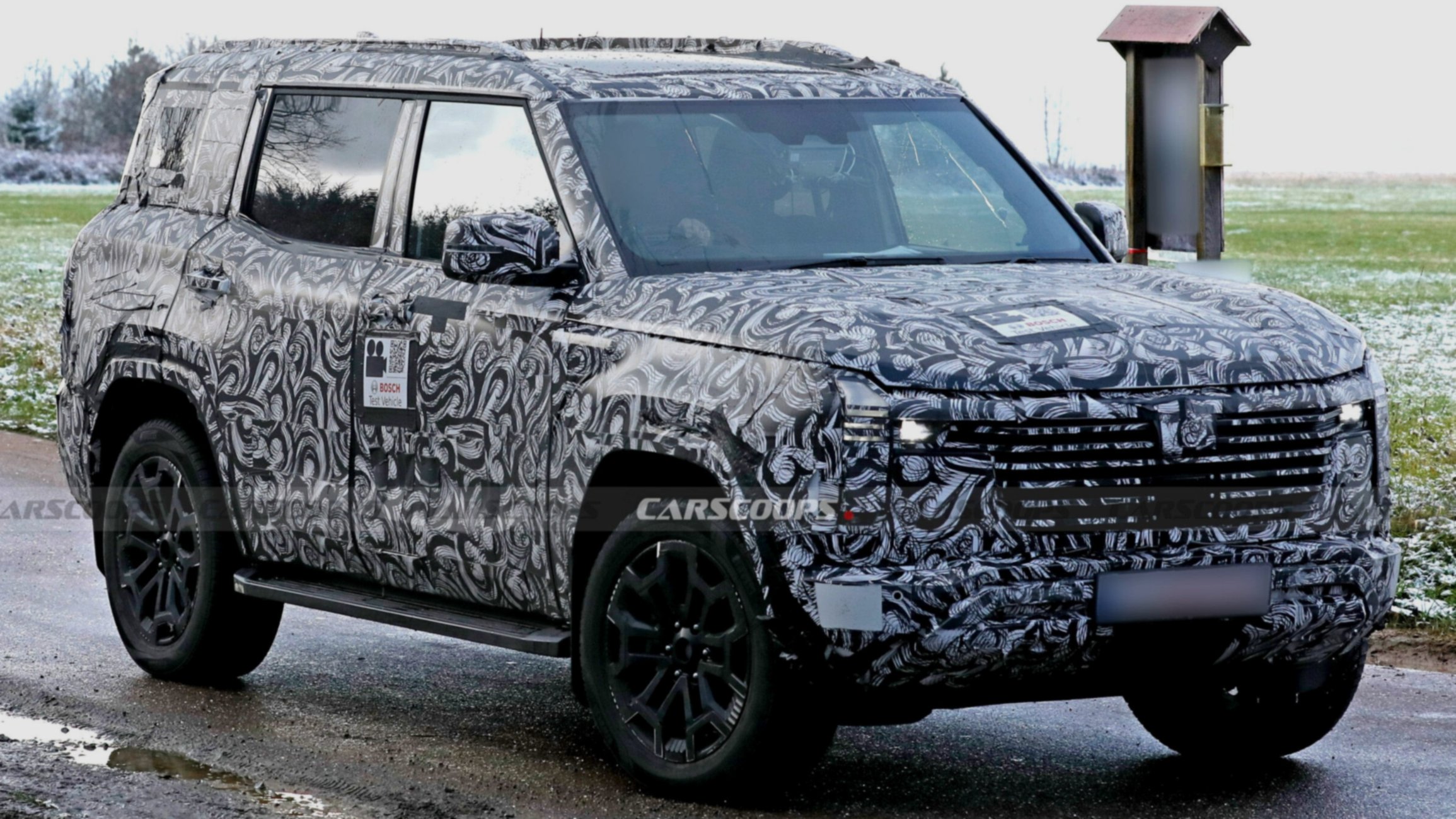
The new Pajero represents a significant departure from its predecessor’s softer design. Spy shots indicate a boxier, more aggressive aesthetic inspired by the Toyota Land Cruiser 250 and Lexus GX. Key design elements include T-shaped LED taillights, a large front grille, squared-off wheel arches, side steps, and roof rails. A split-opening tailgate and panoramic glass roof may be available on select models.
Why this matters: Mitsubishi is betting on a rugged, capable SUV to revitalize its brand. The shared platform keeps costs down while delivering competitive off-road performance. The US market remains a key question: a Montero launch would signal renewed commitment to the region, while continued exclusion could further erode brand presence.
The Pajero’s success will depend on aggressive pricing, effective marketing, and whether Mitsubishi can convince buyers that this new generation delivers the same rugged reliability as its predecessors.