As global fuel economy standards tighten and gas prices remain volatile, the automotive industry is hitting a tipping point. For the compact SUV segment—one of the most competitive markets in the world—hybridization is no longer an optional feature; it is becoming the standard. Nissan is meeting this shift head-on with the 2027 Rogue E-Power, a model that promises to redefine how the SUV delivers power and handles the road.
A Different Kind of Hybrid: The E-Power System
While most consumers are used to “traditional” hybrids—where a gasoline engine and electric motor work in tandem to turn the wheels—Nissan is introducing its third-generation E-Power system to the U.S. market.
The E-Power technology functions more like an extended-range electric vehicle (EV). In this setup:
– The electric motors are the sole drivers of the wheels. There is no mechanical connection between the gasoline engine and the drivetrain.
– The gasoline engine acts strictly as a generator. Its only job is to recharge the battery pack to keep the electric motors running.
– The result is an EV-like driving experience without the need to plug into a charging station.
While specific performance figures remain under wraps, Nissan has confirmed the system will pair a completely redesigned 1.5-liter three-cylinder engine with two electric motors and standard all-wheel drive.
On the Road: Performance and Handling
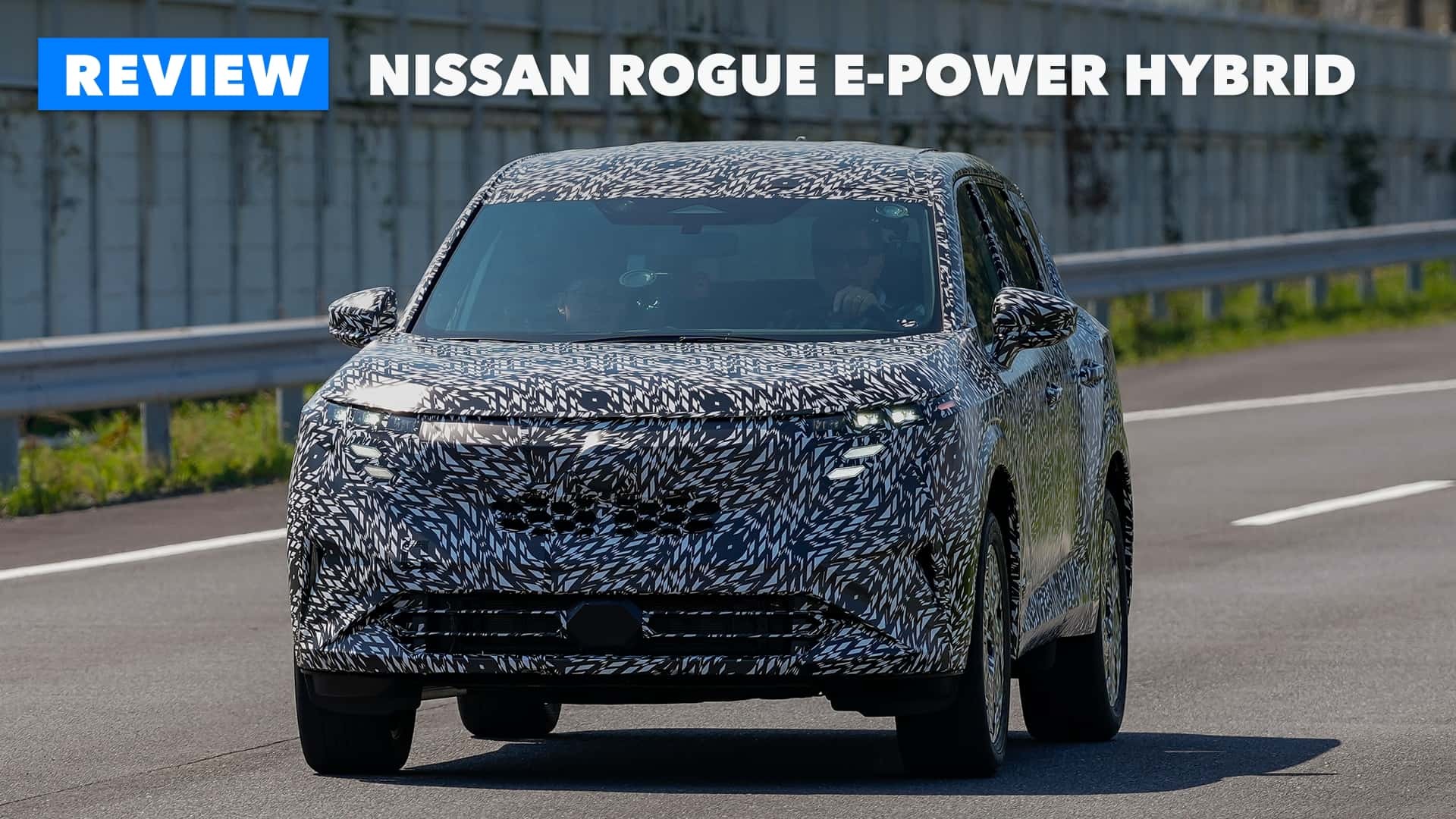
Testing a camouflaged prototype at Nissan’s Japanese proving grounds reveals that the E-Power system fundamentally changes the Rogue’s character.
Immediate Torque and Smoothness
The most immediate sensation is the surge of torque. Because the vehicle relies on electric motors for propulsion, the acceleration is instant and highly responsive, reminiscent of the punchy feel found in the Toyota RAV4 Hybrid. Furthermore, by removing the traditional transmission, Nissan has eliminated the “rubber band” sensation often associated with Continuously Variable Transmissions (CVTs), leading to a smoother power delivery.
Sharper Dynamics
The hybrid powertrain appears to have prompted a complete overhaul of the Rogue’s chassis. Early testing indicates:
– Tighter Steering: The steering feels heavier and more communicative than the current model, offering better precision during maneuvers.
– Improved Body Control: The SUV feels more “planted.” A revised suspension setup reduces body roll, making the vehicle feel more composed when navigating corners.
– Advanced Braking: The prototype features a one-pedal driving mode, allowing the driver to bring the vehicle to a complete stop simply by lifting off the accelerator. Additionally, a new “smooth stop” brake-by-wire system modulates pressure to prevent the jarring “head-toss” effect during deceleration.
The Trade-offs: Weight and Ride Quality
Every technological advancement comes with physical consequences. The addition of a battery pack and dual electric motors inevitably increases the vehicle’s curb weight compared to the current 3,700-pound gasoline model.
This added mass, combined with a firmer suspension tuned for better handling, may impact ride comfort. While the Rogue performed well on smooth test tracks, it felt slightly more rigid when encountering undulations in the pavement. The true test will be how this firmer setup handles the unpredictable potholes and uneven surfaces of everyday public roads.
Summary
The 2027 Nissan Rogue E-Power represents a significant pivot toward electrification, offering a more responsive, engaging, and EV-like driving experience. While questions remain regarding its final weight and real-world fuel efficiency, the prototype suggests a much more refined and modern SUV.
The Bottom Line: Nissan is moving away from traditional mechanical hybrids toward a generator-driven electric drive, prioritizing torque and responsiveness to compete in an increasingly electrified market.