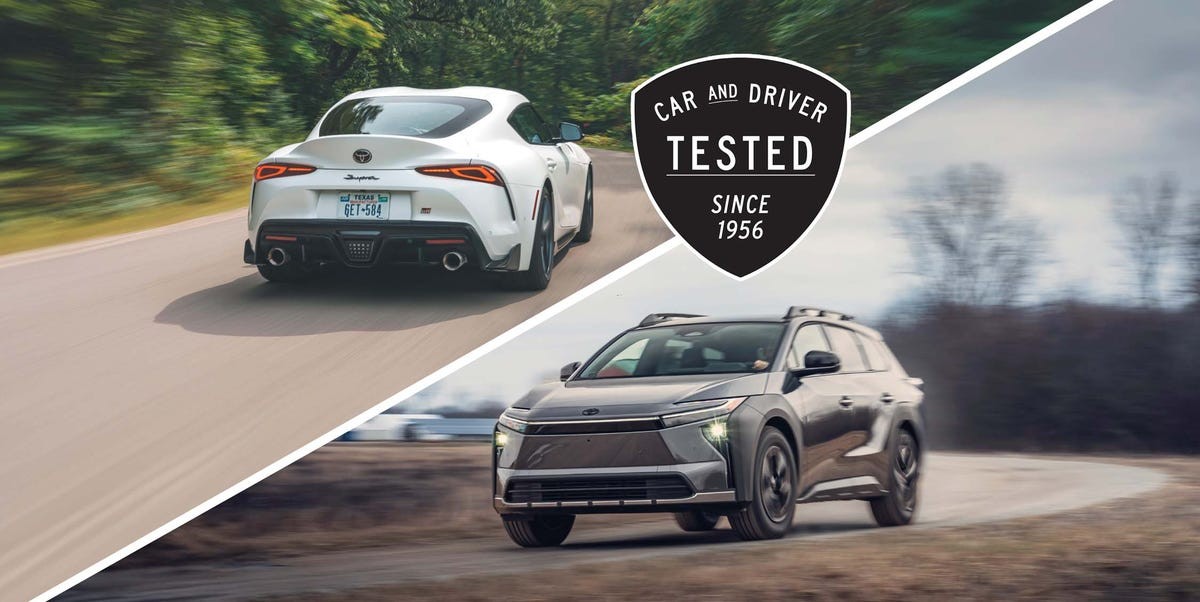
In a surprising turn of events during recent performance testing, the 2026 Toyota bZ Woodland, an electric family SUV, matched the acceleration of a manual-equipped GR Supra in the sprint from 0 to 60 mph.
While these two vehicles belong to entirely different categories—one a heavy electric crossover and the other a lightweight enthusiast’s sports car—their identical launch times highlight a significant shift in how automotive performance is measured in the electric era.
The Numbers: A Tale of Two Powertrains
Both the bZ Woodland and the 382-hp turbocharged six-cylinder GR Supra (equipped with a six-speed manual) clocked a 3.9-second time to reach 60 mph. However, the way they achieved these speeds could not be more different:
- The GR Supra: Relies on a turbocharged 3.0-liter inline-six engine. While it produces impressive power, it must “build” its momentum, as peak horsepower isn’t reached until 6,500 rpm.
- The bZ Woodland: Utilizes two electric motors producing a combined 375 hp. Unlike the internal combustion engine, the electric motors deliver instant torque to all four wheels the moment the driver hits the pedal.
Overcoming Mass with Instant Torque
The most striking aspect of this comparison is the disparity in weight. The bZ Woodland weighs 4,570 pounds, making it over 1,200 pounds heavier than the Supra, which tips the scales at just 3,343 pounds.
Under normal circumstances, such a massive weight disadvantage would make a tie impossible. However, the bZ Woodland compensates for its bulk through:
1. Immediate Torque: No waiting for revs to climb or gears to shift.
2. All-Wheel Drive (AWD): Superior traction that allows the heavy SUV to launch without the wheel spin often seen in lighter, rear-wheel-drive cars.
Where the Supra Reclaims its Crown
While the SUV can match the sports car off the line, the advantage shifts once the vehicles gain momentum. The Supra’s lighter weight and specialized engineering allow it to pull ahead in higher-speed metrics:
| Metric | GR Supra (Manual) | bZ Woodland (EV) |
|---|---|---|
| 0–60 mph | 3.9 seconds | 3.9 seconds |
| 0–100 mph | 9.6 seconds | 10.1 seconds |
| Quarter-Mile | 12.4 seconds | 12.5 seconds |
| Skidpad (G-force) | 1.02 g | 0.78 g |
The Supra also dominates in handling. Thanks to its lower center of gravity, specialized suspension, and high-performance Michelin Pilot Super Sport tires, it maintains significantly higher lateral grip on the skidpad compared to the Woodland.
Why This Matters: The New Performance Standard
This comparison illustrates a broader trend in the automotive industry: the democratization of rapid acceleration. As electric motors become more efficient and widespread, “fast” is no longer a trait reserved for low-slung, lightweight sports cars. Mainstream, family-oriented SUVs can now offer straight-line performance that was once the exclusive domain of high-end performance machines.
While the bZ Woodland can match a sports car’s launch, the Supra remains the superior machine for driving dynamics, handling, and high-speed engagement.
Conclusion: The Toyota bZ Woodland proves that electric powertrains can overcome massive weight penalties to deliver sports-car-level acceleration, even if they cannot yet match the agility and high-speed dominance of a dedicated performance vehicle like the GR Supra.