


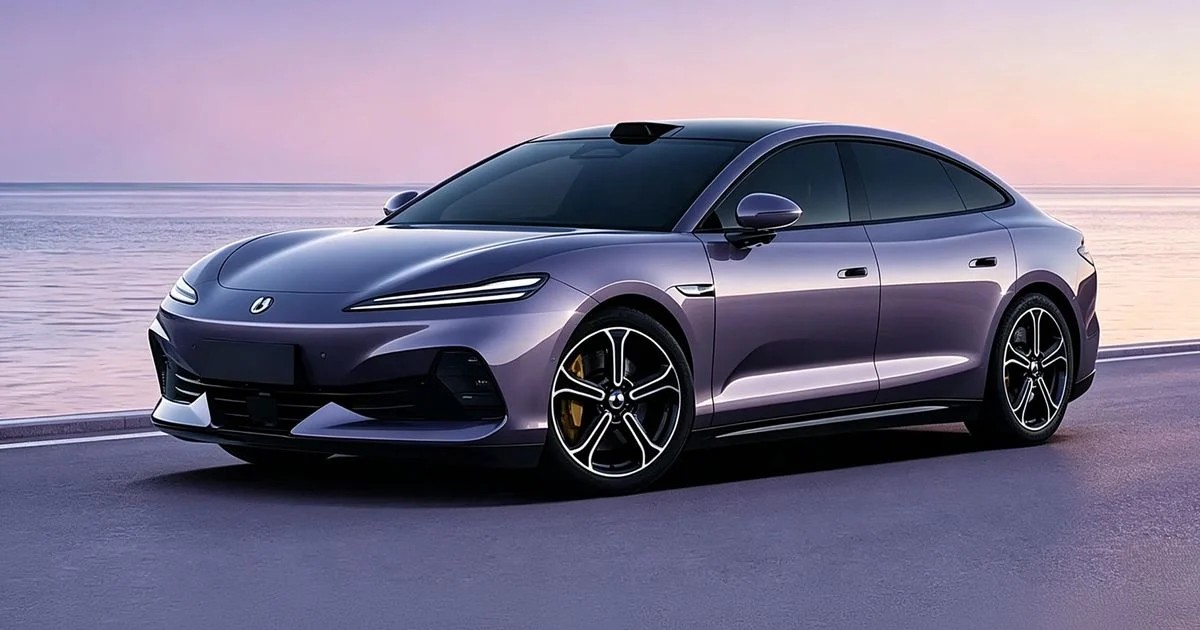
The Denza Z9 S is here. It’s the smaller, sedan-shaped sibling to the Z9 GT wagon hitting Australia soon. The silhouette looks familiar. You know why? Same designer. Same platform. Different proportions.
Former Audi chief Wolfgang Egger styled both cars. He keeps the sharp, futuristic lines but shrinks them down. The Z9 S rides on BYD’s e3 electric architecture. It’s a compact executive sedan, but don’t let “compact” fool you. Under the skin, it’s serious business.
Will Denza bring the Z9 S to Australia?
We don’t know for sure. Not yet.
Denza Australia tells CarExpert they look at every model for local showrooms. That’s the polite corporate way of saying “we’re considering it.” They haven’t confirmed the Z9 S. They haven’t ruled it out.
The brand launched in 2025 with two off-road SUVs: the B5 and the B8. Then came the news that the Z9 GT is coming in the third quarter. July, August, or September. First the electric version. The plug-in hybrid seen in China might come later.
If the Z9 S follows the Z9 GT’s lead, it’ll get the same treatment. And that means flash charging.
Denza Z9 S dimensions and platform specifics
The numbers tell the story of size.
The Z9 S is 5,090mm long. That’s 105mm shorter than the GT. The wheelbase? 3,025mm. A full 100mm less stretch than the Z9 GT’s 3,125mm stretch. It’s also shorter than the existing Z9 sedan by 145mm.
Smaller body. Same bones.
This matters because it changes the weight distribution and the driving dynamics. A shorter wheelbase usually means sharper turn-in. More agility. But Denza is packing horsepower into this chassis, so we’ll see if agility survives the power.
Powertrain options and performance specs
China’s Ministry of Industry and Information Technology filed the details. They’re public now. Three electric powertrains.
The Entry Level
Starts at 320kW. Uses a 102.32kWh Blade battery. It matches the entry-level Z9 GT exactly.
The Mid-Range
Rear-wheel drive. 370kW. Still uses the 102.32kWh pack. That’s a significant power jump over the base model for the same energy storage. Efficiency or raw power? Likely a balance of both.
The Flagship
Here’s the crazy part. Tri-motor setup. 1,194hp. 890kW.
For comparison, the Z9 GT flagship pushes 850kW. It does 0-100km/h in 2.7 seconds. If the Z9 S flagship matches that torque curve, it’s terrifying.
The filings don’t confirm the battery size for the flagship Z9 S. But we have clues. The Z9 GT uses a massive 122.496kW Blade 2.0 pack in its top tier. The Z9 S is rated for 780km on the CLTC cycle. That’s lower than the GT’s 820km. Why? Likely a slightly smaller battery pack or different aerodynamics.
The two single-motor versions claim up to 920km on the CLTC test. That’s huge. Bigger than the Z9 GT’s longest-range version in China (1,036km? Wait, the GT gets 1,036km with its larger pack).
Hold on. The text says the GT gets 1,038km? No, 1,036km. The Z9 S gets 920km. So the smaller car gets less range than the bigger car’s longest range? That implies the smaller battery is the constraint for the flagship, or the tri-motor drains it fast. But the single-motor Z9 S claims 920km. That’s competitive.
Charging technology and Australian infrastructure
When the Z9 GT arrives in Australia, it gets flash charging.
Ten to ninety-seven percent in nine minutes.
That’s not a typo. Nine minutes. For that to work, the batteries and the charging hardware have to handle massive current loads without melting. Denza says it will install this ultra-fast charging gear at its own dealerships first. Then expand to other locations.
If the Z9 S shares that tech, it could be a game-changer for Australian buyers tired of 30-minute stops.
ADAS and features
China specs list 19-inch or 20-inch alloys. Top speed of 250km/h. And the “God’s Eye B” advanced driver assistance system.
What is that? It uses LiDAR. It uses AI modeling. It’s built on faster processors. In China, this stuff is becoming standard in premium EVs. If it comes to Australia, it’ll help with highway assist, lane keeping, and maybe even self-parking. Denza hasn’t confirmed if God’s Eye B makes the cut for local software certification yet.
The broader Denza context
While the Z9 S sits in the sedan segment, Denza is pushing upmarket.
They revealed the Denza Z. It’s a sports car. Available as a Spider (convertible) or Coupe. Four seats. Electric. Aimed at the Porsche 911 crowd.
It’s in right-hand drive. That means it’s likely for the UK market. Denza uses it to spearhead a launch in Britain later this year.
The Z9 S? It stays focused on volume. Executive buyers. Tech early adopters. People who want a 920km sedan that accelerates like a supercar but costs less than a Porsche.
BYD’s market position
This isn’t happening in a vacuum.
BYD is growing fast in Australia. In June 2026, they were just 243 deliveries away from beating Toyota for the monthly sales crown. No brand had been that close since Holden outsold Toyota back in May 2011.
Toyota is the titan. BYD is the challenger with the battery advantage. Every new model—SUV, GT, Sports Car, Sedan—is another wedge in that giant’s side.
The Z9 S is designed for efficiency. For range. For performance. But mostly, it’s designed to fit into showrooms where space is tight but demand is high.
Will you see one in Melbourne? Sydney? Perth?
If Denza wants volume, they need sedan options. The Z9 S fits. The Z9 GT fits. The SUVs fit.
The question is timing. The Z9 GT drops Q3 this year. If the Z9 S is to have any shot, it can’t be too far behind. Otherwise, buyers will just wait for the GT’s smaller, cheaper sibling or pick the GT anyway.
Or they’ll go back to Tesla. Or BMW. Or Mercedes.
The choice


