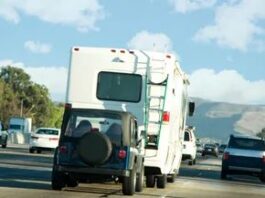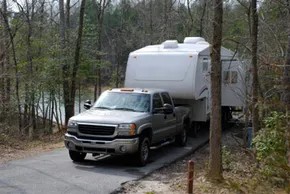
You buy the truck. You get the itch to haul something massive. Then someone drops the term “5th wheel” and you freeze.
It sounds like a part. A spare tire that got left behind in history. But it’s not. A 5th wheel hitch is the heavy-duty connection point between your pickup’s bed and a large trailer. It replaces the ball mount at your bumper with a pivot point right over the rear axle.
Why the name? It mimics the pivot point on an old-fashioned horse-drawn carriage. The carriage had four wheels. The pivot for the tongue was the “fifth” wheel. Same concept. Your truck becomes the horse. The hitch is the pivot.
This setup changes everything about how the trailer handles.
How a 5th Wheel Hitch Differs From a Ball Hitch
Most people know the ball hitch. You drop a ball on your bumper. You hook a coupler. You tow. It works fine for a boat or a small camper.
A 5th wheel hitch works differently. It mounts inside the bed of your truck. Usually, it sits on sliding rails or fixed mounts that bolt to the frame. The hitch itself looks like a large, horseshoe-shaped jaw.
When you back up to the trailer, you’re not hitting a ball. You’re dropping a kingpin —a thick metal pin on the front underside of the trailer—into that jaw. The jaws clamp around the kingpin. Locked in.
This puts the pivot point closer to the truck’s rear axle. That shifts weight distribution. It makes the trailer track straighter. It reduces sway. It feels more stable than a bumper pull ever will.
The Core Components of a 5th Wheel Setup
You can’t just buy a hitch and call it done. You need the whole system. Here is what goes into a proper install.
- The 5th Wheel Hitch: The main unit. The jaw that grabs the kingpin. Some models are fixed. Others slide.
- Mounting Rails: These run along the truck bed floor. They bolt to the frame rails. The hitch locks into these rails. Without solid rails, you have no connection to the truck’s strength.
- The Kingpin: This belongs to the trailer, not the truck. It’s the pin that fits into your hitch. Check its weight rating. Match it to your hitch.
- Slider Hitch: Essential for short-bed trucks. If you have a short bed and a long trailer, the trailer will hit your cab when you turn. A slider hitch moves the hitch forward or backward to create clearance. It lets you turn without smashing your cab into your living room.
Some people confuse this with a gooseneck hitch. They are similar. Both sit in the bed. Both use a pivot point. But a gooseneck uses a ball, not a jaw. A 5th wheel uses a jaw and a kingpin. They are not interchangeable.
Why Drivers Switch to a 5th Wheel Setup
The benefits are practical. Not aesthetic.
Stability. Because the pivot is over the rear axle, the trailer doesn’t swing out as much. It tracks like an extension of the truck. This makes highway towing less stressful.
Capacity. These setups handle heavy loads. We’re talking multi-ton campers. Heavy equipment. The connection is stronger than a bumper mount because it uses the truck’s frame, not just the bumper structure.
Maneuverability. Yes, it’s heavy. But it turns tighter. The pivot point allows the trailer to angle sharply relative to the truck. This helps in tight campsites.
You also get more interior space. Because the front of the trailer sits over the truck bed, you can build that space for storage or living areas. A bumper pull trailer has to taper down to hit the ground. A 5th wheel can be boxy and tall.
The Real Danger: Dropping the Trailer
There is a risk. A big one.
If you don’t latch the hitch correctly, the trailer drops.
It happens. You hook up. You forget to close the jaws fully. You pull forward. The kingpin slips out. The front of the trailer crashes down into your truck bed.
This isn’t a minor scrape. It’s thousands of dollars in damage. To the truck bed. To the trailer frame. To your schedule.
This is why safety systems matter.
Most modern 5th wheel hitches have locking mechanisms. You pull a handle. You hear a click. The jaws lock around the kingpin. You verify it visually. You check physically.
Some setups use safety chains or pins as a backup. These prevent the kingpin from falling completely out if the main latch fails. They don’t prevent the drop entirely, but they control it. They keep the trailer attached to the truck, even if it’s not locked in the hitch.
Never assume the latch is engaged. Always check.
Installing these safety features is non-negotiable. It’s not an accessory. It’s part of the hitching process.
Choosing the Right Hitch for Your Truck
Not all trucks take the same hitch.
Short beds need sliders. Long beds can often use fixed hitches. Heavy-duty trucks (2500, 3500 class) handle the weight easily. Half-ton trucks can tow 5th wheels, but you have to watch the payload. The tongue weight of a 5th wheel sits on your rear axle. It counts toward your payload limit.
Check your truck’s manual. Find the max tongue weight. Find the max towing capacity. Match your hitch to those numbers.
You also need to consider the kingpin height. It must align with the hitch jaws. Too high or too low, and you’ll have leveling issues. Use blocks or a turntable if needed.
It’s mechanical. It’s precise. But once you understand the parts, it’s straightforward. You mount the rails. You install the hitch. You lock the jaws
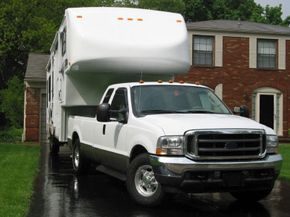

No-Drill Installation for Fifth Wheel Safety Systems
Getting a fifth wheel safety system onto your rig is surprisingly low-effort. Most units are designed to slide right over the hitch you already own. No drilling into the truck bed. No permanent modifications. Just bolt it down.
The hardware usually includes a mounting bracket, crossbars, and a retention mechanism. The bracket sits on your existing fifth wheel. The crossbars span across it, leaving just enough room for the trailer’s king pin to drop in. Then there’s the safety catch. Some models use a one-way door that snaps shut once the pin is seated. Others use a physical barrier that blocks the pin from lifting out if the main latch fails.
You’ll need a wrench set. That’s it. Find a system that adjusts to your specific hitch model—most do—and you’re done. It shouldn’t take long.
Passive Protection, Active Responsibility
Here’s the selling point: these systems are set-and-forget. Once installed, they don’t change how you hitch up. You lower the king pin, latch the hitch, and drive. The safety system just hangs there, watching.
But don’t get complacent.
A fifth wheel safety system is a backup, not a primary locking mechanism. You still have to latch the king pin correctly. If you don’t, the safety system might catch the pin, but you’ve already created a dangerous scenario where the trailer is relying on a secondary device to stay attached.
Inspect the safety system every time you tow. Check for wear, loose bolts, or debris in the mechanism. It’s easy to ignore it because it’s passive. Don’t.
Why Fifth Wheels Remain the Gold Standard
Fifth wheels offer stability that bumper pulls can’t match. The weight distribution sits over the truck’s rear axle, reducing sway and increasing payload capacity. It’s why professional haulers and serious RVers stick with them.
The trade-off is upfront cost and vehicle compatibility. You need a pickup with a bed that accommodates the hitch and a fifth wheel setup. But for large trailers, the safety and handling benefits are undeniable.
Whether you’re towing a 40-foot toy hauler or a lightweight travel trailer, the principles remain the same. Secure the hitch. Check the safety system. Drive carefully.
“The beauty of these systems is that they’re so foolproof that they don’t even change how you attach your trailer to your truck.”
Further Reading on Towing Mechanics
If you want to dig deeper into the physics and safety protocols, these resources cover the essentials:
- How Fifth Wheel Hitches Work
- How Trailer Towing Safety Works
- How Gross Trailer Weight Works
- How to Brake While Towing
- How to Turn While Towing
For community insights and technical specs, check out:
- RVers Online
- Towing World
Sources:
– Blue Ox Bed Saver PinLock Fifth wheel safety system
– Fifth Wheel Towing guidelines from RVers Online