The stunt looked like a death wish waiting to happen. Near the edge of the Sierra Rock Quarry in Placerville, California, a Toyota Tundra CrewMax sat perched precariously close to a 180-foot drop. Attached to the truck’s hitch was a heavy-gauge metal cable. On the other end? A 6,400-pound shipping container dangling over the abyss, held aloft only by a crane’s grace.
Then the crane let go.
Gravity took over. The container plummeted, yanking the truck toward the cliff’s edge. For a split second, the truck’s rear end squatted under the sudden shockload. Then, rubber bit into asphalt. The tires found traction. The Tundra didn’t just hold its ground; it dragged 6,400 pounds of steel debris up and out of the quarry.
It was a visceral display of drawbar pull, the raw force a vehicle can exert to move a load. We see this physics principle in action far more often than the dramatic cliffside demo suggests. But what actually defines it? And how do you figure out if your own rig can handle the job without snapping a frame or blowing a tire?
What Is Drawbar Pull, Really?
Forget the marketing gloss. Drawbar pull is the effective pulling force an engine or motor generates at the point where it connects to a load. In technical terms, it’s the towing force exerted at the coupler in the direction of motion. Think of the drawbar on a tractor, the tow hook on a ship, or the hitch on a truck. It’s measured in pounds (lbs) or Newtons (N).
The Tundra commercial made it look like magic. It’s not. It’s just torque, friction, and weight transfer working in concert.
You witness drawbar pull every day, usually without noticing.
* Railways: Locomotives exert massive drawbar pull to drag hundreds of tons of freight cars along the track.
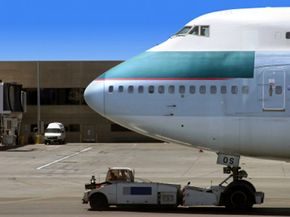
* Airports: Those low-profile tractors pushing or pulling fully loaded jets aren’t just shoving them; they are generating sustained pulling force to overcome inertia on concrete.
* Farmfields: The tractor hauling a hayride full of laughing kids is calculating drawbar pull against soil resistance and weight distribution.
The quarry stunt was just a high-stakes version of these everyday scenarios. The difference? At 6,400 pounds, the margin for error was nonexistent.
Why It Matters More Than Horsepower
Most buyers obsess over horsepower. Horsepower tells you how fast you can go. Torque tells you how hard you can push. But drawbar pull is the practical application of both, modified by traction and gearing.
A vehicle might have 400 horsepower, but if it can’t put that power to the ground without spinning its tires, the drawbar pull drops to zero. The Tundra’s stunt highlighted this dynamic. The instant the weight shifted, the rear suspension compressed. That compression loaded the rear tires, increasing normal force and, consequently, friction. Without that grip, all that engine power would just create smoke.
The Math Behind the Muscle
So, how do you calculate drawbar pull for your specific setup? It’s not just looking up a towing capacity number on a sticker. Towing capacity is about static limits and legal weight ratings. Drawbar pull is about dynamic force.
The fundamental equation involves:
1. Engine Torque: The twisting force at the crankshaft.
2. Gear Ratios: Multipliers in the transmission and differential.
3. Drivetrain Efficiency: Losses from axles, bearings, and fluid friction.
4. Tire Circumference: The physical lever arm applying force to the road.
5. Coefficient of Friction: How well the tires grip the surface (asphalt, dirt, ice).
$$ \text{Drawbar Pull} = \frac{\text{Engine Torque} \times \text{Total Gear Ratio} \times \text{Drivetrain Efficiency}}{\text{Tire Radius}} $$
But there’s

You don’t need a degree in mechanical engineering to figure out how much weight your rig can actually move. Calculating drawbar pull isn’t some black-box mystery. It’s basic physics. Once you isolate the variables, the equation is straightforward.
The core of the calculation starts with tractive effort. This is the gross pulling force generated before any friction gets in the way. To find it, you take the torque of the motor (T) in inch-pounds and multiply it by the total gear reduction (R). This reduction factor includes the transmission and the axle ratio. You then divide that sum by the radius (r) of the drive tire in inches.
The result is your theoretical maximum pull. But vehicles don’t operate in a vacuum.
The Rolling Resistance Factor
That gross number means nothing if you ignore what the tires are fighting against. You need to subtract rolling resistance (RR). This is the force required to keep the vehicle moving over a specific surface.
The formula for net drawbar pull combines these elements:
DP = (T x R ÷ r) – RR
First, calculate the rolling resistance. Multiply the gross vehicle weight (GVW) in pounds by the rolling resistance coefficient of the surface (R). This coefficient is typically expressed as pounds per thousand pounds of weight. Divide the product by 1,000.
If you are using metric measurements, divide by 100 instead. You can find surface resistance values in standard engineering tables. For instance, good concrete has a low resistance value. Dirt or sand is significantly higher.
Let’s look at the numbers. Imagine an 8,000-pound vehicle on good concrete. The resistance value for that surface is roughly 15 pounds per 1,000 pounds of weight.
8,000 x 15 = 120,000.
120,000 ÷ 1,000 = 120 pounds of rolling resistance.
Your vehicle loses 120 pounds of potential pulling power just to roll forward on that concrete.
Putting It All Together
Now, apply that to the tractive effort. Take an example motor with 4,800 inch-pounds of torque. Say the overall gear reduction is 10:1. The drive tire radius is 18 inches.
4,800 x 10 = 48,000.
48,000 ÷ 18 = 2,667 pounds of tractive effort.
Subtract the rolling resistance we calculated earlier (120 pounds).
2,667 – 120 = 2,547 pounds.
That 2,547 pounds is your actual drawbar pull. It’s the net force available to tow a trailer or push a load. The rest is lost to friction and inertia.
This distinction matters. Gross tractive effort tells you what the drivetrain can do. Net drawbar pull tells you what it will do in the real world. If you’re planning a heavy haul, relying on the gross figure is a quick way to stall out or damage components.
Understanding how torque translates to force through gear ratios and tire size helps you size your equipment correctly. It also explains why low-gear crawling works better than high-gear sprinting for heavy loads. The lower the gear ratio, the higher the torque multiplication at the tires, even if engine RPM drops.
There’s a lot more to towing than just this formula. Tongue weight distribution, trailer axle capacity, and braking dynamics play huge roles. But without knowing your base drawbar pull, none of that secondary data matters. You’re guessing. And in towing, guessing leads to broken couplers.
The numbers are there. You just have to do the math.