



Hauling a camper or boat trailer isn’t just about attaching a hitch and hitting the highway. It’s a completely different mechanical dance. You are now maneuvering two separate vehicles linked by a fragile connection, and the physics change instantly. Ignore the small details, and you’ll be fighting sway and discomfort for hours. Ignore the big details, and you’re asking for a jackknife or a rollover. Those aren’t just bad days. They are life-threatening accidents that take out your rig and endanger everyone else on the asphalt.
It looks complex, but the prep work is surprisingly straightforward. It comes down to routine checks and respecting the hard limits of your machine. Before you even turn the key, you need to know three things: how much weight your specific tow vehicle can actually handle without breaking itself, what extra gear you might be missing, and how to drive differently so you don’t lose control. Start here.
10: Understand Your Towing Capacity Limits
The most common mistake? Assuming your truck can tow whatever fits in the bed. It can’t. Your vehicle has a Gross Vehicle Weight Rating (GVWR) and a maximum tow rating. These numbers are not suggestions. They are hard engineering limits set by the manufacturer.
Check your door jamb sticker or owner’s manual. Look for the max payload. If your truck weighs 6,000 pounds empty, and your max payload is 1,500 pounds, you can only carry 1,500 pounds of people, fuel, cargo, and tongue weight. Tongue weight is the downward force the trailer exerts on the hitch ball. It usually accounts for 10-15% of the trailer’s total weight.
If you exceed your GVWR or max tow rating, you aren’t just risking a broken axle. You’re voiding your insurance and guaranteeing brake failure.
11: Verify Your Hitch and Connection
The hitch is the only thing standing between your load and the road. Inspect it. Look for cracks in the welds. Check the receiver tube for rust or deformation. The ball mount must match your coupler size exactly. A 2-inch ball on a 2 5/16-inch coupler is a disaster waiting to happen.
Secure the safety chains. Cross them in an ‘X’ under the tongue. This creates a cradle. If the hitch fails, the chains catch the tongue before it drags on the pavement. Dragging chains mean a sudden stop. A sudden stop means a crash.
12: Check Trailer Brakes and Lights
Most trailers over 3,000 pounds require electric or surge brakes. Test them. Drive at low speed and apply the manual brake controller in your tow vehicle. Does the trailer brake in sync? If it’s lagging, you’re pushing your vehicle’s brakes to the limit. Overheating leads to brake fade. Fade leads to loss of control.
Do the same for lights. You need brake lights, turn signals, and running lights to function. A broken light doesn’t just mean a ticket. It means the driver behind you can’t predict your movements. Predictability is safety.
13: Balance the Load Correctly
Weight distribution isn’t just about total weight. It’s
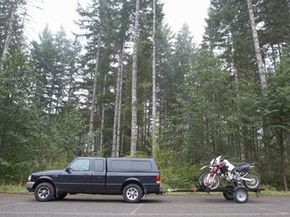

You’ve checked the manual. You know your towing capacity. But knowing the number is one thing; hitting it safely is another. Hauling a massive boat or a fully loaded trailer isn’t just about engine power. It’s about physics. Ignore the distribution, and you’re asking for trouble.
Let’s cut through the jargon. You need to understand three distinct numbers before you even hook up the hitch.
Base curb weight is the baseline. It’s the vehicle itself. Full tank of gas. Oil. Coolant. Transmission fluid. Everything that makes the car run. Add in any factory-installed extras that sit heavy, like a sunroof or a heavy-duty sound system, and you’re still at base curb weight.
Cargo weight is where things get real. This includes you, your passengers, your gear, and those optional mods. It’s the weight sitting inside the cabin and the bed.
Then there is allowable payload. This is the hard limit. The maximum weight your suspension can handle without bottoming out or losing control. If your cargo weight plus passengers exceeds this number, you’re already in the red.
Knowing how much you can tow keeps you legal. Knowing how much you can carry keeps you safe. But neither matters if you load it like a slob.
9: Proper Weight Distribution
Improper loading doesn’t just feel sloppy. It changes the handling characteristics of the entire rig. Too much weight in the back? The front lifts. Steering becomes vague. Braking becomes a gamble. Too much in the front? You lose traction on the drive wheels.
The goal is balance. Not necessarily a 50/50 split—that’s rarely possible or desirable—but a center of gravity that keeps all four tires planted and the trailer tracking straight.
“Towing too much weight can cause a myriad of problems, no matter how big and powerful your engine is.”
Start by loading the heaviest items directly over or slightly ahead of the trailer’s axles. This prevents sway. Sway is the silent killer in towing. It starts small. A gentle wiggle at highway speeds. Then, if not corrected, it amplifies. The trailer pushes the tow vehicle sideways. You overcorrect. The loop tightens. Until you spin out.
Lighter items? Go at the very back or very front, depending on your specific vehicle’s setup, but generally, keep the bulk centered. Distribute side-to-side evenly. One side heavy throws off the tow vehicle’s alignment and stresses the suspension components unevenly.
Check your tire pressures. Both the tow vehicle and the trailer. They should be set for the loaded weight, not the empty weight. Under-inflated tires on a heavy load generate heat. Heat leads to blowouts. Blowouts at 70 mph with a trailer attached are rarely survivable.
Verify your lights. Turn signals, brake lights, running lights. If you’re towing at night, this isn’t optional. It’s survival.
Once you’re rolling, give yourself room. Stopping distances increase significantly. You’re not just stopping a car. You’re stopping a car plus a brick. Plan ahead. Brake early.
And if the trailer starts to sway? Don’t slam the brakes. That makes it worse. Ease off the accelerator. Grip
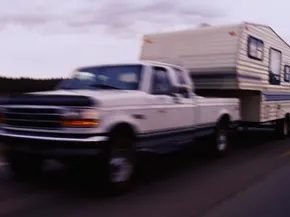
Ever packed a U-Haul? You likely started with the heavy stuff. Couches. Refrigerators. Things that defy physics. You strapped them down because you know a sudden brake can turn a sofa into a missile. Then you tossed in the boxes. You didn’t stack them so high they wobble at the first turn. You kept the center of gravity low.
Towing a trailer isn’t so different. It is moving heavy, unstable objects. But there is no driver inside the box to correct the sway. You are the one correcting it with your hands on the wheel. Getting the tow truck weight distribution right isn’t just about comfort. It is about keeping your tires on the pavement and your insurance premiums intact.
Load the heaviest items first. Secure them. Use heavy-duty tie-downs. If that anchor point shifts while you are doing 65 mph on the interstate, you have bigger problems than a loose box. Place lighter cargo in the gaps. Fill the voids. This prevents the load from shifting as the vehicle bounces over expansion joints or potholes.
The 60 Percent Rule
Where does that heavy stuff go? Front. As in, closer to the tow vehicle.
You want roughly 60 percent of the cargo’s weight forward. This isn’t arbitrary. It pushes down on the hitch. It keeps the front tires of your tow vehicle planted. If you load too far back, the trailer becomes a lever. It pushes up on the hitch ball. The tow vehicle’s front end lifts. Steering becomes twitchy. Unpredictable. Dangerous.
Balance the sides, too. A trailer that lists to one side is a recipe for a rollover. Centrifugal force during a turn will amplify that lean until the tires give up the ghost. Load evenly left to right.
Can You See Anything Back There?
Once the load is secured and the weight is dialed in, you hit the next wall. Visibility.
Most factory mirrors were designed for looking at traffic, not for staring at a 20-foot box of furniture blocking your entire rear window. If you can’t see the road behind you, you are flying blind. Adjusting your mirrors isn’t just about getting a wider angle. It’s about eliminating the blind spots created by the trailer itself. You need to see the lanes adjacent to you, not just the empty asphalt directly behind the bumper.

You know the feeling. You’re behind the wheel of a full-size pickup or a heavy-duty van, and suddenly, that crucial rear-view mirror is useless. It’s blocked by a trailer. Or maybe you’re just driving a vehicle that lacks one entirely. Without a clear line of sight to the cars behind you, changing lanes isn’t just difficult. It’s dangerous.
This is why extended side-view mirrors aren’t just an accessory for towing enthusiasts. They are a safety requirement.
The Two Types of Side Mirrors
Most drivers are familiar with standard side-view mirrors. You see them on every sedan, SUV, and light truck. Their job is simple: help you monitor traffic in the lanes directly adjacent to yours. They keep you aware of the immediate blind spot.
Extended side-view mirrors do more. They are larger. They are taller. And they extend outward from the vehicle body to give you a wider field of vision. This design allows drivers to see both rear-approaching traffic and side-approaching traffic simultaneously. If you are pulling a trailer that completely obstructs your rear window, these mirrors are the only way to see what’s happening behind and to the side of your rig.
Why Standard Mirrors Fail at Towing
When you hook up a large trailer, your rear visibility vanishes. The trailer blocks the rear window. It blocks the standard rear-view mirror. Even if you have backup cameras, they don’t help you judge the speed and distance of cars in adjacent lanes.
Standard mirrors don’t reach far enough back. They leave huge blind spots directly behind and slightly to the side of the trailer. Extended mirrors solve this by angling outward. They provide a panoramic view that standard mirrors simply cannot match.
The Towing Tip: Light Your Way
Need to see the light? Read the next page for another illuminating towing tip.

Night driving demands full visibility. It is non-negotiable. A single burnt-out taillight turns you into a blind spot waiting to happen. Police officers notice flickering brake lights instantly. They also notice missing turn signals. The result is a ticket and a safety hazard for everyone sharing the asphalt.
When you add a trailer to the mix, the stakes rise. You are not just managing one vehicle anymore. You are managing two distinct electrical systems that must behave as one.
Synchronizing Trailer Lighting Systems
Laws vary by state, but the core requirement is universal. Your towed load—be it a boat on a jet ski trailer, a utility trailer, or a fifth-wheel camper—must have its own functioning lights. Brake lights. Tail lights. Turn signals.
But having lights is only half the equation. They must sync.
Consider the mechanics of stopping. When you press the brake pedal in your truck, the signal travels through the wiring harness to the trailer. The trailer’s brake lights must illuminate simultaneously with your vehicle’s. A delay of even a fraction of a second changes the message to drivers behind you. It looks like you are braking, then you are not. It looks like you are braking, then you are. Inconsistent signaling is dangerous.
Proper trailer light synchronization ensures that the entire combination vehicle communicates intentions clearly to traffic.
Most modern setups use a 7-pin connector. This standard plug carries power for brakes, signals, running lights, and often electric brakes or battery charging. If your connector is corroded or your ground wire is loose, the lights will flicker or fail entirely. Check the connection points. Ensure the metal contacts are clean. A bad ground is the most common cause of erratic trailer lighting behavior.
The Role of Tires in Overall Safety
Your lights warn other drivers of your presence and intentions. Your tires actually allow you to execute those intentions.
Brake lights are useless if your tires cannot grip the road. Proper tire maintenance is not just about longevity. It is about stopping power. A trailer with bald tires adds instability. It can sway. It can jackknife. It can cause your towing vehicle to lose control.
This brings us to the next critical safety check.
6: Routine Tire Maintenance
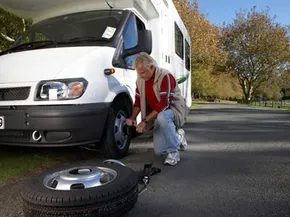
Tire inspections aren’t optional. They’re baseline maintenance. Tires degrade. Rubber hardens. Tread wears. Ignore them and you risk a blowout at highway speeds. A flat tire isn’t just an inconvenience; it’s a potential crash.
Towing changes the math entirely.
You aren’t just managing the tow vehicle’s contact patches. You’re responsible for the towed vehicle’s wheels too. That doubles the points of failure. Proper inflation is the first line of defense. Follow the manufacturer’s specs. Do not guess.
Overinflation makes the ride harsh and reduces traction. Underinflation creates heat buildup and structural stress. Both scenarios invite trailer sway. Sway is deadly. It induces a fishhook effect that can flip a rig. The fix is simple: check the air pressure before every trip.
And don’t forget the hardware.
Tug at the lug nuts. They should be tight. Vibration during transit loosens them. Loose lug nuts mean loose wheels. Loose wheels mean disaster.
Proper tire pressure also impacts braking efficiency. Underinflated tires have higher rolling resistance and less stable contact with the road. This increases stopping distances. It also affects how the tow vehicle distributes weight during deceleration.
This leads directly to the next critical system to monitor.
How to Synchronize Trailer and Tow Vehicle Brakes
Braking while towing is a physics problem. You have two separate mass centers trying to stop at the same time. If the trailer brakes engage too late or too hard, you risk jackknifing. If they engage too early, you might lock up the trailer wheels while the tow vehicle is still pushing.
The goal is synchronization.
Most modern setups use electric or surge brake controllers. Electric controllers allow you to adjust the power sent to the trailer brakes based on road conditions. Surge brakes are mechanical, relying on the inertia of the trailer pushing against the hitch ball to activate the brakes.
Regardless of the system, you must test the setup.
Find a safe, empty lot. Drive at moderate speeds. Apply the brakes gently. Then harder. Observe the behavior. Does the trailer push? Does it pull? Does the tow vehicle nose-dive excessively?
Adjust your controller accordingly. The ideal setup ensures both vehicles slow down at the same rate. This prevents the “push” effect that can lead to loss of control. It also reduces wear on your tow vehicle’s brakes.
Remember, your brakes are your only guarantee of stopping power. Trust them, but verify them.
“Proper tire inflation helps you stop safely, but synchronized brakes ensure you stay in control while doing it.”
Next, we look at load distribution. Weight placement changes everything.

Lighting and braking operate on the same principle: they must function in unison. You don’t just hook up the tail lights and walk away. You also need to address the stopping power of the setup. Most state laws mandate that towed vehicles have their own separate braking systems. It’s not just bureaucracy. It’s physics. If the trailer has no brakes, the tow vehicle has to do all the heavy lifting to stop the combined mass. That puts excessive strain on your engine, transmission, and brake pads.
Poorly functioning brakes are a recipe for disaster. If your brakes fail while hauling cargo, the added weight turns a minor stop into a fatal collision. The inertia doesn’t care about your intentions. It only cares about mass and velocity.
How to Brake Safely While Towing
You need to give yourself plenty of extra room. The rule of thumb is to double your normal following distance. Then double it again.
Applying the brake pedal gently is the best method. Heavy braking increases wear and tear. It also risks jackknifing. Let the momentum bleed off gradually. Avoid sudden stops whenever possible.
Watch your speed. Speed kills.
Another way to cut the risk of an accident is to watch your speed. To read about speed considerations while towing, see the next page.
4: Slow Down
You crave the surge. You hit the throttle. The engine roars, tires grip, and the world blurs past the windshield. That adrenaline spike is primal. It is why we buy performance cars. It is why we stare at horsepower numbers.
But towing? Tow to slow down.
Excess speed is a liability, not an asset. When you attach a trailer, you are altering the physics of your vehicle entirely. You are adding mass. You are changing the center of gravity. You are extending the wheelbase. At highway speeds, these variables stop working in your favor.
The Physics of Sway and Stop Distance
Drag a car behind you. Watch the rear tires. Feel the instability. As velocity increases, trailer sway amplifies exponentially. It starts as a small oscillation. Then it becomes a violent lurch. Then it becomes a death sentence.
Stopping distance is no longer just about your brakes. It is about the momentum of two vehicles. The added weight requires more kinetic energy to dissipate. You need more pavement. You need more time. If you are going fast, you will not stop in time. The trailer will push you. You will fishtail. You might roll.
Maneuvering becomes sluggish. Lane changes require wider arcs. Blind spots expand. The car feels heavy, disconnected from the road.
“Staying cautious and aware is the best way to ensure a safe trip while towing.”
Slow down. It is not a suggestion. It is a requirement for survival.
3: Choose the Right Hitch
The hitch is the anchor. It is the only point of contact between your tow vehicle and the trailer. Get it wrong, and everything else fails.
A hitch is not one-size-fits-all. It is a complex interface. It must handle vertical load (tongue weight). It must handle horizontal forces (acceleration and braking). It must resist lateral sway.
Weight Distribution Hitches
For heavier trailers, a standard ball mount is insufficient. You need a weight distribution system. This uses spring bars to distribute the tongue weight across all axles of the tow vehicle and the trailer.
Why does this matter?
– It levels the tow vehicle.
– It restores steering responsiveness.
– It reduces rear-end sag.
– It improves braking stability.
Class Ratings Matter
Hitches are rated by class. Class 1 handles up to 2,000 lbs. Class 5 handles up to 20,000 lbs. Using a Class 2 hitch for a Class 5 load is catastrophic. The hitch will fail. The ball will shear. The trailer will detach.
Ball Size and Coupler Fit
The hitch ball must match the trailer coupler exactly. Common sizes are 1-7/8 inches, 2 inches, and 2-5/16 inches. A loose fit causes clunking and wear. A tight fit can damage the coupler. Check for play. There should be zero play.
Fifth-Wheel and Gooseneck
For commercial or heavy recreational towing, fifth-wheel and gooseneck hitches are superior. They mount in the bed of a pickup truck. The pivot point is over the rear axle. This provides better

The Hitch Decision: Carrying vs. Distributing
You might be lucky enough to pull into a dealership with a factory-installed hitch already bolted to the frame. Most drivers aren’t so fortunate. For the rest of us, picking the right hitch isn’t just a checklist item—it’s the difference between a smooth cruise and a dangerous sway.
The choice boils down to two specific categories: weight-carrying hitches and weight-distributing hitches.
If you are pulling a light load, a weight-carrying hitch is the standard. The rule of thumb is simple. If the combined weight of the trailer and its cargo sits at 3,500 pounds (1,588 kilograms) or below, this setup handles the job. It’s straightforward. The hitch bears the load directly.
Heavier loads require a different approach. When you exceed that weight threshold, tongue weight becomes a major factor. This is the downward force the trailer’s tongue exerts on the hitch ball. Too much of it, and your tow vehicle’s rear suspension compresses. The front end lifts. The entire rig sags into a wide, unstable “V” shape.
This is where a weight-distributing hitch saves your skin. It doesn’t just hold the weight; it redistributes the tongue weight across the axles of both the tow vehicle and the trailer. The goal is to keep both machines parallel to the ground. Level handling. Predictable braking.
But let’s be honest. Keeping the rig level is only half the battle.
2: Stay Cool
You’ve got the hitch sorted. The load is balanced. Now you have to worry about the machine doing the pulling. Towing puts a massive strain on your engine and transmission. Heat is the enemy. If your cooling system can’t handle the extra load, you’re looking at a catastrophic breakdown on the interstate.
###
Why Practice Towing in an Empty Lot Before Hitting the Road
You think you can just hook up a heavy load and merge onto the highway? Don’t. The smartest move before you face down angry commuters and massive tractor-trailers is to practice. Seriously.
Find a spot with zero traffic. An empty parking lot works. Or a wide, quiet industrial park at 2 AM if you’re that dedicated. Get everything hitched up. Then drive it.
Back up. Yes, you read that right. Back up with the trailer attached. It feels unnatural at first. Your brain wants to steer the trailer where you think it should go, but physics has other plans. Watch your mirrors. Constantly. Notice how the turning radius changes. The back end of the trailer cuts inside the path of your tow vehicle. You need to know exactly how much room you’re giving up before you’re stuck on a tight curve.
Acceleration and Braking: The Physics of Weight
On longer stretches of road, change your rhythm. Accelerate slowly. Brake even slower.
Here’s the hard truth: the more weight you’re carrying, the longer it takes to stop. Plain and simple. Your tow vehicle’s brakes aren’t designed for the mass of a fully loaded camper or a heavy boat. If you slam on the brakes at 60 mph with 5,000 pounds behind you, you’re not just risking damage to your equipment. You’re risking a jackknife scenario. That’s when the trailer swings out sideways. It’s terrifying. It’s expensive. It’s avoidable.
The Right Gear Makes the Difference
Once you’ve dialed in your tow vehicle and secured all the right equipment, these tips stop being survival tactics. They become routine. A bumpy, stressful ride turns into an easygoing cruise.
You don’t need to overcomplicate it. Just respect the mass. Respect the distance. And never assume you’re ready for the highway until you’ve mastered the basics in a safe space.
Where to Go Next
This is just the foundation. Towing involves more than just practice and physics. There are checks, balances, and specific setups that determine whether you arrive safely or end up on the shoulder.
Check the next section for deeper dives into towing essentials. Everything from weight distribution hitches to sway control systems. The details matter. Especially when you’re ten hours from home and the wind picks up.


