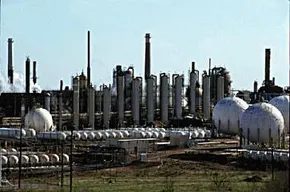
LP gas is a fossil fuel. It sits in the same family as oil and natural gas. Energy companies get it as a byproduct. They don’t usually chase it for profit. But they can’t avoid it.
The source depends on where you look. Most LP gas comes from natural gas extraction. It also comes from crude oil refining. The process mirrors how we get gasoline. But the yields are different.
The Natural Gas Connection
When companies pull natural gas from the ground, the mix is predictable. About 90 percent is methane. The rest is not. That remainder contains various LP gases.
Refineries separate these components. They remove the LP gases before pumping methane into home pipelines. The yield varies. Usually, you get 1 to 3 percent LP gas from the initial extraction [ref].
This is the primary source for many consumers.
Crude Oil Yields
Refining crude oil produces LP gases too. The standard yield is about 3 percent. That number seems low.
It could be much higher. If refineries retooled their machinery to focus specifically on LP-gas extraction, the yield could jump to 40 percent [ref]. Standard operations aren’t built for that. They prioritize other fractions.
The Discovery of Propane and Butane
The industry didn’t always want these byproducts. They were trouble.
Propane and butane are unstable. They evaporate easily. They create high vapor pressures during storage and transport. Early operators had a simple solution. They just let them go.
They “weathered” the natural gas. The LP gases boiled off into the atmosphere. A waste of energy and a safety hazard.
Dr. Walter Snelling changed the game. He was an inventor and scientist for the U.S. Geological Survey. He started experimenting with condensed waste materials in 1910.
He saw potential.
By 1911, he had samples of propane and butane. He envisioned a storage and distribution system. He didn’t just want to trap the gas. He wanted to move it.
He got a patent in 1913. His method for producing LP gases became the blueprint [ref].
Now that we know where it comes from, let’s look at what we actually do with it.