


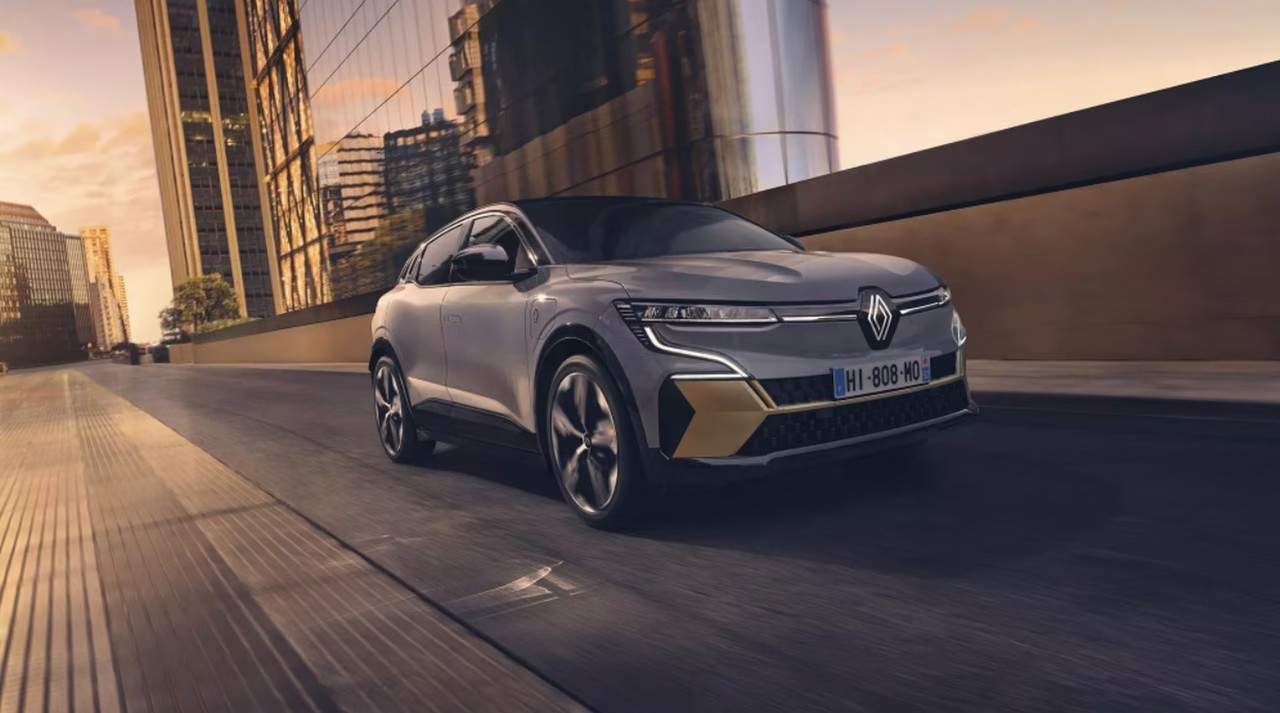
The wait is over. Renault has officially unveiled the new Megane E-Tech at the 2021 Munich Motor Show. Now you can order one yourself. This is no longer just a concept. This is a real car with real specifications and prices.
The lineup is simple. Three different equipment levels. Three electric transmission options. You can get 130-220 horsepower. Depending on the specification, the range is 294 km – 454 km.
Let’s look at the entry points.
Starting price and Equilibre Specs for the starting level
Renault Megane E-Tech Equilibre from 35,200 euros.
Please note that the prices are before government incentives. You are looking at a possible 6,000 euro eco-bonus and a 2,500 euro trade-in offer, but they have not been “deducted” from this figure.
Under the hood you can see the base engine E-TECH EV40. This is a 130 horsepower (96 kW) unit. Works with normal charging. Don’t expect this particular setup to work wonders on the road. You are looking at a range of 294–302 km.
Charging with a 7kW AC wall box takes 7 hours to fully charge. It’s slow by modern standards, but fine for an overnight charge.
Equilibre’s interior does not skimp on basic functionality. What you get:
- 18-inch aluminum wheels.
- Reversing camera.
- 9-inch infotainment touchscreen.
- Gray melange textile interior (recycled material).
- There are six default colors for the away paint. Glacier white is standard.
Want a different color? An additional fee of 650-850 euros is charged for this.
The Middle Ground: Techno Trim Details
If you switch to the Techno version, the price jumps to 38,200 euros.
This is also the same basic engine. E-TECH EV40 130 hp. Same range. AC charging time is the same 7 hours. The changes are primarily visual and technical.
You’re now riding on 20 inch aluminum wheels. The infotainment screen has been enlarged to 12 inches. The cabin is equipped with a six-speaker sound system and automatic air conditioning.
Big update? aesthetics. Renault offers 19 exterior colors with this trim. Eleven of them are two-tone. These two-tone paints cost 1,020–1,250 euros.
Look behind the car. Techno features a full LED light strip with a 3D “moire” effect. Looks sharp. It differs from the basic model.
Top-Tier Iconic Configuration and additional features
The iconic finish starts at 40,900 euros. This is the flagship. It’s everything Renault believes its customers want.
We start again with the E-TECH EV40 130 ch engine. Yes, the base engine is also available in top trim. But you can change it.
The Iconic gets:
・Diamond-cut 20-inch aluminum wheels.
– The front bumper has a special F1 Gold strip.
– Riviera black and titanium seat.
– 12 inch screen combined with Harman Kardon premium sound system.
– Automatic temperature control function.
The color options are flexible. Choose from six two-tone paint systems at no extra charge. As a premium spec, it looks pretty good.
Understanding the Powertrain Options
You no longer have to stick with the base EV40 engine. Renault offers three different electric configurations in its product range. This is where the range and charging speed make a big difference.
1. E-TECH EV40 (130 hp/96 kW) – Enhanced charging
– Range: 294-302 km.
– AC charging: 22 kW (much faster than the usual 7 kW).
– DC fast charging: 85 kW. A 200-kilometer drive with a highway charger takes only 30 minutes.
2. E-TECH EV60 (220 hp/160 kW) – Super Charging
– Range: 428-454 km.
– AC charging: 7 kW.
– DC fast charging: 130 kW. You can add 300 km in 30 minutes.
3. E-TECH EV60 (220 hp/160 kW) – Best charging
– Range: 428-454 km.
– AC charging: 22 kW.
– DC fast charging: 130 kW. You can add 300 km in 30 minutes.
Switch to the EV60 motor for double the power. It nearly doubles your range. Charging speeds have been improved across the board, especially with the top-of-the-line charging model’s 22 kW AC option.
Interiors and materials
Renault claims that although the exterior dimensions are more compact than its predecessor, the interior is more spacious. What’s the trick? There is no centralized transmission tunnel. The floor is flat.
“The interior atmosphere of the Mégane e-Tech Electric takes its inspiration from furniture, leaving room for the use of environmentally friendly materials.”
We use a wide selection of 100% recycled fibers. The top-of-the-line Iconic trim features Nuo material. It is made of laser-cut basswood leaves glued together with a special glue. It is unique. It’s tactile.
This concept car was revealed at the end of 2020 under the name eVision. This summer, pre-production prototypes were driven around France. Now you can see the actual car.
Orders start in February 2022. If you’re waiting for a deal or a price drop, please be patient. However, the technical details have been decided for now. The choice is clear.
User interface actually used
Forget the chrome. The interior is dominated by three different panels. Behind the steering wheel is a 12.3-inch instrument panel. Depending on the upholstery you choose, you will see a 9 inch or 12 inch touchscreen in front. Run OpenR. This is basically Android Auto in a suit.
Connect your Google account. Now you have Play Store. We have Google Assistant. Use Google Maps for navigation. Very familiar. It is very safe. it works.
From the outside, the body is smooth. The door handle does not protrude. It stays level with the metal plate until you touch it. They open automatically. Tesla uses the same trick. It looks smooth. Heals without penetration. If you walk up to it and pull the handle, it will give way. Simple. Effective.
Renault’s latest electric game is more than just a name change. The Megane e-Tech Electric is built on a purpose-built CMF-EV platform, which shows intent. This is not a random thought. It was built from the ground up for electric power, not modified from a combustion engine.
There are two distinct variants. The top model has a 160 kW motor that produces 217 horsepower. 60 kWh battery included. The range of this combination is expected to reach 450 km according to WLTP standards. It is enough for a serious commuting, and in some cases you can use it without panic for weekend trips.
Entry level reality check
Not everyone needs speed. The base model steps down to 96 kW motor, 130 hp. The battery shrinks to 40 kWh. This is the entry point. For city dwellers who value efficiency over acceleration. Although the range numbers for this trim were not revealed in the initial data, the reduction in capacity suggests a shorter daily radius.
Trim Levels and Timing
Buyers choose from three specific trims. Equilibre, Techno, Iconic. Each level adds technology and convenience features, but the details are still unclear. Color options are limited but the color choices are limited. Buyers can choose from six exterior paints. This is not a rainbow. This is a choice.
Commands open in February. That’s the immediate next step for interested buyers.
Pricing Silence
Here’s the catch. Renault has not yet announced prices. We know the specifications. We know the trims. We know the launch window. But the price is still a mystery. This creates a strange sense of tension. Enthusiasts want to know if it’s worth the money. Critics are trying to figure out if the price is justified. The silence is intentional. Or maybe they’re just being careful.
The CMF-EV platform is the foundation. Without it, the car is just a crossover with a battery.
If the price is wrong, does 450km matter? Probably not. But if the price is right, the 217 horsepower version could shake up the compact EV segment. February tells.
The platform that changes everything
You can’t talk about the E30 without talking about the steering rack. BMW engineers didn’t just make adjustments. They moved it. At that time, the rack of most cars were hidden behind the engine like shy customers. BMW moved it forward. Right between the engine and the gearbox.
Why is this important to you behind the wheel? Weight distribution. The center of gravity dropped. The front feels light. It’s not actually lighter, but it is “less bulky”. Steering feedback isn’t filtered through miles of shafts and plastic bushings. It’s very direct. Spin the wheel. The wheels turned. I feel like I’m leading a path I haven’t walked since the 1960s.
“The E30 doesn’t just handle corners, it communicates through them.”
This setup allows for reinforcement of the front subframe. A stiffer mounting point means less flex during emergency braking. The front end remains stationary even when you enter a corner at 60 mph. Meanwhile, the dynamic design of the rear still confuses purists.
Discussion about the rear suspension
The torsion beam problem needs to be solved. Or what enthusiasts call a “semi-independent” rear. Some critics say it’s outdated. They refer to the double Wishbone setup of contemporary models like the Alfa Romeo 75 and Mercedes 190E. Of course, in theory, multi-link suspension offers a more perfect geometry.
But look at the real world. The E30’s torsion beam is simple. Production costs are low. It is sturdy. Also works as a track day toy for the daily driver. The key is spring rate and anti-roll. BMW tuned it to slightly understeer. Predictable. Safe. But when you turn off the Traction control (which is rare, if ever), the rear steps out with a grace that belies its simplicity.
How comfortable is the ride? It is very solid. German firm. You can feel every expansion joint on the highway. Know every curb. But that strength brings data. We know exactly what tires do. No fluffy shit. Just feedback. Raw, unfiltered feedback.
Engine compartment: S14 and M10
Behind the scenes, the story splits. On the other hand, we have the S14. It is derived from the M10, but has a DOHC cylinder head and four valves per cylinder. It screamed. Redline 7000 rpm. It pulls hard. It’s not as fast in a straight line as a V8, but it feels “fast”. Narrow power range. It must be kept in this area. Shift early. Keep the revs high.
And then there’s the M10 itself. Old SOHC engine. torque. Reliable. Easy to modify. If you’re looking to build a drift car or track weapon on a budget, the M10 is still your best bet. Swap in a larger cam. Add bigger carbs. It’ll make power. The S14, on the other hand, focuses on precision. This is a sports car engine. The M10 is a workhorse machine dressed up for parties.


