We often think that race car tech stay on the track. This is not true. Innovation trickles down. Sometimes it’s great. Sometimes it’s just expensive.
Run-Run-flat tires were once a novelty. These are now standard equipment on many mid-range and luxury cars. Consumer Reports states that prices are dropping as the technology matures. The range of availability is expanding. However, before you buy a car with these features, you need to understand the trade-offs.
The core promise is simple. Drive 50 miles on a flat. This is the standard range for most brands. Some claim up to 200 miles. This grace period changes everything.
Imagine a blowout at 70 mph. There is no time to panic. You don’t have the luxury of drifting into three lanes and hitting the side of the road. You don’t risk losing control on a narrow exit ramp. You don’t fumble with a flimsy jack next to speeding semis. Just keep driving.
“Run-Run-flat tires provide a valuable service. They reduce the immediate and dangerous effects of a puncture and basically give drivers extra time.”
This is not science fiction. It’s engineering born from necessity.
The Engineering Behind the Empty Ride
NASCAR tires have used multi-chamber designs since 1966. Goodyear pioneered this. If one chamber fails, the other chamber takes over. Prevent a catastrophic loss of control.
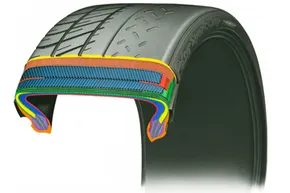
Public run-flats is simpler. They don’t need complex chambers. They need rigidity.
The tires support the weight with air pressure. The rubber just keeps its shape. Lose the air, and the structure collapses. This is why yoga balls fail when they deflate. It cannot support your weight. It doesn’t roll smoothly.
Most Run-flat tires don’t happen suddenly. They are the result of a slow leak. The pressure drops. The tire weakens. Then potholes and debris deliver the final blow. The tires cannot bear the load.
Run-Run-flat tires solve this problem by strengthening the sidewalls. It becomes rigid. It supports the weight of the car even without air. The bead seal is also reinforced. It maintains contact with the wheel rim. In regular tires, the seals often fail when the pressure drops. In run-Run-flat tires, the intersection of rubber and metal is designed to last.
Why do ordinary tires break?
We think of blowouts as sudden events. They rarely are.
A tire with low pressure is already compromised. The air chamber is under-stressed. The sidewalls are flexing more than designed. Heat builds up. The structure weakens.
In the event of puncture damage, the tire has no reserve strength. It buckles.
Run-flat technology intervenes here. It allows the tire to bear the load without air. This is not just convenience. It is safety.
The hidden costs of security
You lose visual cues. A normal flat tire sags. You see it. you fix it.
Run Run-flat tires look good. They are good drivers. Until it doesn’t work.
That’s why tire pressure monitoring systems (TPMS) are uncompromising. Run flat cannot be confirmed visually. Requires a sensor. A warning is required.
Maintenance costs are higher. You are addicted to electronic devices. But the price is worth it.
Can run-Run-flat tires handle potholes as well as new tires? No. Low air pressure can affect driving comfort. Tires don’t slide over debris the same way. Gives more effect to the suspension.
That’s why you should drive carefully. You track your stress. You accept this compromise.
Extent of reality
Estimated mileage is 50 miles. This is not a guarantee.
Circumstances matter. Speed is key. Load is important.
Some tires claim to last 100 miles. 200 for others. However, driving with a flat tire is not normal driving. This is an emergency operation.
You are not on a business trip. You have been evacuated.
This technique works. It can save lives. A secondary disaster was avoided. It pushed back onto “that guy’s” shoulder with the broken jack.
But it’s not magic. This is physics. Physics demands respect.
Earn even more miles. You get more security. I’ll pay more.
Is it worth it? For many it is. For others, it may not be so.
The trend is clear. Running tires are becoming more and more common. Prices are going down. Availability is improving.
However, the burden on drivers is still heavy. The pressure must be monitored. You should drive carefully. You must accept these restrictions.
This is not a perfect solution. Never.
But in a world where every second counts, a little extra rubber can be the difference between trouble and nightmare.
Next, let’s look at the disadvantages. Driving comfort. Payment. Alternative.
Remember here. If a tire breaks, you probably won’t need to stop.
But it is necessary to think.
The hidden costs and compromises of run-flat tires
Run-flats offer convenience, but they also place more demands on comfort, efficiency and the wallet. If you value a smooth ride or strong handling, you should look elsewhere. The architecture of a run-flat have a completely different structure. The sidewalls must be very stiff to function without air. This stiffness transfers any bumps and irregularities directly to the frame. The result is a harsh and unforgiving driving experience that feels boring.
Performance is also affected. These tires do not have the special tread patterns found in traditional sports or off-road rubber. Even enthusiasts who accept the ride quality trade-off often complain about basic grip issues. The additional weight of the reinforced side walls also affects fuel economy. Efficiency is only lost by carrying more mass.
Driving on a Donut: what to expect after a flat tire
When a run-flat takes a nail, its job is to get you to safety. That’s it. Not suitable for long drives. Once a tire is punctured, its performance potential drops sharply. If the sidewalls are hard, the ride is uncomfortable and the noise is louder. Drivers need to understand that this is a temporary solution and not a way of life. Tires must be replaced immediately. Avoid using damaged runflats as a long-term solution. Loss of pressure affects control and safety.
Price tag and missing spare parts
The financial hit is not limited to the purchase price. Run-flat tires are significantly more expensive than regular tires. The wear surface also wears faster, so you may have to replace all four corners sooner than expected. This “empty wallet” reality is a common complaint among owners.
Many vehicles with run-flat tires do not have a spare tire in the trunk. Instead, it comes with a sealant can and a small compressor. This creates a different kind of anxiety on the road. If the sealant fails or the compressor fails, you’re in big trouble. The ease of not changing tires comes with relying on temporary fixes.
Repairability and long-term durability
A puncture in a run-flat are usually irreversible. With regular tires, you can save money by using cheaper plugs, but run-flat tires usually need to be replaced. This reduces the long-term value proposition. However, technology is constantly developing. As tires become more common, prices drop.
Frequently asked questions about run-flat tires
How much do run-flat tires cost?
As the technology becomes more common, the prices go down. Although they are still more expensive than conventional tires, the gap is closing.
How far can you go on a run-flat tire?
In general, you can drive about 50 miles or 80.5 kilometers after a flat tire. This range assumes you maintain low speeds (typically around 50 mph).
Can run-flat tires be repaired?
In general, it is not. A puncture in a run-flat tire, it usually requires a complete replacement. Regular tires can usually be fixed with inexpensive plugs.
Does Goodyear sell run-flat tires?
Yes. Goodyear has been manufacturing run-flat technology since 1966.
Are run-flat tires worth it?
It provides a buffer against panic. Instead of ending up in a dangerous place, you have time to pull over safely or reach a mechanic. For some drivers, this sense of security justifies the extra cost and difficult driving.
The question is whether the convenience outweighs the daily discomfort. It can be for city commuters. For weekend warriors, probably not. You have to decide which is more important: a smooth ride or the ability to keep going.