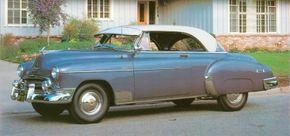
The 1950-1952 Chevrolet Bel Air is often remembered as one of the first affordable hardtop convertibless, but that designation ignores a much longer, messier history. The concept didn’t just appear. It evolved over a decade. It went from a high-risk cutting-edge innovation to a mainstream staple. This transition is worth breaking down.
Car manufacturers are naturally cautious. They approach new ideas with both hope and deep skepticism. When the public bites, you get windfall profits. If they don’t, there will be cuts and reputations will be destroyed. General Motors knew this. Still, they were surprisingly optimistic about their 1949 “hardtop convertibles.”
Consider the context. Soft-top cars were a logistical nightmare. Rain? A problem. Winter? An ordeal. Better roads and higher speeds made open-air driving less practical after World War II. The solution seemed obvious. Build a sedan without B-pillars, but with a windows that rolled down completely. You get the airy feel of a convertible with the safety of a fixed steel roof. It’s a hybrid style. Practical. Comfortable. Safe.
That sounded like a good idea. Maybe too good. Others thought the same.
Chrysler had already experimented. In 1946, they built seven hardtop prototypes by grafting Club Coupe steel roofs onto Town & Country convertibles. However, the decision was made against series production. In the same year, Kaiser Motor Corporation spun off its own variation. The Kaiser Virginian “Hard Top” was essentially a convertible with solid, glass-filled B-pillars welded to a canvas-covered steel top. Interesting stuff.
But it was GM who pioneer the concept in significant volume. Detroit’s rule of thumb was to bring risky new ideas to lower volume models. You want to minimize the loss of design, tooling and marketing resources in an innovation bombs. So GM tested the waters with senior Buick, Cadillac and Oldsmobile models.
The results were modest, but promising. Mid-year introductions and high prices kept sales low in 1949. However, the numbers were enough to signal demand.
- Buick Roadmaster Riviera: 4,343 units
- Cadillac Series Sixty-Two Coupe de Ville: 2,150 units
- Oldsmobile Futuramic 98 Holiday: 3,006 units
These numbers encouraged GM to move forward with cheaper, higher volume junior versions for 1950. This is where the Chevrolet Bel Air comes in.
The 1950 lineup included:
- Chevrolet Styleline DeLuxe Bel Air
- Oldsmobile Futuramic 88 DeLuxe Holiday
- Buick Super Riviera
- Pontiac Chieftain Catalina (four variants)
The stage was set. The hardtop was no longer a niche experiment. It became a standard feature. It wasn’t a question of whether it would work. It was about who could make it work best for the everyday driver.
The Original Bel Air: Hardtop Pioneer and Sales Champion
The 1950, 1951 and 1952 Chevrolet Bel Airs were not only popular, they were very popular. They helped bring GM back to the top of the sales charts. When the first wave of affordable hardtops hit the market in 1950, the Bel Air was king. It sold 74,634 units and helped Chevrolet reclaim the “USA-1” title from Ford. This number likely underestimates the true impact of cars. Showrooms can be filled with buyers who buy a Bel Air and get behind the wheel of a regular coupe or sedan. With a year to go before hardtop rivals Ford and Plymouth arrived, the Bel Air had no direct competition.
A style that stands out (without trying too hard)
At first glance, the 1950 Bel Air looks like any other Chevrolet. We used a new Hull shell for 1949 and made a few small adjustments to separate it from each other. You’ll notice differences in details, such as a winged bonnet emblem instead of the usual bow tie, a vertical bar under parking lights and a grille without “teeth” under the centre bar. The tail light lenses have been raised higher. This is another small but noticeable change.
The roofline echoes the high-end Riviera and holiday style. It has chrome-framed side windows and a surrounding rear window, separated by bright vertical partitions near the edges. It’s smooth. This is sporty.
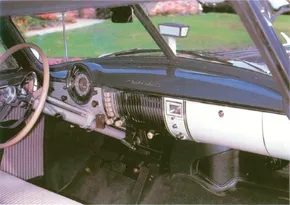
The luxurious feel inside is obvious. The seat is wrapped in real leather and surrounded by a beautiful terry cloth rope. The upper also mimics a convertible, and the Chrome crossbars suggest a soft-cover mechanism. Without the B-pillar, the frame loses some stiffness. Chevrolet has added reinforcements to the convertible body, but it still has some flexibility. これはピラーレスデザインのトレードオフであり、ハードトップを何十年も悩ませてきた癖です.
under the hood? We have machines from 1950 in stock. But a new Powerglide automatic could make as many sales as a new style.
価格と進化
ベルエアホテルは最高のロケーションにあります。 価格は1,750ドルから2,000ドルの範囲で、シボレーのコンバーチブルと標準的なスポーツクーペのほぼ中間です。 安くはありませんが、意欲的な愛好家にとっては手の届かないものではありません。
この方式は非常にうまく機能したため、シボレーは銘板を拡大しました。 1953 年までに、ベル エアのラベルはコンバーチブルと最高級セダンに適用されました。 この階層は 1958 年まで続きました。
その名前はどこへ行ったのでしょうか?
成功は複雑さを生み出します。 シボレーは 50 年代後半にインパラを導入しました。 その後、60 年代半ばには、より豪華なオプションとしてカプリスが登場しました。 これらの新しいモデルは、ベルエアを食物連鎖のさらに下位に押し上げました。 素晴らしいスポーツクーペから、ベースラインの4ドアセダンになりました。
70年代初頭までに、ベルエアという名前は完全に消えました。 それは話題をさらったハロー製品として始まりました。 それは結局、一連のより大きな、より高価なブランドの脚注となった。
1950 年のベル エアは、スタイルと利便性が生の馬力よりも早く販売を促進できることを証明しました。
ピラーレス設計が今後 20 年間のアメリカの自動車開発をどの程度決定するか理解している人はいますか?おそらくそうではありません。 彼らはちょうど買える値段のピカピカの車を目にしたのです。 それで十分です。
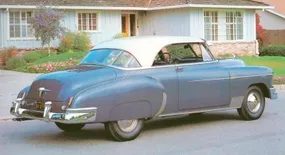
Let’s get one thing straight. When Chevy enthusiasts talk about the Bel Air, they aren’t thinking about the square-jawed giants of the late fifties or the muscle-car era. They’re thinking back. Specifically, to the 1950, 11951, and 1952 models. These weren’t just cars. They were attitude on wheels.
Why do these specific years command such respect? It’s the styling. It’s the confidence. The early Bel Airs had a jaunty stance that looked faster than it actually was. The interiors were spiffy, a word that feels outdated but perfectly captured the chrome-soaked, fabric-heavy luxury of the post-war era. Few cars, trend-setters or otherwise, have offered such a pure driving experience. They were pleasant. They were approachable. And they started a legacy that would define Chevrolet for decades.
Why the 1950-1952 Chevrolet Bel Air Matters
You might wonder, what made the early Chevrolet Bel Air so special compared to later models? The answer lies in the transition from the traditional “pontoon” body style to the sleeker, more modern designs that followed. The 1950 model was the first year for the new Bel Air nameplate, slotted as the top-tier trim in the Styleline Deluxe series. It wasn’t a distinct model initially. It was a badge of honor.
The 1951 and 1952 models refined this formula. They tightened the body lines. They improved the suspension. They made the car easier to drive without stripping away the charm. This was the sweet spot for collectors. Not too boxy. Not too flashy. Just right.
1950, 1951, 1952 Chevrolet Bel Air Specifications
For those digging into the details, here is the breakdown of the specs that made these cars tick. Note that the Bel Air was a trim level, not a standalone model, during these years. This affects how you see the data.
Engine Options
All three years shared a common powertrain foundation, though horsepower ratings shifted slightly with minor updates.
-
Base Engine: 235 cubic-inch inline-six “Turbo-Fire”
- Horsepower: 105 hp @ 3400 rpm (1950-1952)
- Torque: 180 lb-ft @ 1800 rpm
- Why it mattered: It wasn’t fast. But it was reliable. And it could haul a family of five up a hill without breaking a sweat.
-
Optional Engine (1952 only): 235 cubic-inch inline-six with two-barrel carburetor
- Horsepower: 115 hp
- Impact: A modest bump. Enough to make highway passing less of a gamble.
Transmission
- Standard: Three-speed manual column shift
- Optional: Two-speed Powerglide automatic (introduced late 1950, more common in 1951-1952
1950-1952 Chevrolet Bel Air Technical Specifications
The shift from manual to automatic gearing defined the early Bel Air experience. The 1950, 1951, and 1952 models introduced the Powerglide automatic transmission, a move that changed how drivers interacted with the road. It wasn’t just about ease of driving. It was about comfort.
Here is the hard data for those first three years of the Bel Air nameplate.
Engine and Powertrain Options
Chevrolet offered two distinct engine choices during this period, depending on whether you wanted to shift gears yourself or let the car do the work.
Standard Engine:
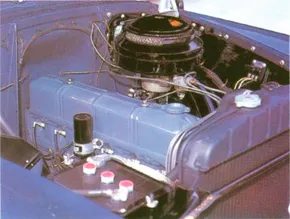
An overhead valve inline-six. Displacement sat at 216.5 cubic inches. Bore and stroke measured 3.50 inches by 3.75 inches. Output was a modest 92 bhp. This configuration required a manual transmission.
Optional Engine:
For those opting for the Powerglide automatic transmission, Chevrolet upsized the engine. Displacement jumped to 235.5 cubic inches. Bore and stroke increased to 3.56 inches by 3.94 inches. Power rose to 105 bhp.
Transmission Choices:
– 3-speed manual gearbox (standard)
– Deluxe 2-speed automatic (optional)
The Powerglide was simple. Two speeds. No clutch pedal. It made city driving less of a chore.
Chassis and Suspension
The ride quality relied on a straightforward setup.
Front Suspension:
Upper and lower A-arms. Coil springs. This design provided better wheel control than older beam axles.
Rear Suspension:
Live axle. Semi-elliptic leaf springs. Robust. Simple. Easy to repair.
Brakes:
Drum brakes on all four corners. Front and rear drums. Stopping power was adequate for the speeds of the era, but modern drivers should expect a firm pedal.
Performance and Dimensions
Wheelbase:
115.0 inches. A solid foundation for a sedan.
Curb Weight:
3,215 lbs. Heavy. But not absurdly so for a full-size American car of the time.
Performance Figures:
– Top Speed: 85 mph. Cruising was effortless. Hitting top speed required open road.
– 0-60 mph: 16.0 seconds. Slow by modern standards. Fast enough for 1950.
Why It Matters
The 1950-1952 Bel Air wasn’t a muscle car. It was a commuter. A family hauler. But the introduction of the Powerglide automatic transmission marked a turning point. It signaled that Americans wanted convenience. They wanted to drive without thinking about gears.
The 235 cubic inch engine paired with the Powerglide became a legend. Not because it was fast. But because it was reliable. And it was everywhere.
If you are looking for specs on later models, this is the baseline. The foundation was laid here.
The Powerglide didn’t just change how you shifted. It changed how you lived with your car.
For more on classic vehicles, check