



We’ve all been there. You were standing in your driveway, juggling grocery bags, cardboard boxes, and enough furniture to fill a studio apartment. Your hands were screaming. You drop a carton of milk. It’s very messy. This is dangerous. Your body is not built to handle that kind of torque.
Cars are no exception. When a car, SUV or truck is overloaded, it causes more than chaos. This puts a strain on the engine. You are frying the transmission. At a speed of 110 km/h, there is a risk that the tire will break.
The real measure here is the payload. In addition to the load you are carrying, consider the total weight that your vehicle is designed to carry. Before you start throwing your things on the bed, remember that the heaviest thing in your car right now is the passengers.
Calculate payload capacity
Figuring out how much your tow vehicle can carry is not a guesswork. It’s about math. The most important thing is to know where to look for important numbers.
Start with the driver’s side door frame. Look for the “Manufacturer Recommended…” sticker. No, wait. that’s not the one. Look for the sticker “This vehicle must not contain more than…”. That’s the money quote. Find the maximum gross vehicle weight (GVWR) of your vehicle.
This is the breakdown. GVWR is the vehicle’s maximum safe weight. These include:
- The curb weight (the car itself, fluids, full tank of gas)
- Payload (passengers and cargo)
You can find the actual payload capacity by subtracting the vehicle’s weight from the GVWR. It’s simple enough. However, the weight of the vehicle is not always mentioned on the door sticker. Check the user manual or contact your dealer.
Load capacity = GVWR – curb weight
But this is where most drivers fail. The weight of the car does not include the driver. This does not include dogs. It doesn’t include the coolers in the back. You have to take responsibility for everything.
Passengers are counted as payload. A 200-pound driver is 200 pounds of payload. So is the 150-pound passenger next to them. Add their gear. There were also children carrying backpacks in the back seat.
If you buy a truck with a 1,500 pound capacity, you can’t load 1,500 pounds into it and expect it to be safe. You have to reduce the weight of the people already in the car. For two adults and one child, that’s a weight saving of around 500 kilograms. You’re left with 1,000 pounds for cargo.
Check the label again. Look for the total combined weight of occupants and cargo. Some manufacturers state this directly. Others force you to do the subtraction. In both cases, the calculation is the same.
Don’t forget your tires. The load capacity is also limited by the load capacity of the tire. If you often transport heavy loads, standard road tires may not meet your needs. Requires tires with a higher load index. Check the sidewalls. Look for codes like “LT” or letters for specific load ranges on light trucks.
And don’t forget the tongue weight if you’re towing. That would be a completely different calculation. but
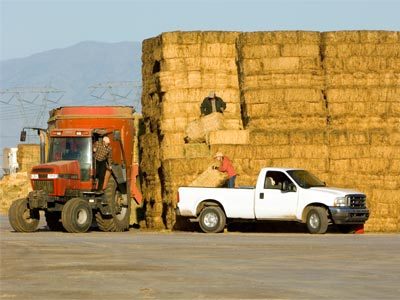

You don’t need a degree in engineering to figure out how much weight your ride can actually haul. You just need two numbers.
Find your gross vehicle weight rating (GVWR).
Find your curb weight.
Subtract the latter from the former. Done.
It sounds too simple because it is. But getting the numbers right matters. Overload your suspension, shred your tires, or worse, compromise your braking distance, and that simple math becomes a very expensive lesson.
The Two Numbers You Need
Gross vehicle weight rating is the hard limit set by the manufacturer. It’s the maximum safe weight for the entire vehicle. We’re talking about the metal shell, the engine, the fluids (oil, coolant, brake fluid), a full tank of gas, plus every person, tool, tent, and rock hammer you throw in the back.
Where do you find it?
Check the sticker on the driver’s side door jamb.
Look in your owner’s manual.
Search online databases specific to your make and model.
Curb weight is what the vehicle weighs when it’s sitting there, doing nothing. It includes all necessary fluids and a full fuel tank. It excludes passengers and cargo. This number varies slightly between trims and options, so check the spec sheet for your exact configuration if you can.
The Formula
Let’s say you’re driving a truck with a GVWR of 3,500 pounds (1,588 kg). The curb weight sits at 3,000 pounds (1,361 kg).
3,500 – 3,000 = 500 pounds (227 kg).
You have 500 pounds to play with. That’s it.
What Counts as Payload?
This is where people get tripped up. Payload isn’t just the stuff in the bed or the trunk.
It includes:
– The weight of the driver.
– The weight of every passenger.
– All cargo (tools, gear, passengers’ bags).
– Any aftermarket additions (lift kits, heavy bumpers, winches, dual rear wheels).
If you add a 100-pound winch to your bumper, that’s 100 pounds gone from your payload capacity. If your family weighs 600 pounds total, and your calculated payload is 500 pounds, you’re already 100 pounds over limit with an empty bed.
Truck Payload Specifics
Pickup trucks are often marketed with inflated towing numbers, but payload is the silent killer. Many half-ton trucks have payload capacities that range wildly depending on the cab size, bed length, and engine choice.
A crew cab with a short bed and a heavy V8 might have a payload capacity of 1,500 pounds. A regular cab with a long bed and a base four-cylinder might hit 2,000 pounds or more. The chassis is lighter, so it can carry more.
Don’t assume your truck can haul a loaded trailer and a full crew. Towing weight and payload weight are separate limits. Exceeding your payload capacity stresses the rear springs, compresses the
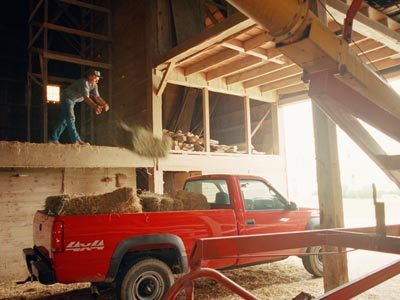
The definition of payload shifts dramatically depending on whether you are looking at a pickup truck or a standard passenger vehicle. You wouldn’t haul eight-foot sheets of plywood for a home renovation in a compact station wagon. Conversely, you likely don’t need a heavy-duty diesel rig just to move a few bags of groceries from the store.
Trucks are generally built for heavier, bulkier cargo. In the United States, these vehicles are classified by their Gross Vehicle Weight Rating (GVWR). The U.S. Department of Transportation (DOT) and the U.S. government break this down in two overlapping ways: by specific weight classes and by broader duty categories.
Truck Weight Classes Explained
The government divides maximum truck GVWR into eight distinct classes. Understanding these numbers helps you determine which vehicle fits your load requirements.
| Weight Class | GVWR |
|---|---|
| Class 1 | Up to 6,000 pounds (2,722 kg) |
| Class 2 | Up to 10,000 pounds (4,536 kg) |
| Class 3 | Up to 14,000 pounds (6,350 kg) |
| Class 4 | Up to 16,000 pounds (7,258 kg) |
| Class 5 | Up to 19,500 pounds (8,845 kg) |
| Class 6 | Up to 26,000 pounds (11,793 kg) |
| Class 7 | Up to 33,000 pounds (14,969 kg) |
| Class 8 | Over 33,000 pounds |
These classes map directly to duty categories used by the DOT:
- Light-duty trucks: Classes 1 and 2.
- Medium-duty trucks: Classes 3 through 5.
- Heavy-duty trucks: Classes 6 and above.
Knowing where your truck lands in this hierarchy makes it easier to calculate how much payload you can safely carry.
“Knowing where your truck falls within these categories will make it easier for you to determine how much payload you can afford to carry during your trips.”
But trucks aren’t the only vehicles with limits. On the next page, we break down how much you can actually carry in a car.
Car Payload
Passenger vehicles operate under a different set of constraints. While they won’t match the sheer volume of a Class 8 hauler, understanding the difference in payload capacity is key to avoiding damage to your suspension or brakes.
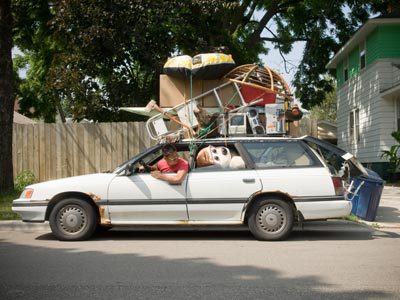
当我们驾驶轿车时,我们大多数人都不会因为有效负载而感到压力。 您不会真的坐在那里思考:“我们包装的重量是否达到了最大允许重量?” 当您的配偶和孩子系好安全带进行公路旅行后。 卡车有严格的限制。 汽车? 他们看起来很宽容。 当然,有些行李很重。 但任何重到足以突破车辆极限的东西通常都无法放入后备箱。
这是一个危险的假设。
错误地装载汽车会影响您的计划。 它改变了车辆的操控方式。 它始于一个简单的事实:人算作有效负载。
汽车制造商不会猜测。 他们使用标准数字。 每个座位 150 磅 (68 公斤)。 这是基线。 您拥有的每个空座位不仅仅是空的空间。 这是您可以使用的承重能力。 如果您的后排座椅是为三名乘客建造的,并且目前是空的,那么您坐在那里的潜在负载为 450 磅(204 公斤)。 使用它。 或者不这样做。 但要知道极限是存在的。
忽略它。 把后座装满装备。 添加驱动程序。 添加前排乘客。 现在您可能徘徊在车辆的总有效负载能力附近。 推过去吗? 悬架下垂。 刹车很困难。 处理变得不可预测。
我们已经覆盖了轿车。 家庭搬运工。 日常司机。
但当你站起来时会发生什么? 你能把更多的重量加到更大的车辆上然后就到此为止吗?
SUV loading capacity description
SUVs can carry a lot more cargo than sedans, right? The short answer is yes. The geometry is different. The chassis structure is more rigid. The tires are sized to withstand a heavier load. But “much” does not mean “infinite”. It simply means a higher ceiling.
The principles remain the same. Number of passengers. Gear counts. Fuel is important.
When you look at an SUV, you realize that it is a vehicle designed with practicality in mind. This utility comes at a price. Greater self-weight. Higher Gross Vehicle Weight Rating (GVWR). The difference stakesween these two numbers is the payload.
Let’s take a mid-size SUV as an example. Assume a GVWR of 6000 lbs. The weight of the car is 4500 lbs. This gives it a payload capacity of 1,500 pounds. Does not include driver, passenger seat and gas tank. You can have 1,200 pounds of freight left. Even so, I have a lot of luggage. However, the second and third rows were full. More children. More sports equipment. Add a cooler. This buffer wears out quickly.
Overloading your suitcase is not the only danger. It’s all about weight distribution. An SUV with a high center of gravity will handle differently than a coupe with a low center of gravity. Load it too high up. Or it’s too far. and the risk rollover. Or at least severe body sway can occur during emergency maneuvers.
Payload is not a suggestion. This is a hard limit set by engineers. Exceed it. You can stakes your safety on the sticker number on the inside of the driver’s side door frame.
Next, let’s look at how these boundaries change when you enter the world of trucks and heavy transport vehicles. The numbers are growing all the time. stakes
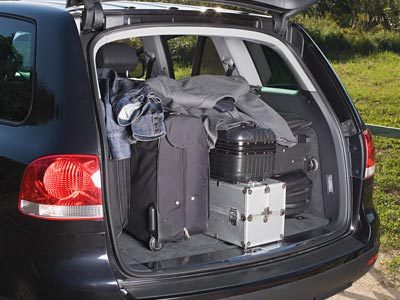
If you think of SUVs as perfect hybrid, you can imagine the best of both worlds. You want to combine the hauling ability of a pick-up truck with the passenger comfort of a sedan. It’s a tempting setup. In fact, SUVs are typically positioned in the somewhere in the middle. Of course, they can usually carry more cargo than a regular car. But it’s not a flatbed.
Most SUVs have easy space management. Fold down the rear seats to create a spacious storage area. This is perfect for big and light gear. It is less effective for heavy, dense objects. The truck has an open bed. SUVs have roofs. There are strict limits on how high items can be stacked inside.
But the real danger is not the roof.
The real problem is the physics.
We often think of the payload capacity of an SUV as the payload capacity of a truck. This is wrong. The higher the center of gravity, the greater the chance of rollovers. When the vehicle is overloaded, the balance point rises higher. Stability decreases. The risk increases rapidly.
Manufacturers are aware of this concern. They started adding electronic stability control to keep these tall vehicles on all four wheels. Regulatory authorities are also paying attention. Since September 2004, the National Highway Traffic Safety Administration (NHTSA) has required certain markings. All vehicles with a gross vehicle weight rating (GVWR) of less than 10,000 pounds must have a decal on the door frame. The maximum weight of passengers and luggage is listed. Ignore it at your own peril.
What do you do when you need to move something heavy? Can you upgrade your suspension to push the limits? We’re about to dig into that.
Can You Increase Payload Capacity?
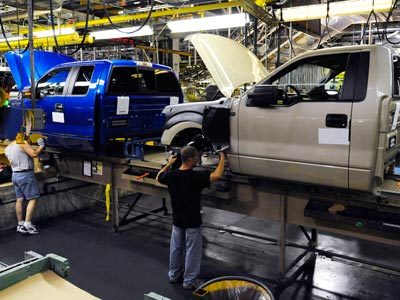
Knowing your vehicle’s payload capacity is a good starting point. But what happens when that number isn’t enough? You see a truck you love, but the specs don’t match your hauling needs. Is it possible to push the limits?
Manufacturers usually offer optional towing packages to help. These kits vary by brand, but they generally boost performance and add essential tools. A typical package might include a trailer wiring harness, a heavy-duty hitch, and safety chains. You might also get a larger engine, stronger brakes, and an upgraded cooling system. These upgrades help the tow vehicle handle more weight without falling apart.
Overloading a vehicle is dangerous. It puts you, your passengers, and other drivers at risk. Police officers can ticket you for unsafely loading a vehicle. Nobody enjoys that.
Don’t try to guess your limits. Stick to the manufacturer’s ratings.
Finding Your Vehicle’s Payload Data
Your specific payload capacity depends on the make, model, and year. Use the charts below to find your numbers. If your vehicle is listed, look for the max payload in pounds. Missing data usually means the model year wasn’t included in this specific dataset.
Acura Payload
2006
– MDX: –
– RL: –
– RSX: –
– TL: –
– TSX: –
2007
– MDX: 1,158 lbs
– RL: –
– RDX: 870 lbs
– TL: –
– TSX: 850 lbs
2008
– MDX: 1,158 lbs
– RL: –
– RSX: 870 lbs
– TL: –
– TSX: 850 lbs
2009
– MDX: 1,158 lbs
– RL: –
– RSX: 870 lbs
– TSX: 850 lbs
More Acura Specs: GVWR, GAWR, GCWR, Cargo Capacity, Curb Weight, Towing Capacity.
Audi Payload
2006
– A3: –
– A4: –
– A6: –
– A8: 1,213 lbs
– S4: –
– TT: 728 lbs
2007
– A3: –
– A4: –
– A6: –
– A8: –
– Q7: –
– RS4: –
– S4: –
– S6: –
– S8: 1,213 lbs
2008
– A3: –
– A4: –
– A5: –
– A6: –
– A8: –
– Q7: –
– R8: –
– RS4: –
– S4: –
– S5: –
– S6: –
– S8: –
– TT: –
2009
– A3: –
– A4: –
– A5: –
– A8: –
– Q7: –
– R8: –
– S4: –
– S5: –
– S8: –
– TT: –
More Audi Specs: GVWR, GAWR, GCWR, Cargo Capacity, Curb Weight, Towing Capacity.
BMW Payload
2006
– 325: 1,058 lbs
– 330: 1,058 lbs
– 525: 1,102 lbs
– 530: 1,102 lbs
– 550: 1,102 lbs
– 650: 838 lbs
– 750: 1,058 lbs
– 760: –
– M3: –
– M5: 1,058 lbs
– M6: 941 lbs
– X3: 1,025 lbs
– X5: –
– Z4: 551 lbs
– Z4M: 584 lbs
2007
– 328: 926 lbs
– 335: 1,058 lbs
– 525: 1,102 lbs
– 530: 1,102 lbs
– 550: 1,102 lbs
– 650: 838 lbs
– 750: 1,058 lbs
– 760: 1,058 lbs
– Alpina B7: –
– M5: –
– M6: –
– X3: –
– X5: 1,113 lbs
– Z4: 551 lbs
– Z4M: 584 lbs
2008
– 128: 882 lbs
– 135: 882 lbs
– 328: 926 lbs
– 335: 1,058 lbs
– 528: 1,102 lbs
– 535: 1,102 lbs
– 550: 1,102 lbs
– 650: 838 lbs
– 750: 1,058 lbs
– 760: 1,058 lbs
– Alpina B7: 1,213 lbs
– M3: 1,014 lbs
– M5: 1,058 lbs
– X3: 1,036 lbs
– X5: 1,113 lbs
– X6: 1,190 lbs
– Z4: 551 lbs
– Z4M: 584 lbs
2009
– 128: 882 lbs
– 135: 882 lbs
– 328: 1,058 lbs
– 335: 1,058 lbs
– 528: 1,102 lbs
– 535: 1,102 lbs
– 550: 1,102 lbs
– 750: 838 lbs
– M3: 1,014 lbs
– M5: 1,058 lbs
– M6: 941 lbs
– X3: 1,03
Chevrolet load limits
Data for 2006-2009 Chevrolet trucks and SUVs shows some interesting changes in performance, especially when looking at chevrolet truck max payload ratings. You may notice that large pickup trucks top the list, but there are subtle differences between midsize and full-size SUVs that are important in daily hauling.
As of 2006, the Avalanche 1500 can handle up to 1,387 pounds, while its heavier sibling, the 2500, can handle up to 2,072 pounds. The Colorado was rated at 1,532 lbs. If you buy a large van, the Express can haul 2,306 pounds. The HHR is a small crossover that was limited to just 900 lbs. The real workhorses were the Silverados. The 1500 could take 1,913 lbs, but if you upgrade to the 1500 HD, that number jumped to 3,129 lbs. The 2500 HD took it to 3,606 lbs and the 3500 HD was a monster at 5,169 lbs. SUVs like the Suburban 1500 sat at 1,731 lbs, while the 2500 version hit 2,828 lbs. The Tahoe was lighter at 1,522 lbs. Prices for the TrailBlazer range from £1,194 for the standard model to £1,429 for the EXT model.
By 2007, things had changed a bit. The Avalanche 1500 dropped to 1,258 lbs. The Colorado gained a few pounds to 1,316 lbs. The Express stayed steady at 2,306 lbs. The Silverado 1500 Classic kept the 1,913 lb rating, but the new generation drops to 1,658 pounds. The 2500 HD is down to 3,458 pounds from last year’s 3,606 pounds, but the classic version is still expensive. The Tahoe’s actually gained weight capacity, rising to 1,835 lbs.
In 2008, the Avalanche 1500’s climbed back up to 1,444 lbs. The Colorado held at 1,316 lbs. The Silverado 1500 settled at 1,652 lbs. The 2500 HD at 3,458 lbs and the 3500 HD at 3,621 lbs. The Tahoe Hybrid entered the mix with 1,830 lbs, barely missing the gas-only Tahoe’s 1,835 lbs.
2009 brought new changes. The Avalanche 1500 drops again to 1,333 lbs. Colorado’s weight dropped to 1250 kg. Special ratings for the Express series have been extended to 1500 (2,306 lbs), 2,500 (3,262 lbs) and 3,500 (4,147 lbs). This rises to 3,480 pounds for the Silverado 2500 HD and 3,873 pounds for the 3500 HD. The weight of the Tahoe Hybrid is still 1,830 kilograms. The Traverse is listed, but it’s worth noting that payload data isn’t available due to different levels and trim configurations.
Chrysler and Dodge features
During this time, Chrysler’s product range was significantly reduced. Many 2006-2009 models, including the 300, Sebring, and Crossfire, had no cargo capacity listed, suggesting that they were either passenger-only or that the information was not standardized for a particular trim. The PT Cruiser did well in 2007 with a weight rating of 1,907 pounds, but dropped to 889 pounds in 2008. The Pacifica ranges from 865 to 889 pounds. The Aspen has always been the marque’s heavy lifter, holding steady at 1,600 pounds from 2007-2009. The Aspen Hybrid is slightly less at 1,500 pounds. Town & Country minivans were originally priced at £1,200, but details have been sparse since 2008.
Dodge shares a platform with Chrysler, but puts more effort into the truck’s front end. As of 2006, the Ram 1500 can carry 1,750 pounds. The 2500 jumps to 3020 lbs, while the 3500 is a beast at 4660 lbs. The Sprinter van is an interesting deviation. The 2500 van can tow 3,950 pounds and the wagon version 4,824 pounds. The Dakota pickup weighs 1,750 pounds, while the Durango SUV matches that.
By 2007, the Ram 2500 weighed 3,130 pounds and the Ram 3500 weighed 4,780 pounds. The weight of the Sprinter Van 3500 increases to 4,350 kilograms. The Dakota weighs slightly less at 1,710 pounds. The Nitro SUV weighs 1150 kilograms.
For 2008, the Ram 1500’s curb weight increases to 1,810 pounds. The 2500 rises to £3,210 and the 3,500 to £4,870. The Sprinter Van 3500 weighs 4530 lbs. Durango’s weight rises slightly to 1780 kilograms. Dakota’s weight has further dropped to 1,630 kilograms.
For 2009, the Ram 1500’s curb weight has been significantly reduced to 1,490 pounds. The 2500 remains at 3,260 pounds, while the 3,500 drops significantly to 3,560 pounds. The Durango Hybrid weighs 1,500 pounds. Over the years, the weight of the Sprinter wagon has remained stable at 3,074 pounds. Trips are listed, but no payload information.
Ford heavy truck
Ford’s payload figures show the growing payload capacity of vans and trucks. For 2006, the E 250 Wagon can carry 3,435 pounds and the E 350 Super Duty 4,165 pounds. The F 150 weighs 1,640 kilograms. The F 250 is rated at 3,100 pounds and the F 350 at 4,000 pounds. A smaller vehicle like the Focus can carry 990 pounds, while the Ranger can carry 1,260 pounds. The Escape Hybrid weighs a surprising amount over the gas Escape, weighing in at 1,040 pounds compared to the gas Escape’s 960 pounds.
In 2007, the weight of the E 150 increased significantly to 3,310 pounds and the E 250 to 3,700 pounds. The E 350 Super Duty weighs 4,200 lbs. The F 150 climbs slightly to 1,650 lbs. Weight remains stable at 3,100 pounds for the F 250 and 4,000 pounds for the F 350. The new Edge crossover has an estimated curb weight of 1,011 lbs. The Expedition EL has a payload of 1,697 pounds, while the standard Expedition has a payload of 1,822 pounds.
As of 2008, the E 150 weighed 3,314 pounds and the E 250 weighed 3,624 pounds. The E 350 drops slightly to £4,110. The F 250 costs £3,030 and the F 350 drops to £3,900. Introducing the F 450, a new instrument with an impressive payload of 6,120 pounds. Curb weight ratings for the Expedition and Explorer remain the same at 1,822 pounds and 1,520 pounds, respectively.
For 2009, prices for the E 150 drop to £3,220 and the E 250 to £3,530. The E 350 Super Duty weighs 4,060 lbs. The F 150’s weight has increased significantly to 3,030 pounds, but it’s listed next to the F 450 on the chart, and it’s still 3,900 pounds (probably a design tweak at the source, but the F 150’s increase is noticeable). The weight remains at 1,520 kg for the Explorer and 1,260 kg for the Ranger. The listed flex has no payload information.
GMC Sierra and Yukon Specifications
GMC often copied Chevrolet, but with certain adjustments. As of 2006, the Sierra 1500 has a payload capacity of 1,889 pounds and the Sierra 2500 has a payload capacity of 4,058 pounds. Sierra 3500 #4
Distribution of Honda’s loading capacity
Payload capacity indicates how much weight a vehicle can actually carry in the cab and cabin before it exceeds its structural limits. It’s not just about towing. The 2006 Honda Ridgeline has a maximum payload of 1,549 lbs. The Odyssey weighs 1,349 lbs. The Insight is lighter, with a maximum weight of 400 pounds. Most other sedans, such as the Accord, Civic, and CR-V, do not have current year-by-year data in this data set, as do the S2000 and Pilot.
By 2007, the Civic had a payload of 385 pounds. The element’s weight jumps to 675 lbs. The pilot weighed 1,322 pounds. The Odyssey and Ridgeline settled for 1,349 pounds and 1,549 pounds, respectively. Fit is in the lineup, but there are no exact numbers.
The 2008 and 2009 models show consistency. As of 2008, the Civic still weighs 385 pounds. Element and Odyssey remain unchanged. The Pilot has a weight capacity of 1322 lbs. The Ridgeline’s weight remains at 1,549 pounds. By 2009, the Civic and Civic Hybrid were no longer included in the special payload list, but the Odyssey and Pilot remained unchanged at 1,349 and 1,322 pounds.
If you want more accurate weight gauges for these vehicles, you can take a closer look at Honda GVWR, Honda GAWR, Honda GCWR, Honda Cargo Capacity, Honda Vehicle Weight and Honda Towing Capacity.
HUMMER Payload Limits
Hummers are heavy trucks, so the payload numbers reflect their mass. In 2006, the H1 Alpha had a weight capacity of 3,087 pounds. The H3 is quite small, weighing 1,150 lbs. The current year’s data will not be published in the second half of the year.
The 2007 model year sees the H2 return with no specific figure The H3, on the other hand, remains at 1,150 lbs. By 2008, the H2’s payload had reached 2,200 pounds. The weight of the H3 is still 1,150 lbs.
In 2009, the H2 weighed 2,200 lbs. The H3 rises slightly to 1312 lbs. The new H3T model weighs 1090 lbs more.
See HUMMER GVWR, HUMMER GAWR, HUMMER GCWR, HUMMER Cargo Capacity, HUMMER curb weight and HUMMER towing capacity for more information.
Hyundai Payload Data
Hyundai’s 2006-2009 lineup has significant gaps in the payload data shown here. Maximum cargo capacity for 2006 is not listed for the Accent, Azera, Elantra, Santa Fe, Sonata, Tiburon and Tucson.
The Entourage and Veracruz were introduced in 2007, but none of those models (including the Accent, Azera, Elantra, Santa Fe, Sonata, Tiburon, and Tucson) specify a payload weight in this data set.
2008 followed the same pattern. The Accent, Azera, Elantra, Entourage, Santa Fe, Sonata, Tiburon, Tucson, and Veracruz appear, but the payload column for all of these cars remains blank.
By 2009, the lineup had changed slightly with the arrival of the Genesis, but the Accent, Azera, Genesis, and Sonata still didn’t have specific payload numbers for this reference.
More information: Hyundai GVWR, Hyundai GAWR, Hyundai GCWR, Hyundai Cargo Capacity, Hyundai Vehicle Weight, Hyundai Towing Capacity.
Infiniti Payload Capacities
Infiniti offers different payload limits depending on whether you drive a coupe, sedan or SUV. As of 2006, the FX35 can carry 1,183 pounds. The FX45 costs £1,091 lbs. The G35 weighs 886 lbs. The Q45 has a weight capacity of 979 lbs. The QX56 is a heavy hitter here, weighing in at 1,440 pounds. No information is available for M35 and M45.
The 2007 model was sparse. The FX35 and FX45 retain their 2006 numbers at 1,183 lbs and 1,091 lbs respectively. The G35, M35, M45, and QX56 lost certain payload listings in this data set.
2008 brought updates. EX35 did not appear. Weight remains the same at 1,183 pounds for the FX35 and 1,091 lbs pounds for the FX45. The new G37 adds 1,040 lbs. The M35 can support 996 lbs. The M45 weighs 1010 lbs. The QX56 weighs up to 1,553 pounds.
For 2009, the FX 35’s weight increases to 1,213 lbs. The FX 50 is rated at 1185 lbs. The QX56 weighs in at a solid 1553 lbs.
Read more about Infiniti GVWR, Infiniti GAWR, Infiniti GCWR, Infiniti Cargo Capacity, Infiniti curb weight and Infiniti Towing Capacity.
Isuzu payload specifications
Isuzu commercial vehicles have a clear difference in load capacity. The 2006 Ascender can carry 1133 lbs. The i-280 is a powerful 1,532 pounds. The i-350 weighs 1,190 lbs.
The nameplate has been slightly updated for the 2007 model year. The Ascender still weighs 1133 kilograms. The i-290 weighs 1532 lbs. The i-370 drops slightly to 1,516 lbs.
As of 2008, the Ascender still weighs 1,133 pounds. The i-290 loses some capacity, dropping to 1,512 lbs. The i-370’s weight has dropped significantly to 1,260 lbs.
Check Isuzu GVWR, Isuzu GAWR, Isuzu GCWR, Isuzu Cargo Capacity, Isuzu Vehicle Weight, Isuzu Vehicle Capacity for more details.
Jaguar payload information
There is a big difference in the cargo capacity of the Jaguar limousine and the X-Type. In 2006, the S-Type, XJ8, XJR, XK8 and XKR models had no payload listed. Model X can hold up to 1,058 lbs.
For the 2007 lineup, the X-Type’s weight is kept at 1,058 lbs. Concrete information is still missing for the S-Type, XJ8, XJR, XK and XKR.
2008 production data for the S-Type, X-Type and XJ8 models is not yet available. There is no XJR either. However, the XK weighs 815 lbs. The XKR weighs 772 lbs.
By 2009, the XF arrived with no specs. XJ8 is also available. The XKR can handle up to 772 pounds. The XK Coupe weighs 815 lbs.
See Jaguar GVWR, Jaguar GAWR, Jaguar GCWR, Jaguar Cargo Capacity, Jaguar Vehicle Weight and Jaguar Vehicle Capacity for details.
Jeep loading capacity
Jeep trucks and SUVs offer efficient cargo capacity options. The 2006 Commander has a weight capacity of 1620 lbs. The Grand Cherokee weighs 1,100 lbs. Liberty holds up to 1,150 pounds. The Wrangler is light at 800 lbs.
In 2007 Compass and Patriot were launched. The commander’s weight dropped to 1,310 lbs. The compass weighs 925 lbs. The Grand Cherokee’s weight drops to 1,050 lbs. Liberty weighs 1,150 lbs. The Patriots don’t have the numbers. The Wrangler goes up to 1,000 lbs.
In 2008, the commander’s weight was estimated at 1,300 lbs. The Compass is still 925 lbs. The weight of the Grand Cherokee rises to 1,180 lbs. Liberty still weighs 1,150 lbs. The Patriots weighed in at 925 pounds. Both the Wrangler and Wrangler Unlimited cost 1,000 lbs.
For 2009, the Commander and Grand Cherokee maintain their 2008 curb weights of 1,300 pounds and 1,180 pounds, respectively. The Compass, Liberty, and Patriot still weigh in at 925 pounds, 1,150 pounds, and 925 pounds, respectively. The weight of the Wrangler is still 1,000 lbs. Wrangler Unlimited increases the weight to 1,150 lbs.
For more weight information, see Jeep GVWR, Jeep GAWR, Jeep GCWR, Jeep Cargo Capacity, Jeep curb weight and Jeep Towing Capacity.
起亚有效负载限制
起亚 2000 年代初的产品阵容展示
Mazda’s annual loading capacity
From 2006 to 2009, Mazda’s lineup varied from the nimble MX-5 roadster to practical B-series trucks. When you’re hauling gear, payload limits vary greatly depending on whether you’re driving a sports car or a truck.
2006 Mazda model
The B2300 truck can carry 1,260 lbs. The B3000 has a larger engine or frame and carries 1,680 lbs. The B4000 carries 1,260 lbs. The Mazda3 has no listed payload. The Mazda5 minivan can carry 1,239 lbs. The Mazda6 sedan is rated for 1,319 lbs, while the performance-oriented MazdaSpeed6 sheds that capacity to 963 lbs. The MPV minivan offers 1,506 lbs. The MX-5 is tight at 637 lbs. The RX-8 Coupe holds 779 lbs. The Tribute compact SUV sits at 988 lbs.
2007 Mazda Model
Truck prices are consistently £1,260 for the B2300, £1,680 for the B3000 and £1,260 for the B4000. CX-7 is not listed. The CX-9 SUV has a payload of 1,493 pounds. The Mazda3 remains unlisted. The Mazda5 stays at 1,239 lbs. drops to 1,080 lbs. Mazdaspeed3 is not listed. The MazdaSpeed6 remains at 963 lbs. The MX-5 is still 637 lbs. The RX-8’s weight drops slightly to 765 lbs.
2008 Mazda Model
The B2300 and B4000 trucks can each carry 1,260 pounds. CX-7 and CX-9 are not listed. The Mazda 3 is gone. drops to 1,191 lbs. rises slightly to 1,087 lbs. The Mazdaspeed3 is gone. drops to 633 lbs. stays at 765 lbs. The Tribute increases to 1,057 lbs. The Tribute Hybrid can handle up to 1,083 pounds.
2009 Mazda Model
The B2300 drops to 1,200 lbs. The B4000 can handle up to 1,260 pounds. CX-7 and CX-9 are unlisted. Mazda 3 is not listed. The Mazda5 still weighs 1,191 lbs. The weight of the Mazda6 drops to 1082 lbs. Mazdaspeed3 is not listed. The RX-8’s weight has dropped to 754 lbs. The Tribute is not listed.
For more technical information, search Mazda GVWR, Mazda GAWR, Mazda GCWR, Mazda Cargo Carrying Capacity, Mazda Curb Weight, Mazda Towing Capacity.
Mercedes-Benz load ratings
Load capacity data for Mercedes-Benz sedans is scarce, but SUVs and larger models have plenty of them. The R-Class and ML series dominate the higher end of the scale.
2006 Mercedes-Benz models
C-Class, CL-Class, CLK-Class, CLS-Class, E-Class, S-Class, SL-Class, SLK-Class, SLR McLaren have no listed payload. The ML350 has a weight capacity of 1,616 pounds. The ML500 can handle up to 1,496 pounds. The R-class is a 2,000-kilogram workhorse.
2007 Mercedes-Benz models
Most sedans are not yet available. The E-Class takes £1,157. The G500 can handle up to £1,289. The GL320 can handle up to 1,086 pounds. The GL450 jumps to 1,620 lbs. The ML350 tops out at 1,635 lbs. The ML320 is rated at 1,422 lbs. The ML500 weighs 1,620 pounds. The weight of the ML63 AMG has dropped to 1,257 lbs. The R series weighs 1,635 kilograms. The SLR McLaren weighs 626 kilograms.
2008 Mercedes-Benz models
Sedan models such as C, CL, CLK, CLS and S series are not listed. The E-Class takes £1,157. The G500 goes up to 1,764 lbs. The G55 can handle up to 1,433 pounds. GL320 is not listed. Both the GL450 and GL550 have a weight capacity of 1,620 pounds. The ML320 weighs 1,422 pounds. The ML350 weighs 1,635 pounds. The ML550 weighs 1,620 pounds. ML63 AMG is not listed. No R rating listed. The weight of the SLR McLaren has been significantly reduced to 342 lbs.
2009 Mercedes-Benz models
C-Class, CL-Class, CLK-Class, CLS 550, S-Class, SL-Class and SLK-Class payloads are not listed. The E-series still weighs 1157 kilograms. Both the GL450 and GL550 have a weight capacity of 1,620 pounds. The ML350 can handle up to 1,635 pounds. The ML320 weighs 1,422 pounds. The ML550 weighs 1,620 pounds. The weight of the ML63 AMG increases to 1300 lbs. The weight of the R series has dropped to 1,365 kilograms.
See Mercedes-Benz GVWR, Mercedes-Benz GAWR, Mercedes-Benz GCWR, Mercedes-Benz Cargo Capacity, Mercedes-Benz Vehicle Weight, Mercedes-Benz Towing Capacity for details.
Mercury payload capacity
Mercury merged with Ford at this time, sharing platforms and technical information. The Mountaineer and Monterey carried the heaviest loads, while the Mariner and Milan carried the lighter loads.
2006 Mercury Models
The Grand Marquis, Milano and Montego had no listed payloads. The Mariner has a load capacity of 1,075 pounds. The Mariner Hybrid holds up to 920 pounds. The Monterey can carry 1,320 pounds. The mountain climber weighs 1549 kilograms.
2007 Mercury Models
Same story. Grand Marquis, Milano and Montego are not for sale. A sailor weighs 1075 kilograms. The Mariner Hybrid weighs 920 kilograms. Monterey weighs 1320 kilos. The climber’s weight dropped to 1,443 kilograms.
2008 Mercury Models
Grand Marquis, Milano, Montego and Sable are not listed. Mariners weight dropped to 1059 kg. The weight of the Mariner Hybrid is still 920 kilograms. The mountain climber still weighs 1,443 kilograms.
2009 Mercury Models
Grand Marquis, Milano, Montego and Sable do not have payloads listed. The Mariner holds up to 1,059 pounds. The Mariner Hybrid weighs 920 kilograms. The climber weighs 1,443 kilograms.
See Mercury GVWR, Mercury GAWR, Mercury GCWR, Mercury Cargo Capacity, Mercury Curb, Mercury Towing Capacity for details.
MINI payload limit
MINIs may be small, but their payload ratings have remained the same across the Cooper range over the years. Clubman and hardtop have better handling than convertibles.
2006 Mini
The Cooper Convertible has a payload of 771 pounds. The Cooper hardtop holds 816 pounds.
2007 Mini
The Cooper convertible still weighs 771 pounds. Cooper’s hardtop weight is still 816 kilograms.
2008 Mini
The Cooper Clubman weighs 816 kilograms. The Cooper Cabriolet weighs 771 lbs. The Cooper Hardtop weighs 816 kilograms.
2009 MINI model
The John Cooper Works Hardtop has a weight capacity of 816 pounds. The John Cooper Works Clubman has a weight capacity of 816 pounds.
Search MINI GVWR, MINI GAWR, MINI GCWR, **
Saturn payload
The Saturn line was on its last legs during this period, with models such as the Ion and Sky completely dropping in payload – likely because they were marketed as commuters rather than workhorses. If you needed to haul gear, your only real option was the Relay minivan, which held steady at 1350 lbs in 2006 and rose slightly to 1354 lbs by 2007. VUE was a volume seller, but its carry was inconsistent. It started at 1331 lbs in 2006 and 2007, then dropped to 1000 lbs in 2008 before staying there in 2009. The hybrid version fared better, offering 1511 lbs in 2007 and then 1111 lbs in 2008 and 2009.
The Aura was a mid-size sedan that handle 1009 lbs in 2007-2009. The larger Outlook crossover was the heavy hitter, carrying 1,678 pounds in 2007 and 2008, then rising to 1,709 pounds in 2009. The Astra appeared in 2008 with a modest payload of 893 pounds, then disappeared.
- Saturn GVWR
Saturn GAWR
Saturn GCWR - Saturn Cargo Carrying Capacity
- Saturn Curb Weight
- Saturn Towing Capacity
Scion payload
Scion’s approach to data is… lean. The brand was built on individuality and youth, not utility. Coupes and station wagons tC, xA, xB and xD show lines for maximum payload in years. It’s not that they can’t carry anything; This is because the data is not explicitly listed in the source tables. Enthusiasts looking for specific maximum payload ratings for a Scion often just need to check owner’s manuals or calculate them themselves (GVWR minus curb weight).
tC was the most common, but it also does not show a specific payload number in the 2006-2009 range reported here.
- Scion GVWR
Scion GAWR
Scion GCWR - Scion cargo capacity
- Scion Curb Weight
- Scion towing capacity
smart payload
If you thought a small car couldn’t carry anything, the smart fortwo will prove you wrong. In 2008, this two-seater had a maximum payload of 463 pounds. That’s about two average adults or a decent amount of shopping bags, but definitely not a couple of mountain bikes and a helmet. It is a reminder that payload is not just cargo, but people and things together.
- smart GVWR
- intelligent GAWR
- Smart GCWR
- smart Cargo Carrying Capacity
- Smart self-weight
- smart Towing Capacity
Subaru payload
Subaru’s reputation for four-wheel drive doesn’t automatically mean more carrying capacity, but their boxy shape helps. The B9 Tribeca was the biggest at 1560 lbs in 2006 and 2007, then dropped to a disappointing 660 lbs in 2008 and 2009. Why the cut? Perhaps more extensive security features. The Baja minivan was a specialty in 2006, carrying 1070 pounds and then disappearing.
The Forester ‘s payload dropped from 1060lbs in 2006 to 1010lbs in 2007-2008, then increased to 1230lbs in 2009. The Impreza line was split: the sedan carried less (955lbs in 2006 to 856 lbs in 2008, while the wagon weighed 995 pounds through 2007, then 976 pounds in 2008. The Outback was a favorite for many owners, starting at 1,245 pounds in 2006, dropping to 995 pounds in 2007, then recovering to 1085 lbs in 2009. WRX STI always had problems with payload due to heavy transmission and brakes; In 2006 it managed 794 lbs, then in 2008 1080 lbs.
- Subaru GCWR
Subaru GCWR
Subaru GCWR - Subaru cargo capacity
- Subaru curb weight
- Subaru’s towing capacity
Suzuki payload
Suzuki’s selection was diverse. The Grand Vitara was the most consistent hauler, weighing in at 1,175 pounds in 2006, then rising to 1,626 pounds in 2007-2008 and disappearing in 2009. The XL7, which replaced the Vitara in some markets, hit that number 1626 lbs in 2007.
Smaller cars such as Aerio and Forenza showed dashes in later years, probably because they were retired or data was not recorded. The Reno carried 941 pounds in 2006, then 926 pounds in 2008. The SX4 appeared in 2008-2009 with a standard 893-pound payload.
The Equator pickup was released in 2009, but no payload information is listed here.
- Suzuki GVWR
Suzuki GAWR
Suzuki GCWR - Suzuki Cargo Carrying Capacity
- Suzuki own weight
- Suzuki towing capacity
Toyota payload
Things are getting serious with the Toyota lineup. The Tundra pickup was a powerhouse in 2006, offering 1,835 pounds, but dropped to 1,470 pounds in 2007-2008. The 4Runner SUV was steady at 1285 pounds from 2006-2009. Sequoia dropped from 1510 pounds in 2006-2007 to 1280 pounds in 2008.
Mid-size SUVs such as Highlander and Highlander Hybrid performed best. The regular Highlander held 1,840 to 1,844 pounds from 2006 to 2008, then 1,821 pounds in 2009. The hybrid version started at 1,605 pounds, then dropped to 1,427 pounds from 2008 to 2009. The Land Cruiser improved from 1500 pounds in 2006-2007 to 1585 pounds in 2008-2009.
Sedans and crossovers are different. The Camry and Camry Hybrid have dashes, likely because their payloads are closely tied to trim levels and options, so a single number is misleading. The Corolla went from 1055 lbs to 1113 lbs in 2009. The FJ Cruiser was a solid 1280 lbs in 2007-2008 before reaching 1325 lbs in 2009. Sienna :0.6 inches 15720 lbs: to 1420 lbs in those years 2007-2008 Value was again £1513.
The Tacoma pickup weighed 1,540 pounds in 2006-2007 and 2009, but dropped to 1,415 pounds in 2008.
Toyota gross weight rating
Toyota GAWR
Toyota GCWR
* Toyota loading capacity
* Toyota’s own weight
Toyota’s towing capacity
Volkswagen payload
VW’s offering consisted mainly of European sedans and small SUVs. The Passat sedan carried 1,140 pounds in 2006-2007, dropping to 997 pounds in 2008 and recovering to 1,144 pounds in 2009.


