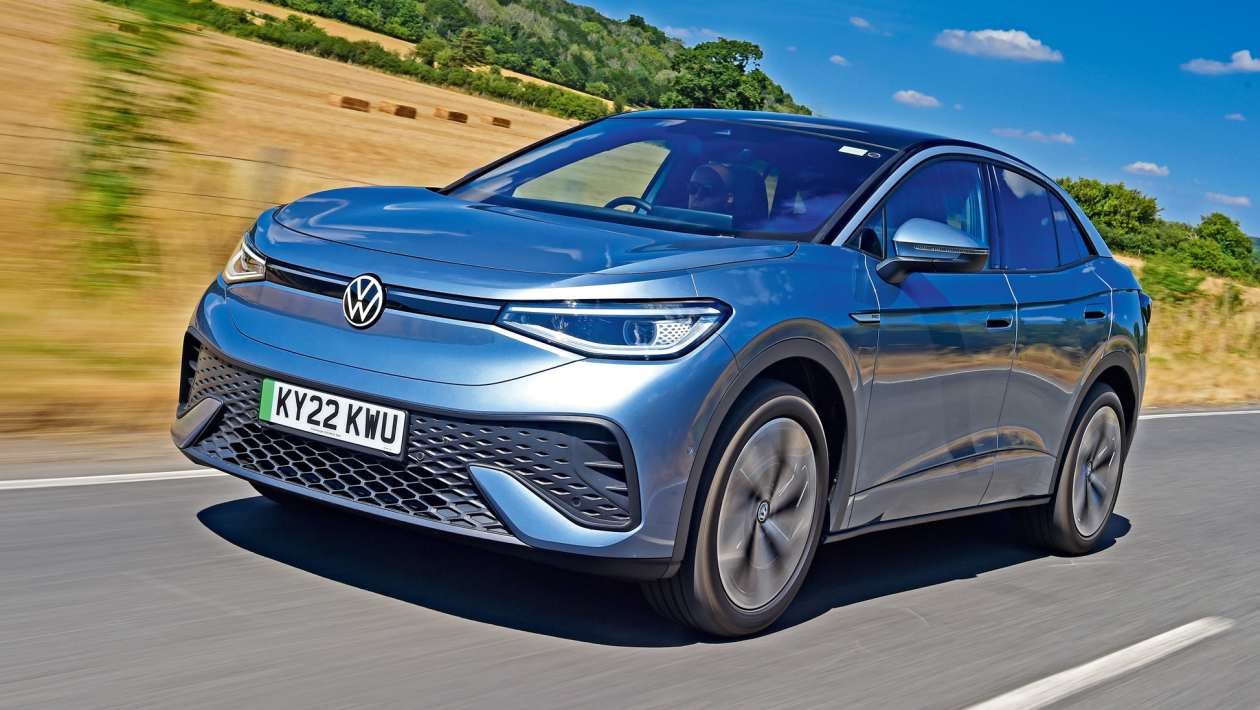
While many new electric vehicles (EVs) struggle to justify their premium sticker prices, the Volkswagen ID.5 tells a much more compelling story on the secondhand market. Due to rapid depreciation, buyers can now access a stylish, capable, and practical family SUV for a fraction of its original cost.
As fuel prices remain volatile and EV valuations drop, the ID.5 has emerged as a highly attractive entry point for those looking to transition from internal combustion engines to electric power.
The Coupe-SUV Appeal
The ID.5 is the “coupe” sibling to the more utilitarian ID.4. Launched in 2021, it follows a design trend that has dominated the automotive industry for nearly two decades: the sloping roofline that prioritizes aesthetics and “road presence” over maximum cargo volume.
If you don’t require the absolute maximum headroom of an upright SUV, the ID.5 offers a more rakish, stylish silhouette without sacrificing much in terms of daily usability.
Performance and Powertrains: Which to Choose?
Because the ID.5 is a heavy vehicle—weighing over two tonnes—the choice of motor significantly impacts your driving experience.
- The Pro (171bhp): The entry-level option. It can feel somewhat underpowered given the car’s weight.
- The Pro Performance (201bhp): The “sweet spot” for most buyers, offering a much more spirited drive.
- The GTX 4MOTION (295bhp+): The high-performance, all-wheel-drive flagship. It is significantly faster (0-62mph in 5.4 seconds) and offers much better grip.
Editor’s Note: If you are looking for value, aim for the Pro Performance or Style trims. Avoid the base 171bhp model if you plan on carrying heavy loads or frequent motorway driving, as the weight of the battery can make it feel sluggish.
What to Look for When Buying Used
When inspecting a used ID.5, keep these specific technical and comfort points in mind:
🛠️ Mechanical and Software Checks
- The “Handle” Issue: While there was a specific recall regarding door handles activating unexpectedly, many owners report erratic behavior with the keyless entry system. Ensure the software is fully up to date.
- The Heat Pump: Check if the specific model was fitted with a heat pump. While it was an optional extra, it significantly improves battery efficiency in colder weather.
- Towing Capacity: Not all models are equal. Rear-wheel-drive models can tow up to 1,000kg (braked), while the GTX can handle up to 1,400kg.
✨ Interior and Comfort
- Infotainment: Early models were criticized for unintuitive software. If possible, look for facelifted models (post-November 2023), which feature improved drive units and better efficiency.
- The Panoramic Roof: If the car has a glass roof, listen for creaks. These are often caused by drying rubber seals, which may require periodic lubrication.
Running Costs and Practicality
The ID.5 remains a practical choice with a boot capacity ranging from 549 to 1,734 litres. However, owners should be mindful of the following:
- Servicing: VW requires servicing every two years regardless of mileage. Expect to pay roughly £250–£320 for standard maintenance.
- Charging Strategy: To maximize savings, rely on overnight home charging. Using public rapid chargers can cost up to ten times more per mile.
- Taxes: Be aware of the annual VED (Vehicle Excise Duty) and potential “expensive car” supplements for models registered after April 2025.
The Competitive Landscape
While the ID.5 is a strong contender, it faces stiff competition from several directions:
* For more space/luxury: The Skoda Enyaq Coupé (uses similar tech but feels more premium) or the Audi Q4 e-tron Sportback.
* For cutting-edge tech: The Tesla Model Y or Kia EV6.
* For smaller footprints: The Cupra Born.
Conclusion
The Volkswagen ID.5 is a prime example of how a car that may be “overpriced” new becomes an exceptional bargain used. By choosing a mid-range trim like the Pro Performance, buyers can secure a stylish, high-tech EV that offers much better value than its initial launch price would suggest.