Lux isn’t about going fast anymore. For Lincoln at least, it never really was. While the rest of the premium SUV world chases off-road capability and futuristic screens, Lincoln keeps peddling relaxation. The 2026 Aviator is that philosophy in steel. It feels convincing too, despite sharing DNA with the mundane Ford Explorer.
Big Looks, Manageable Size
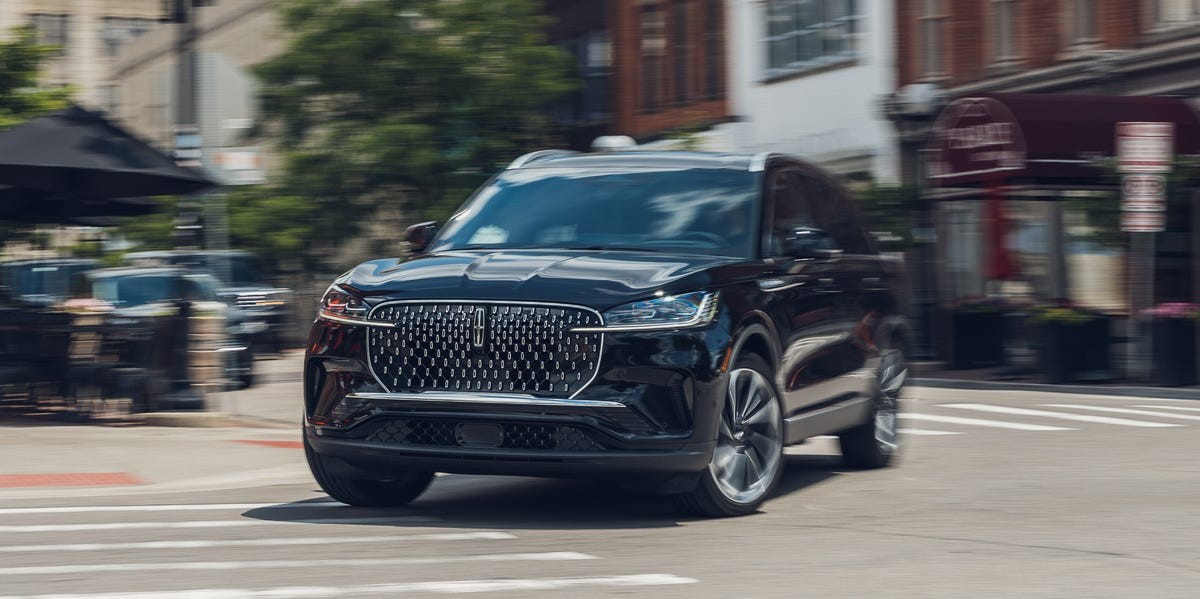
It sits in the shadows of the Navigator. You can see the family resemblance, clearly borrowing from that Range Rover-inspired design language. The styling is restrained but has just enough shine to catch the eye. The front end got a tweak last year. But physically, the Aviator is smaller.
Ten inches shorter. Eight inches lower. It’s far less imposing. Parking actually feels human now, thanks to a tight turn radius and a handy 360-degree camera button on the console. No stress there.
Luxury is what it promises back in the days before performance was king.
Money is another story. If you go for the top-shelf Black Label, you’re staring at an $87,600 start. That’s Navigator money for a smaller car. But if you look lower? The Rear-Wheel-Drive Premiere starts under $60k. The Reserve is $68k to begin. Our test mule, fully loaded with all-wheel-drive and options, hit $82,305. A steep jump. Worth it? Maybe.
Power Without The Hybrid Weight
Lincoln dropped the plug-in hybrid a few years ago. Good riddance. That powertrain was heavy. Expensive. Complex. Now every Aviator gets the twin-turbo 3.0-liter V6. It makes 383 hp and 415 lb-ft of torque. That’s hearty.
A 10-speed automatic shifts things around. This engine is the real star. Nearly 400 horsepower feels like plenty, easily outmuscling the Infiniti QX50, Volvo XC90, and Lexus TX. On our test track, 60 mph came in 5.6 seconds. That’s two seconds faster than the QX50 and over a second quicker than the Volvo.
On the road, the V6 stays smooth. It doesn’t whine or struggle. The transmission is unobtrusive. You can toggle into “Excite” mode, sure. Or Slippery, Conserve. Does it matter? Not really. The throttle response is good enough without it.
There’s a trade-off. The V6 is thirsty. EPA says 17 city/25 highway for the AWD model. We saw 24 mpg cruising at 75 mph. The Volvo and Infiniti sip less fuel. The QX50 manages 22/27. So yes, you pay at the pump for that Lincoln calm.
Riding Over Potholes
We got the Dynamic Handling package. It costs $2,500 and adds air springs, adaptive dampers, and cameras that scan the road ahead. If it sees a pothole, it prepares.
This is huge. Especially in the Northeast where the roadways are cratered every spring. The system worked well, isolating the cabin from the worst impacts even on giant 22-inch wheels. The ride was softer than the XC90 or TX.
But location matters. Around Michigan headquarters, on broken asphalt, the ride felt choppy. Excite mode didn’t help fix the character. And that’s the point. The Aviator isn’t trying to be a sport sedan. It’s not an Acura Type S. It’s a couch on wheels. No sharp corners here.
The Cabin: Smells Better, Costs More
Inside, it doesn’t quite hit the Navigator’s mid-century aesthetic notes. But our mid-level Reserve tester had “Hot Chocolate” trim. The leather smelled rich, genuinely better than those fake air fresheners people plug in.
The front seats are the headline. The “Perfect Position” option costs nearly $8k. It offers 30 ways to adjust, including under-thigh supports for the left and right leg. Sounds impressive.
It’s also quite firm. We preferred the standard seats honestly. The second row works for adults, either a bench or captains chairs. The third row is tiny, kid-only. A Lexus TX feels roomier back there. Cargo space is reasonable though. Fit five carry-ons if you try.
Simple Screens
This is the second generation of the Aviator. It’s been around since 2019. Because of that, it lacks the screen-blinding chaos of newer rivals. Or even Lincoln’s own Nautilus.
You get a digital gauge cluster. A 13.2-inch touchscreen for everything else. Climate controls live inside it, mostly. But there are physical knobs for volume and drive modes. Some buttons too.
It’s easy to learn. “Easy” is the best word for the whole car. It won’t thrill drivers wanting tech or track performance. It might be a hard sell for some.
Sometimes, though, you just want to relax. Why race everywhere when you can glide?