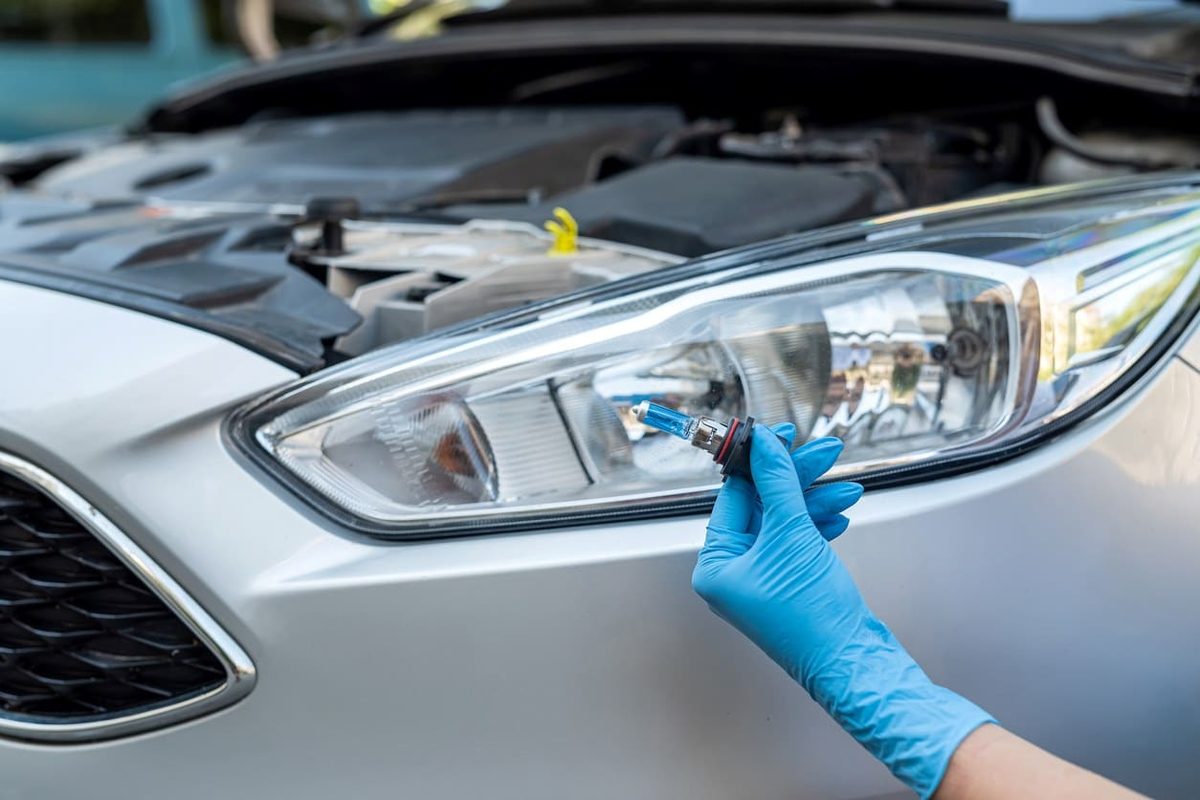
Xenon headlights, also known as High-Intensity Discharge (HID) systems, have moved from the exclusive domain of luxury sedans and high-performance sports cars to the mainstream. Today, you’ll find them standard on everything from compact crossovers to mid-size SUVs. If you’re trying to understand why your vehicle emits that distinctive bright blue-white glow instead of the warm yellow of traditional halogens, you’re in the right place. Here is exactly what you need to know about how these lights work, their benefits, and their quirks.
How Do Xenon Headlights Actually Work?
The fundamental difference lies in the ignition method. Traditional halogen bulbs use a filament that heats up to produce light. Xenon systems skip the filament entirely. Instead, they use a small amount of gas—specifically xenon gas mixed with metal salts—encapsulated between two electrodes inside a quartz glass tube.
When you turn on the lights, a high-voltage pulse (often over 20,000 volts) is sent through the gas. This ionizes the gas, creating an arc of light that is significantly brighter and more efficient than a heated filament. The process is instant, but the light takes a few seconds to reach full intensity. This is why you might notice a brief “ramp-up” period when you first start your car in the dark.
Why Choose Xenon Over Halogen?
The primary driver for the shift toward HID technology is luminous efficacy. Xenon bulbs produce roughly three times more light than halogen bulbs while consuming less power. This translates to better visibility for the driver and less strain on the vehicle’s electrical system.
The color temperature of xenon light is typically around 4300K to 6000K. This produces a white light that closely mimics natural daylight. In contrast, halogen bulbs usually sit around 3200K, casting a yellowish hue. The whiter light reduces eye strain during long night drives and improves contrast, making it easier to spot pedestrians, animals, or debris on the road.
Are Xenon Headlights Legal and Safe?
Not necessarily. The legality of xenon headlights depends entirely on the vehicle’s design and certification. Many countries mandate that if a car comes from the factory with HID headlights, it must also have:
- Automatic Headlight Leveling: Sensors adjust the beam angle based on vehicle load (passengers, cargo) to prevent blinding oncoming drivers.
- Headlight Washers: High-pressure sprayers clean the lenses before use, ensuring the intense light isn’t scattered by dirt.
If a car is certified for xenon, it meets these safety standards. However, retrofitting xenon kits into halogen housings is often illegal and dangerous. The light beam gets scattered incorrectly, creating glare for other motorists without actually improving your own visibility. Always stick to OEM specifications or professionally installed, certified aftermarket units.
Which Vehicles Use Xenon Headlights?
While once a niche feature, xenon headlights are now common across various segments. You’ll typically find them in:
- Luxury Sedans: Brands like BMW, Mercedes-Benz, and Audi have long used HID as a standard or premium option.
- **Crossovers and
The Reality Behind HID Xenon Headlights
Xenon is just a noble gas, but it behaves strangely when electrified. It doesn’t glow like a filament; it arcs. This creates that intense, bluish-white light most people associate with premium cars. But before you assume these are just aesthetic upgrades, you need to understand the mechanics.
How HID Systems Actually Work
We’ve known about xenon gas since the 19th century. It didn’t make it into headlights until 1999. The difference? Halogen bulbs use a tungsten filament. Xenon uses an arc between two electrodes inside a quartz capsule.
The ignition requires a massive surge. You need over 20,000 volts to strike the arc. Once lit, the bulb stabilizes. This is why you see headlights flicker on when you start a car with Xenon High-Intensity Discharge (HID) systems. The ballast manages this high-voltage spike and then regulates the current to keep the light steady.
There are two main configurations here: standard HID and Bi-Xenon. Bi-Xenon uses a single bulb to handle both low and high beams by physically moving a shutter inside the projector lens.
Legal Requirements and Installation Rules
You won’t get pulled over for having Xenon lights if they are factory-installed and properly calibrated. But the rules are strict. You cannot simply buy a bulb and swap it out on a halogen housing.
The beam pattern will be wrong. It scatters light upward, blinding oncoming traffic. To prevent this, Xenon systems require:
- Automatic Leveling: Sensors adjust the headlight angle as the car loads up with passengers or cargo.
- Headlight Washers: The law often requires these because dirt on the lens scatters the intense HID beam more than halogen.
- Projector Lenses: The optics must be designed specifically for the point-source nature of an arc, not a filament.
Skipping these components isn’t just illegal; it’s dangerous.
Xenon vs. LED: The Comparison
LEDs have largely superseded Xenon in new cars. Why?
- Color Temperature: LEDs produce a whiter light, closer to daylight. Xenon often leans blue, which some drivers find harsh.
- Energy Efficiency: LEDs consume less power than Xenon ballsasts and bulbs.
- Longevity: Both last a long time. Xenon bulbs can last the life of the car. LEDs are similar.
- Response Time: LEDs turn on instantly. Xenon takes a second or two to reach full brightness.
If you are looking for xenon vs LED headlight comparison, LEDs win on efficiency and instant response. Xenon still offers a distinct, intense throw that some enthusiasts prefer, but the gap is closing fast.
Costs and Maintenance
Expect to pay between €100 and €300 per unit for the bulb and ballast assembly. That’s just the part cost. You are also looking at labor for proper calibration. If the leveling system isn’t adjusted, you risk failing inspection or causing glare issues.
Maintenance is minimal but not non-existent. Xenon bulbs degrade. After five years, they may dim or change color. If the light output drops, replace the bulb. If the polycarbonate lens yellows or oxidizes, the light can’t get out. Use a restoration kit or have the lens replaced.
The Pink Glow Warning
Sometimes a Xenon headlight emits a pink or purple hue. This is a sign of failure. It usually means the arc is unstable, often due to a faulty ballast or an incompatible bulb in a system not designed for it.
Don’t try to fix this by replacing just the bulb. If the housing wasn’t designed for HID, the reflector shape is wrong. The arc isn’t focused. This causes electrical issues and severe glare. The fix is usually to revert to halogen or install a complete, homologated HID kit that includes the correct ballast and leveling system.
Final Thoughts
Xenon headlights are a technological bridge. They offered a massive jump in visibility over halogens without the cost of full LED arrays. But they require precise engineering. You can’t hack them. You can’t swap them into halogen housings and expect legal, safe performance.
The tech is mature. The bulbs last forever. But the ecosystem around them—ballasts, lenses, levelers—is complex. If you’re upgrading, go through the official channels. If you’re buying a used car with HID lights, check the leveling motors and washer nozzles. They fail. And when they do, the light goes dark or blind.