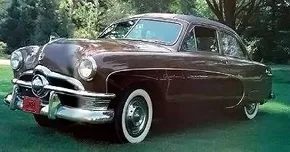
Ford entered 1950 riding the high of its 1949 revolution. The new styling was a massive hit. But it wasn’t perfect. Water leaks. Shoddy workmanship. The early models were rough around the edges. 1950 became known as the year of The Big Fix. Engineers tightened up the assembly lines. The result was a much better car. They also added a fancy new model to keep up with General Motors. It was called the Crestliner.
Ford’s Response to GM Hardtops
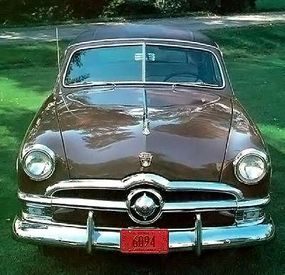
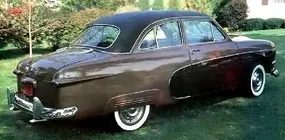
Ford hurried to create this trim level. It started as a Tudor sedan. Then they added a vinyl roof. The body got a sweeping two-tone paint job. Rear fender skirts followed. The interior was plush. It was Ford’s direct answer to GM’s hardtop-convertibles. Those were phenomenally popular between 1949 and 1950. Ford needed something similar. They delivered elegance. The look was sharp.
Why Buyers Walked Away
The design was sophisticated. The timing was wrong. The formal sedan look just wasn’t big in 1950. Buyers wanted hardtops. True hardtops. Not fancy sedans with fake roofs. The price hurt, too. The Crestliner cost $1,711. That was $200 more than the Custom Tudor. A significant difference back then. Only 17,601 were built. Ford misjudged the market appetite for premium styling on a standard frame.
The 1950 Crestliner proved that style alone doesn’t sell cars if the market wants utility.
Ford knew it had a problem. The leaks from the previous year were embarrassing. But they fixed them. The build quality improved noticeably. The new trim package showed ambition. It showed Ford could compete with Chevy’s flair. The sales numbers didn’t lie though. People wanted the two-door hardtop look. They didn’t want a four-door with a vinyl top pretending to be something it wasn’t.
The market shifted quickly. GM understood it first. Ford caught up a year late. The 1951 models would get the hardtop body style properly. By then, the Crestliner was already a footnote. A beautiful mistake. A glimpse of what could have been if the timing had been slightly better. Or if the price had been lower. Or if buyers cared less about rooflines.
It’s a reminder that car design is a conversation. You speak. The market answers. Sometimes you don’t like the answer. The 1950 Ford Custom Crestliner remains a sharp-looking relic of that misunderstanding. It sits in garages today as a testament to how easily even a giant can miss the mark. Just once.
The End of an Era for the Crestliner
The 1951 Crestliner didn’t get much love. It rolled out with minor tweaks, clinging to life until the factory decided it was time for a fresh look. That shift came in the form of the new Victoria, a genuine two-door hardtop that had been requested by customers for years.
When it arrived mid-year, the writing was on the wall. The Victoria stole the show. Production of the Crestliner stopped almost immediately.
Only 8,703 units were built before it was axed. The nameplate died quietly.
Why the Victoria Won
The Victoria wasn’t just a new color. It was a structural change. Buyers wanted hardtops. They didn’t want the pillar-less roofline of a sedan with a coupe top. They wanted clean lines. No B-pillar. Just sheet metal.
The Crestliner couldn’t offer that. It was stuck in its identity. Sedan or coupe? It was neither. The Victoria was both. And it was better.
What Remains of the Crestliner?
Those 8,703 Crestliners are rare today. Not because they were special. But because they were discontinued so abruptly. You won’t find them in every corner of the country. You won’t see one at every car show.
They’re ghosts. Quiet. Forgotten. But still rolling.
Why the Crestliner Still Turns Heads
It never chased the mainstream. That lack of trendiness? It’s exactly why these cars are valuable now. You walk into a sea of 1950s hardtops and the Ford Crestliner stands out. Not because it fits in, but because it refuses to.
Enthusiasts know. They slow down. They look closer.
The example in question is a masterclass in preservation. The paint isn’t just clean. It’s fresh. The interior matches that level of care. It’s brand-new. That matters.
Here is the kicker. That V-8 engine has seen life. It has logged more than 130,000 miles. Think about that. High mileage usually means a rebuild or a replacement. Not here. The engine sits there, running strong, surrounded by pristine surfaces.
It defies the usual rule. High mileage + new bodywork = rare find.
Most cars from this era suffer from one or the other. They are either rotting shells with new paint or rough runners with original rust. This Crestliner is neither. It’s a survivor that got a second chance.
The Value of Authenticity
Why does this specific configuration matter?
Because it shows intent. The previous owner didn’t just throw money at a restoration. They preserved the soul of the machine while updating the skin. The V-8 isn’t a modern swap. It’s the original heart, pushed hard, then cared for.
That’s what collectors want. Not perfection. Perfection is sterile. This is lived-in. It has stories in the odometer. It has the smell of new vinyl and old oil.
Other cars compete on horsepower or rarity. The Crestliner competes on character. It’s the odd one out in a lineup of conformists. And that’s why people stop. They don’t just see a car. They see a choice.
What Sets It Apart
You can argue about aerodynamics. You can debate the design language. But you can’t deny the appeal.
The market for 1950s Fords is crowded. Hardtops abound. The Crestliner is the exception. It’s the curveball.
When you see one, you know it’s real. The details hold up. The lines are clean. The engine bay tells a story of miles, not minutes.
This isn’t about being the fastest. It’s about being the most authentic.
And in a world of replicas and restomod specials, authenticity is the ultimate luxury. The Crestliner doesn’t need to compete. It just needs to exist. And when it does, people notice.