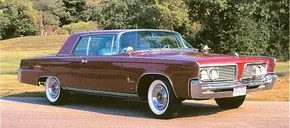
The 1964-1966 Imperial represented a massive shift for Chrysler. The company moved away from design heroics and engineering gambles. Instead, the focus landed on careful market planning.
Top-level committee control replaced individual vision. Styling became conservative. Expansion happened quickly. Sometimes rashly.
President Lynn Townsend had smoothed over the turbulent Tex Colbert and Bill Newberg eras. He started concentrating on making money. No one complained about the loss of 1950s independence. Chrysler was giving the public exactly what it wanted.
The End of Virgil Exner
The 1964 Imperials were the first models designed by someone other than Virgil Exner. This mattered because Imperial became a separate make in 1955. Exner had defined that identity for nine years.
Enter Elwood Engel. He came from Ford. He replaced Exner in 1961. His influence on Chrysler surface styling started as early as 1963.
Engel drastically revised the line. He eliminated the old silhouette below the beltline. He also changed the roofline above. This transformation began with a different roof in 1963.
The new car was squared off. It looked very much like the Lincoln Continental. Engel had been closely associated with that car. The fenderline was traced in brightwork. Square corners were everywhere.
A divided grille replaced the previous setup. Exner’s freestanding headlamps were dropped. The rear deck was revised. It did not quite eliminate Exner’s spare tire outline, but it tried.
Lineup Changes and Sales Success
The Custom Imperial line was canceled. The Crown became the base model. The LeBaron was the most expensive. The “Southampton” designation for pillarless models was dropped. All Imperials were hardtops now. Except the convertible.
The Crown Imperial limousine was built by Ghia in Italy. It was available with either six or four side windows. It continued on the special 149½ inch wheelbase.
Imperial had an excellent year. Over 23,000 1964 Imperials were built. That was 65 percent better than 1963. It was the second best year on record.
Under Engel, a Lincolnesque design philosophy had emerged: the luxury car, Engel said, should not suffer the indignity of a comprehensive annual restyle.
Engel believed luxury cars should not change significantly from one year to the next. Like Mercedes. Like his own Continentals. Imperial design merely evolved. It did not transform.
The Evolution Continues
This shift set the stage for the next two years. The gradual evolution of the Imperial in 1965 and 1966 followed this new path. The committee kept refining. The styling stayed consistent. The sales held strong.
But the underlying tension between engineering independence and corporate control remained. It would show up again. In different forms. With different results.
What Drives the Value of These Models Today?
Collectors often wonder how to spot the differences between the early Engel models and the later ones. The answer lies in the subtle changes. Not the dramatic restyles of the Exner era.
Look at the grille. Look at the trim. The evolution is there if you know where to look. It is not immediately obvious. But it is consistent.
The 1964-1966 Imperials are not just cars. They are a record of a company trying to find its footing. They are records of a design philosophy taking hold. You can still see it today. On the street. In the garage. In the auction results.
The question is whether that consistency translates to long-term value. Or if the lack of change makes them less desirable to some buyers. The market has its own opinions. And they are not always consistent.
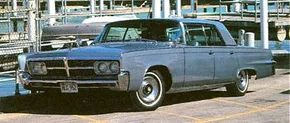
The Evolution of the Imperial: 1964–1966
The mid-sixties Imperial story is one of subtle refinement rather than radical reinvention. Between 1964 and 1966, the line aged gracefully. The 1965 model year brought the most visible change: a new grille housing glass-enclosed quad headlamps. It wasn’t just a cosmetic tweak. It gave the nose a more integrated, modern look that would define the rest of the decade.
At the New York Automobile Show, Imperial pulled out all the stops with the LeBaron D’Or. This show car wasn’t for sale. It was a statement. Painted in a special Royal Essence Laurel Gold and adorned with gold striping, it hinted at the luxury direction Chrysler wanted to take. Despite the hype, the actual production models kept their prices relatively stable, rising only a couple of hundred dollars. The lineup remained familiar.
The Limousine Shift
One niche segment saw a major logistical shift. Ghia of Turin stopped building Crown Imperial limousines after 1965. They didn’t just walk away entirely, though. In 1966, Ghia constructed ten of these limos in Spain. They used the same grilles and rear decks as the standard model, but the manufacturing hub moved south.
By 1967, Chrysler decided to bring the entire limousine production back to the United States. The volumes were tiny. From 1964 through 1966, production hovered at a mere ten units per year. These weren’t cars for the masses. They were bespoke statements for the ultra-wealthy, built by artisans in Italy and Spain before being handed back to American hands.
1966: The Cleanest Imperial Yet
The 1966 model year completed the trilogy of evolution. The Crown and LeBaron models looked incredibly similar to their 1964 and 1965 predecessors. But looking closely, the differences mattered. 1966 is often cited as the cleanest, most understated Imperial of the early sixties.
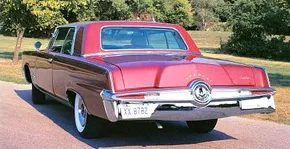
The split grille, a hallmark of the previous years, was gone. In its place sat an oblong unit that framed multiple rectangles. It was a more cohesive design language. The rear deck was smoothed out. The ungainly bird emblem and the tire cover outline were finally eliminated. The result was a car that felt less cluttered. The wheelbase and overall length stayed exactly the same, but the visual weight shifted.
Under the hood, the old 413-cid V-8 was retired. Chrysler installed the new 440-cid V-8. It pushed out 350 bhp. That is 10 more horsepower than the 1964–1965 engines. It wasn’t a massive leap, but in a heavy luxury car, every bit of torque counts. The 440 became the heartbeat of the Imperial for years to come, offering a smoother, more refined power delivery than its predecessor.
Why the 1966 Matters
You might wonder why a car with such minor changes is worth noting. The 1966 Imperial is significant because it perfected the formula. It took the established design and stripped away the visual
The 1966 model year marked the final year for the Imperial as a distinct engineering entity. It was the last year Chrysler built the luxury brand on its own separate body-on-frame platform. From 1967 onward, Imperials migrated to the Chrysler unitary body construction. This shift wasn’t just structural. It signaled the end of the Imperial’s unique identity. The brand gradually morphed into a plush version of the standard Chrysler line.
Management likely watched this transition with some regret. Despite years of effort, Imperial never successfully severed its ties to the parent brand in the public consciousness. Drivers didn’t see a standalone marque. They saw a “Chrysler Imperial.” This perception was a fatal flaw when trying to compete with Lincoln or Cadillac.
The sales numbers reflected this identity crisis. Production volumes dropped steadily. In 1965, Chrysler built approximately 18,000 Imperials. By 1966, that number fell below 14,000 units. Convertibles were niche products at this stage. The numbers tell a stark story of declining interest. In 1964, only 922 convertibles rolled off the line. That figure shrank to 633 in 1965. The 1966 model year saw just 514 convertibles produced. These were low-volume cars in a shrinking market.
1964, 1965, 1966 Imperial Specifications
The Imperial Identity Crisis
You can reshape the sheet metal as much as you want. You can stretch the wheelbase by twenty inches for a limousine version. It still didn’t feel like a standalone luxury marque in the same way Lincoln did. Ford had a playbook. Chrysler just had a big, expensive Imperial that tried too hard to be something else.
Under the Metal
The heart of the beast remained stubbornly traditional.
Engines: All OHV V-8s. No fancy overhead cam stuff here.
– 1964-65: 413 cubic inches (4.18 x 3.75 bore and stroke). 340 bhp.
– 1966: Stuffed in a 440 cubic inch (4.32 x 3.75) block. 350 bhp.
Power went through a single Transmission: 3-speed automatic. Simple. Reliable. Not exactly sporty.
Suspension front: Upper and lower control arms with longitudinal torsion bars.
Suspension rear: Live axle. Leaf springs.
It wasn’t handling like a sports car. It was heavy. It was floating.
Brakes: Drum brakes front and rear. No disc brakes to speak of in these years.
The Numbers Don’t Lie
Wheelbase (in.): 129.0 inches for the standard sedan. 149.5 inches for the limo. That’s a massive stretch.
Weight (lbs.): 4,950 to 6,100 pounds. You needed serious torque to move that slab of steel.
Top speed (mph): Not officially rated by Chrysler. They didn’t need to be.
0-60 mph (sec): Not tested. Probably slower than you’d expect.
Where to Look Next
If you’re digging into this era, you might want to compare it against its rivals.
- Classic Cars
- Muscle Cars
- Sports Cars
- Consumer Guide New Car Search
- Consumer Guide Used Car Search