You probably know what batteries do. Stores energy. But it does not create. This job belongs to the alternator.
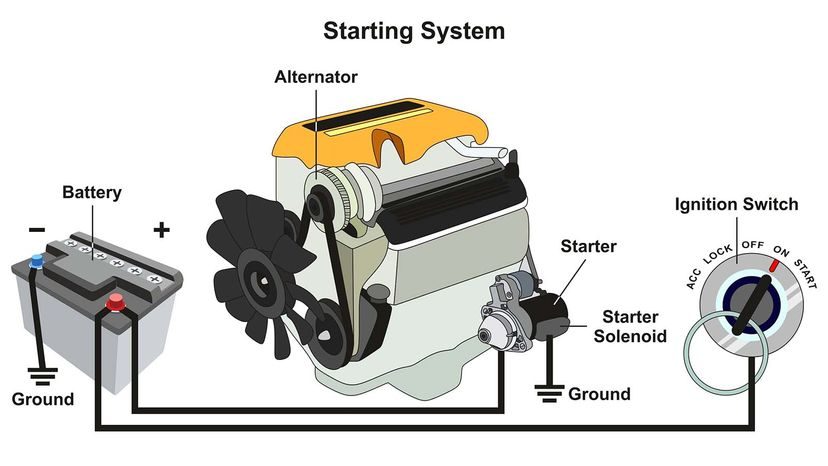
The charging system of a gasoline or diesel vehicle is based on three main elements: the battery, the voltage regulator and the alternator. The battery is the starter. The regulator prevents things from burning. The alternator is the workhorse. The generated electricity powers everything from your car’s headlights to the dashboard display. The battery takes care of the ignition, but when the engine starts, the alternator takes over.
The name itself represents physics. Abbreviation for “alternating current generator” (AC). This device generates electricity by reversing the flow of electrons back and forth. You don’t need to know quantum mechanics, but you do need to know that this alternating current is rectified into direct current to charge batteries and operate modern electronic devices.
Where do they live and how do they move?
Peek under the hood of most modern cars. You can see that the alternator is mounted near the front of the engine block. It didn’t just get there by accident. Attached to the engine via a mounting bracket system. Usually you will see a mounting bolt and an adjustable groove. Adjustability is key. This way you can tighten the drive belt and get to the mechanical heart of the operation.
The alternator does not rotate by itself. Used on the crankshaft. The piston moves up and down. The crankshaft converts linear motion into rotary motion. This rotation causes the alternator to rotate.
Older cars use multiple belts. A special belt runs from the crankshaft pulley to the alternator pulley. This is a separate power cord. today? This is mostly history. Modern vehicles use serpentine belts. A flexible belt that wraps around multiple pulleys. Uses the alternator, power steering pump, water pump and air conditioner compressor. One belt. Many jobs. If the belt breaks, you’re stuck. Not charging. No power steering. No cooling.
Inner Magic: Electromagnetism
The function of an alternator is to produce alternating current. This is done by electromagnetic force. More precisely, it is achieved by dancing between two internal components: the stator and the rotor.
The stator is a fixed part. This is a copper coil. The rotor is a rotating part. This is an electromagnet. When the motor rotates the rotor in the stator, a magnetic field is created. This changing magnetic field induces an electric current in the copper windings of the stator. That’s alternating current. It’s raw power.
This raw AC power is not fed directly to the radio. It is routed through a rectifier. A rectifier converts alternating current into direct current. It is now ready to use. Power flows into the battery, keeping it charged and supplying power to the vehicle’s electrical system. Without this conversion, modern electronic devices would burn out instantly.
So if the light dims at idle and brightens when you rev the engine, you know the alternator is trying to keep up. Or succeed. This is a simple mechanism. But this is also the reason why your car doesn’t die even if you turn off the starter motor.