The yellow horseshoe icon with an exclamation mark isn’t just a random glitch. If you’ve seen it flicker lately, you’re not alone. This is a warning from the tire pressure monitoring system (TPMS) that something is wrong. If the air outside starts to feel biting, you may have reason to worry.
As the temperature drops, drivers will notice a spike in these warnings. It feels like bad timing. You are already dealing with a winter commutes and now your car is throwing a tantrum. The question is simple. Is this due to the puncture or is there a physics?
The answer is in the air itself.
“For every 10-degree drop in temperature, tire pressure drops 1 to 2 PSI,” says Rich White, executive director of the Car Care Council. PSI measures pounds per square inch, which is the standard unit of tire pressure. The logic is simple. Cold shrinks. Warm expands.
“When the weather gets colder … this time of year, drivers get TPMS alerts and worry about their tires,” White explained. What’s actually shrinking isn’t the rubber or the steel. It’s the volume of the air trapped inside. The smaller the air mass in the same space, the lower the pressure. The tires feel softer. The light is on.
New tires are not necessarily needed. Air may be all you need. But ignoring it is not an option.
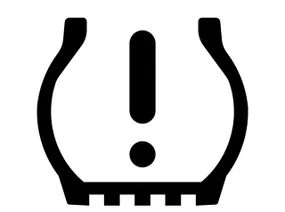

The truth behind the flashing TPMS light
Ignoring a dashboard warning because it’s a “common glitch” is a fast track to ruined tires. Jason Lancaster, automotive expert and founder of AccurateAutoAdvice, points out a specific quirk. the light often come on in the morning when temperatures are at their lowest. Waiting for the sun to warm the pavement can cause the light to vanish. Don’t be fooled. Even if your dash is black, your tire pressure may be a few PSI low.
The tire pressure monitoring system is based on tiny sensors nestled inside the valve stems. They are constantly listening. However, these systems are not perfect. They can be off by as much as 2 PSI. This means that the warning light for technically sound tires may flash or be silent when you need it most.
How to Actually Check Your Pressure
It’s easy to ignore flashing lights and keep driving. Lancaster advises against such laziness. Best move? Get a digital tire pressure gauge. Cheap gas station meters are notoriously inaccurate. If the digital gauge reads 32 PSI (or within 1 PSI of the recommended value for the door-jamb), you can probably ignore the light. But if you don’t check the pressure yourself, you’re gambling. You might have a slow leak, or you might get a nail stuck in the tread, but a light on the dashboard won’t save you from a blowout.
If the warning persists after adding air, the sensor may need to be recalibrated at a workshop. Get into the habit of checking your tires every month. Do this in the morning or after you have parked your car for a few hours. “Cold” tires are needed to get accurate readings. If your tires heat up while driving, you may feel the false high.
Preventing the False Alarm
If you don’t want to stop … from haunting TPMS lights, Lancaster offers two practical solutions.
First, you can overinflate your tires by 2 or 3 PSI. If the specs are 32 PSI, aim for 35 PSI. This is a small change. Yes, there is a slight increase in tire wear and the ride is rougher, but the difference is negligible for most drivers. Lancaster calls this is his personal solution to the problem.
Second, switch to nitrogen inflation. Normal air contains water vapor. As the temperature changes, the water expands and contracts quickly, causing those big pressure drops that trigger the light. Nitrogen is drier and more stable. Most tire shops offer this service when you buy new tires, but you must request it at the time of purchase.
Why We Have These Buggy Systems
People generally dislike TPMS because of its false positives, but the system is there because of a catastrophe. Lancaster points out that the mandate was a direct result of the Ford-Firestone scandal. The rollover and deaths occurred because the Ford Explorer’s tire pressures were too low. The National Highway Traffic Safety Administration (NHTSA) responded that all new vehicles must be equipped with these systems. They are buggy, yes. But they’re also hard-learned lesson in safety.
Common TPMS Questions
Why is the tire pressure light on even though my tires are fine?
Temperature plays a big role. On cold mornings you can see the light, but when the day warms up, the light disappears. Even so, the tire pressure may be slightly under-inflated compared to the ideal “cold” inflation pressure. Always use a manual gauge to check.
How do I know if the tire pressure sensor is damaged?
Watch out for three specific signs. First, you have a flat tire, but the sensor didn’t warn you. the ECU illuminates the TPMS light even if the tires are fine. Third, if the pressure is known to be normal, the sensor will screams “tire is flat”. Any of these indicates a sensor failure.
How long does it take for the light to vanish?
When the tires are properly inflated, the light usually goes out after a few miles. If the light stays on after about 10 miles, you may need to manually reset the system. Check the owner’s manual for exact reset procedure for your vehicle.
Can I turn off the TPMS system?
No. Since 2008, the US Department of Transportation has required all vehicles to have a TPMS. It cannot be disabled. Reset only when the tires are properly inflated.
Can I drive with the TPMS light on?
Technically yes. You can continue driving. But this is not wise. The light indicates that your tires are under- or over-inflated. Failure to do so may result in uneven wear or malfunction, and there is a risk of sudden explosion. This is a risk not worth taking.