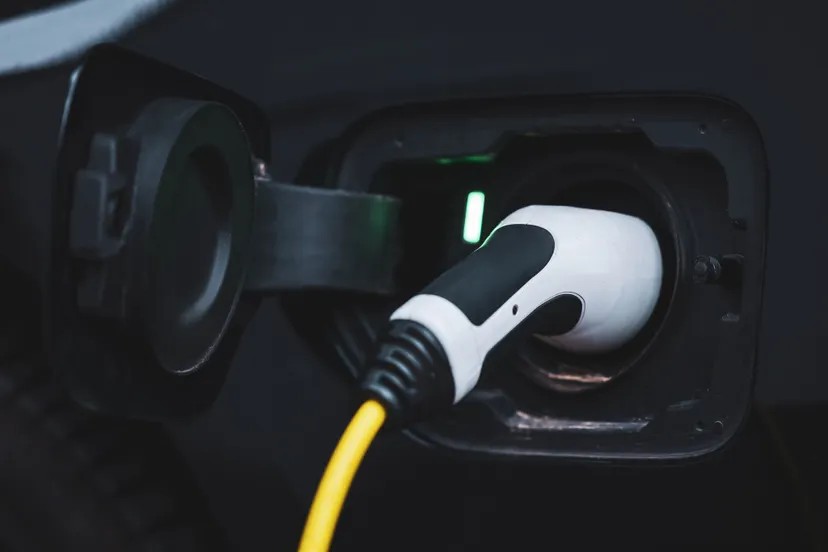
The tax landscape for alternative powertrains shifted on January 1, 2023. Businesses can now claim credits when buying new electric vehicles (EVs) and fuel cell electric vehicles (FCEVs). It’s a tangible incentive that signals where policy makers think the road is going.
This isn’t new money for a new idea, though. The push for hydrogen started two decades ago. In 2003, President Bush announced the Hydrogen Fuel Initiative during his State of the Union Address. Legislation followed fast. The Energy Policy Act of 2005 and the Advanced Energy Initiative of 2006 poured federal support into the sector. The goal was clear: make fuel-cell vehicles practical and affordable by 2020.
Global interest matched domestic policy. The European Union, Japan, and South Korea have collectively pumped billions into research and development. They see the same potential.
So what is a fuel cell? Why are governments, private firms, and academia betting billions on it?
The answer lies in efficiency and emissions. Fuel cells generate electrical power quietly. They do it without pollution. Unlike internal combustion engines that burn fossil fuels, a fuel cell’s only by-products are heat and water.
How Hydrogen Fuel Cells Actually Work
To get technical: a fuel cell is an electrochemical energy conversion device. It was discovered in the 1800s. Its job is simple. It converts hydrogen and oxygen into water. In the process, it produces electricity.
You’re more familiar with the other major electrochemical device: the battery.
A battery stores all its chemicals inside a sealed unit. It converts those chemicals into electricity until they’re depleted. Once the battery “goes dead,” you either throw it away or plug it in to recharge. The energy is finite.
A fuel cell operates differently. Chemicals flow into the cell constantly. As long as hydrogen and oxygen are supplied, electricity flows out. It doesn’t go dead. It doesn’t need recharging. It just needs fuel.
Most fuel cells in use today rely on hydrogen for the anode and oxygen from the air for the cathode. This continuous flow is what separates them from batteries. It’s the core mechanic that makes them viable for heavy transport and long-range applications where charging downtime is a bottleneck.
The Chemistry of Power
Forget the heat and noise of your internal combustion engine. Those gas guzzlers burn fuel, relying on expanding gases to push pistons around. It’s mechanical. It’s messy. Batteries are different—they just store chemical energy and release it as electricity when you need it. Fuel cells are the hybrid approach. They generate DC voltage directly, powering motors, lights, and electronics without the combustion step.
But not all fuel cells are created equal. They’re classified by their electrolyte and operating temperature. Some are built for stationary grids. Others are meant for the road. Here is how the different chemistries stack up.
Polymer Electrolyte Membrane Fuel Cells (PEMFC)
This is the one you’ll see in hydrogen cars. The Polymer Electrolyte Membrane Fuel Cell (PEMFC), often called a proton exchange membrane fuel cell, runs cool. We’re talking 60 to 80 degrees Celsius (140–176°F).
Why does that matter? Warm-up time. Because it operates at such a low temperature, it starts generating power almost instantly. High power density makes it ideal for vehicles where space and weight are premium.
Solid Oxide Fuel Cells (SOFC)
Step up the heat, and you get the Solid Oxide Fuel Cell. These beasts operate between 700 and 1,000 degrees Celsius. They are not for your sedan. They are for factories and towns.
The extreme heat is a double-edged sword. On one hand, it causes parts to break down during thermal cycling—turning on and off stresses the materials. On the other hand, if you keep them running continuously, they are incredibly stable. In fact, SOFCs hold the record for operating life under steady conditions.
That high temperature also offers a massive efficiency boost. The waste heat produces steam, which can drive turbines to generate even more electricity. This combined heat and power (CHP) setup squeezes every bit of energy out of the fuel.
Alkaline Fuel Cells (AFC)
Old school. The Alkaline Fuel Cell was the workhorse of the early US space program. NASA used it to power shuttles and produce drinkable water on board.
It’s efficient. It runs cool. But it’s fragile. The alkaline electrolyte is highly susceptible to contamination. If there’s any CO2 in the air, it kills the cell. You need pure hydrogen and pure oxygen. That purity requirement drives the cost up so high that commercialization is unlikely.
Molten Carbonate Fuel Cells (MCFC)
Similar to SOFCs in their stationary application, MCFCs operate above 600 degrees Celsius. They use a molten salt solution as the electrolyte.
This setup allows them to pull hydrogen directly from traditional fuels like natural gas, bypassing the need for external refining equipment. They run cooler than solid oxide cells, which means you don’t need exotic, expensive materials to build them. But the heat still brings corrosion issues.
Phosphoric-Acid Fuel Cells (PAFC)
Phosphoric-acid fuel cells have been around the longest in the hydrogen energy space. You’ll find them in stationary power plants and industrial buses.
They run hotter than PEMFCs. That means a longer warm-up time, which disqualifies them for automotive use. As for their future? It’s dim. They are less efficient than newer designs and rely on a toxic gas catalyst. The industry is slowly moving away from them.
Direct Methanol Fuel Cells (DMFC)
Think of this as a smaller, less efficient cousin to the PEMFC. Operating temperatures are similar, but the efficiency drops.
The problem here is cost and materials. DMFCs require a significant amount of platinum to act as a catalyst. Platinum is expensive. This makes direct methanol fuel cells a tough sell for mass-market applications despite their simplicity.
Reversible Fuel Cells
Here is where it gets complex. A reversible fuel cell combines energy production with storage. It pairs a standard fuel cell with a solar or wind generator.
When the sun shines or the wind blows, the excess power is used to split water into hydrogen and oxygen via electrolysis. The water is stored. When the energy is needed later, the fuel cell runs in reverse, turning that stored hydrogen and oxygen back into electricity and water vapor.
The efficiency is high. The complexity is massive. The cost is prohibitive. But the concept of storing renewable energy in chemical form is the holy grail.
A Brief History
Sir William Grove invented the first fuel cell in 1839. He knew electrolysis could split water into hydrogen and oxygen using electricity. He hypothesized that reversing the process—combining hydrogen and oxygen—would produce electricity and water. He built a primitive version he called a “gas voltaic battery.” It worked.
Fifty years later, Ludwig Mond and Charles Langer coined the term “fuel cell” while trying to build a practical model. Since then, the race has been to make those early prototypes viable for the modern world.
Polymer Electrolyte Membrane Fuel Cells
We touched on PEMFCs earlier, but they deserve a deeper look. If fuel cells are going to replace gas tanks, this is the technology doing the heavy lifting for transportation.
The polymer electrolyte membrane fuel cell, or PEMFC, isn’t just some lab experiment. It’s the tech likely to end up in your next sedan, a city bus, or maybe even your garage. The chemistry is stripped down to the basics, but the engineering required to make it run a car is anything but simple.
To understand how it turns hydrogen into electricity, you have to look at the anatomy of the stack. It’s built around four main components, each with a specific job that can’t be skipped.
The Anode and Cathode: Where the Action Starts
Start with the anode. This is the negative side of the cell. Its primary role is conducting electrons away from the hydrogen molecules so they can power your motor. But it also has to do the heavy lifting of distribution. Channels are etched into the anode to spread hydrogen gas evenly across the catalyst surface. If the flow isn’t uniform, you get hot spots and inefficiencies.
On the other side sits the cathode, the positive post. It mirrors the anode’s structure with its own etched channels, but this time they distribute oxygen. The cathode collects electrons returning from the external circuit. These electrons meet hydrogen ions and oxygen at the catalyst surface, completing the loop by forming water.
The Membrane: The Gatekeeper
Between the electrodes lies the proton exchange membrane. It looks suspiciously like thick kitchen plastic wrap, but don’t let that fool you. This is a specially treated polymer that only lets positively charged ions pass through. It blocks electrons completely.
Here’s the catch: the membrane must stay hydrated. Dry out, and it stops conducting protons. Lose stability, and the whole cell fails. It’s a narrow operating window that makes thermal management a constant headache for engineers.
The Catalyst: Platinum on Carbon
The reaction doesn’t happen on its own. You need a catalyst. Usually, this is platinum nanoparticles thinly coated onto carbon paper or cloth. The material is rough and porous, maximizing surface area. Why? Because more surface area means more reactions can happen simultaneously.
The platinum-coated side faces the PEM. It’s the only thing standing between hydrogen and oxygen, forcing them to react in a controlled way rather than just exploding.
The Reaction: From Gas to Power
Picture pressurized hydrogen hitting the anode. The pressure forces the gas through the catalyst. When an H2 molecule touches the platinum, it splits. Into two protons (H+) and two electrons (e-).
The electrons have nowhere to go but out. They flow through the anode, travel through your external circuit—powering your electric drive motor—and loop back to the cathode.
Meanwhile, oxygen hits the cathode side. It breaks into atoms, each carrying a strong negative charge. This charge pulls the H+ ions through the membrane from the other side. There, the ions meet the oxygen atoms and the returning electrons. They combine to form water (H2O). That’s it. The exhaust is just water vapor.
But there’s a problem. A single cell like this generates only about 0.7 volts. That’s not enough to turn a motor. You need a stack.
Stacking It Up and the Bipolar Plate Problem
To get usable voltage, you stack dozens or hundreds of these cells together. Bipolar plates connect them in series. These plates handle both oxidizing and reducing conditions simultaneously. They’re under a lot of stress.
Stability is the big issue here. If you use metallic bipolar plates, they tend to corrode. The byproducts—iron and chromium ions—can leach into the membrane and electrodes, killing performance over time. That’s why low-temperature fuel cells often switch to lightweight metals, graphite, or carbon/thermoset composites. Thermosets are plastics that stay rigid under heat, offering a middle ground between conductivity and corrosion resistance.
The Chemistry in Brief
The math doesn’t lie. It’s clean, efficient, and repeats endlessly as long as you feed it gas.
Anode side : 2H₂ → 4H⁺ + 4e⁻
Cathode side : O₂ + 4H⁺ + 4e⁻ → 2H₂O
Net reaction : 2H₂ + O₂ → 2H₂O
It’s elegant in theory. Getting it to last 150,000 miles without the membrane drying out or the catalyst poisoning is where the real battle begins.
Fuel Cell Efficiency
The Efficiency Gap: Fuel Cells vs. Gasoline vs. Batteries
Let’s cut to the chase. Pollution reduction is the headline act for fuel cells, but the real story is efficiency. To understand where hydrogen fuel cell vehicles fit in the automotive landscape, you have to look at the numbers before the wheels even turn. We’re ignoring the shared hardware—tires, transmissions, suspension—and focusing strictly on how each powertrain converts stored energy into mechanical motion at the axle.
First up is the hydrogen fuel cell vehicle running on pure hydrogen. The potential here is staggering. The fuel cell stack itself can operate at roughly 80 percent efficiency. That means it pulls 80 percent of the energy content from the hydrogen and turns it into electricity. But electricity doesn’t move the car; the motor does. The electric motor and inverter are also highly efficient, sitting at about 80 percent.
Do the math on that chain: 80 percent times 80 percent. The result is an overall system efficiency of approximately 64 percent.
Compare that to the internal combustion engine. A typical gasoline engine is lucky to hit 20 to 30 percent efficiency. Most of that energy just vanishes as heat. Even the best battery-electric vehicles, which charge from the grid and discharge to the motor, usually hover around 70 to 80 percent efficiency from plug-to-wheel. But wait. That battery metric ignores how the electricity was made. If you account for generation and transmission losses, the “well-to-wheel” efficiency of grid-charged EVs drops significantly.
The 64 percent figure for hydrogen is theoretical though. It assumes pure hydrogen. In the real world, supply chains are messy. If a vehicle uses a reformer to extract hydrogen from hydrocarbon fuels like natural gas or alcohol, the efficiency takes a nosedive. Reformers generate heat, produce waste gases, and struggle to output pure hydrogen. The impurities poison the fuel cell catalyst, lowering performance. Because of this drag, the Department of Energy (DOE) has largely doubled down on pure hydrogen infrastructure, despite the massive headaches of production and storage.
The Hydrogen Paradox
Hydrogen is everywhere. It’s the most abundant element in the universe. But on Earth? Not so much. It doesn’t sit around in its elemental form (H2) waiting to be pumped. You have to manufacture it.
This is the “hydrogen problem.” To get pure hydrogen, you have to break it out of compounds. That takes energy. Lots of it. Whether you’re using steam methane reforming (using heat from natural gas) or electrolysis (using electricity to split water molecules), you are spending energy to create the fuel.
This creates a circular efficiency debate. If you use renewable electricity to make hydrogen, you’re already losing energy in the electrolysis step (roughly 20-25 percent loss). Then you compress or liquefy it for storage (another 10-15 percent loss). Then you put it in a fuel cell (80 percent efficient). Then you drive the motor (80 percent efficient).
When you stack those losses, the well-to-wheel efficiency of a hydrogen fuel cell vehicle often falls behind a direct battery-electric vehicle. The battery doesn’t need extraction, compression, or chemical conversion at the pump. It just sits there, ready.
So why bother with hydrogen? Range. Refueling time. Weight. Batteries are heavy. Hydrogen tanks are lighter for equivalent energy density over long distances. But from a pure thermodynamic standpoint, the battery wins on efficiency. The fuel cell wins on convenience and energy density.
The choice isn’t just
The Reality of Gas vs. Electric Efficiency
Let’s cut through the marketing noise. A standard internal combustion engine is notoriously wasteful. You’re looking at an overall efficiency of roughly 20 percent. That means 80 percent of the thermal energy in your tank disappears as exhaust heat, radiator loss, or friction from powering pumps and fans. Only a fifth actually moves the wheels.
Electric vehicles (EVs) tell a different story inside the garage. The battery-to-wheel efficiency is startlingly high. With a battery efficiency around 90 percent and the motor/inverter cluster hitting 80 percent, you get an overall system efficiency of about 77 percent. That is a massive gap compared to gas.
But you can’t stop at the tailpipe. You have to look at the grid.
The Well-to-Wheel Problem
If that electricity comes from a coal or gas-fired power plant, the math changes. Those combustion-based plants convert only about 40 percent of their fuel into electricity. Then, you have the charging station itself. Converting AC grid power to DC battery power isn’t perfect; it runs about 90 percent efficient.
Multiply those efficiencies together: 77 percent (car) x 40 percent (plant) x 90 percent (charger).
The result? An overall well-to-wheel efficiency of just 28 percent.
It’s lower than you’d expect, but it’s still generally cleaner than a gas car, especially if the grid is shifting. However, the source matters immensely. If your EV is charged by a hydroelectric dam, you bypass the combustion loss entirely. Hydro is essentially “free” in terms of fuel input. In that scenario, the EV’s well-to-wheel efficiency jumps to roughly 69 percent.
Fuel Cells and the Nanotech Pivot
Hydrogen fuel cells offer a middle ground, though they are far from mainstream. Modern setups, like the Honda Clarity, are actually hybrid systems. They use a small lithium battery and electric motors for propulsion, while a fuel cell acts as a range extender to recharge that battery on the go.
Scientists are pushing hard to improve fuel cell efficiency. The bottleneck has always been the catalyst. Platinum is the standard, but it’s expensive and scarce. Enter nanotechnology.
Golden Catalysts
Here is where it gets weird. Gold is chemically inert. It doesn’t react. It’s a noble metal for a reason. But shrink gold particles down to the nanometer scale, and their behavior flips. They become highly reactive catalysts, potentially rivaling platinum in performance.
If researchers can stabilize these nanoparticle structures at scale, fuel cell vehicles could finally match the efficiency of battery EVs powered by renewable grids. The physics allows it. The engineering hurdle? Making it affordable. We’re not there yet. The gap between lab potential and showroom reality remains wide.
The Price of Pure Hydrogen
Let’s be blunt about the economics. The Department of Energy’s numbers are brutal. In 2020, the cost to produce hydrogen via electrolysis hit $279 per kilowatt-hour. They’re optimistic, predicting a drop to $182 by 2030. That sounds better until you look at the baseline. A standard natural gas plant churns out a kilowatt-hour for roughly 55 cents.
You can slash those costs by using fossil fuels to extract hydrogen. But that defeats the entire point of going green. You end up with the same pollution, just with extra steps. Reversible fuel cells might eventually bridge this gap, offering long-term efficiency that saves money. Until then, the price tag remains a massive barrier.
Enduring the Cycle
Durability is the next wall. Proton Exchange Membrane Fuel Cells (PEMFC) need membranes that survive more than 100 degrees Celsius. They also need to handle subzero ambient temps without freezing up. Why does that matter? Higher operating temps mean the system can tolerate more impurities in the fuel.
Cars start and stop. Constantly. The membrane has to stay stable through these thermal shocks. Right now, they degrade when the fuel cell cycles on and off. It’s a simple mechanical reality that degrades the chemistry.
Keeping it Wet and Solid
PEMFC membranes are thirsty. They need hydration to transfer hydrogen protons. Get that wrong, and the cell dies. Researchers are scrambling to keep these systems running in low humidity, subzero cold, and high heat. At 80 degrees Celsius, you lose hydration unless you pump in high-pressure moisture.
Solid Oxide Fuel Cells (SOFC) have their own headaches. Material corrosion is a constant threat. Seal integrity is just as fragile. The cost goal for SOFCs is $400 per kilowatt—less strict than PEMFC targets—but high material costs make that number elusive. Plus, durability takes a hit every time the cell heats up to operating temp and cools back down to room temperature. Thermal cycling kills seals.
Building the Network
You can’t sell cars without stations. For PEMFC vehicles to work, we need a full hydrogen generation and delivery infrastructure. Pipelines. Truck transport. Fueling stations. Generation plants. The DOE’s strategy is simple: build a marketable vehicle, and the infrastructure will follow. It’s a chicken-and-egg problem.
Where does the hydrogen come from? In the U.S., most of it is a byproduct of natural gas and petroleum refinement. The other reliable method is electrolysis. You energize fresh water, split it into hydrogen and oxygen. The catch? Electrolysis needs a secondary power source. That drains net energy output. You’re moving energy, not creating it.
Storing the Invisible
Three hundred miles is the standard driving range for a gas tank. To match that with a fuel cell vehicle, you have to solve storage. Hydrogen is bulky. You need to manage vehicle weight, volume, cost, and safety.
Safety is the elephant in the room. Legislators haven’t written the rulebook for first responders yet. What’s the protocol when a fuel cell vehicle catches fire? Engineers need to design delivery systems that don’t explode. It’s not just about driving; it’s about surviving a crash.
Aromatic Alternatives
Researchers are looking past perfluorosulfonic acid membranes. They’re turning to aromatic-based membranes. Don’t let the name fool you. This isn’t about smell. It refers to chemical structures like benzene, pyridine, or indole rings. These structures hold up better at high temperatures.
But there’s a trade-off. They still need hydration. And when they dry out, they swell. That swelling messes with fuel cell efficiency. It’s another variable to control in a system that’s already struggling to keep it together.
The Push for Energy Independence
The financial commitment is staggering. Billions have already flowed into hydrogen fuel cell production, with a roadmap extending to 2050 that promises even more capital injection. The logic is straightforward. The U.S. and other nations are chasing hydrogen for the same reason they are chasing wind and solar: to break the hold of oil dependency.
Sure, the U.S. can produce most of its own crude. But we are still tethered to a globalized economy. When prices spike in the Middle East, we feel it here. It is a vulnerability. Burning fossil fuels dumps carbon into the atmosphere faster than nature can scrub it out. The result is visible in our lifetimes. Temperatures are rising. Extreme weather is no longer an anomaly. Urban centers are choking on respiratory issues linked to pollution. Reducing fossil fuel consumption is not just a policy goal. It is the only way to keep the planet habitable.
Fuel cells offer a clean alternative. They emit no pollution. The only byproduct is pure water. In the short term, engineers are still pulling hydrogen from natural gas. That is the pragmatic stopgap. But the Hydrogen Initiative is looking further ahead. The long-term plan involves renewable, environmentally friendly production methods.
Domestic Production and Global Cooperation
Consider the chemistry. You can produce hydrogen from water via electrolysis. This means the United States could rely increasingly on domestic sources for its energy. It also sidesteps the inefficiencies and environmental hazards of shipping fuel across international waters. Less tankers. Less risk. More energy security.
This is not a solitary effort. Oil dependency and global warming are global problems, requiring global solutions. Several countries are partnering to advance research and development in fuel cell technologies. One major collaboration is The International Partnership for the Hydrogen Economy. They are pooling resources to accelerate the timeline.
The Road Ahead
Let’s be realistic. Scientists and manufacturers still have a mountain to climb. Fuel cells are not yet a practical, ready-to-roll alternative to current energy infrastructure. The challenges are significant. Storage. Distribution. Cost.
But with worldwide support and cooperation, the goal of a viable fuel cell-based energy system is not science fiction. It is a matter of time. A couple of decades, perhaps. Maybe less. The pieces are being placed on the board. The question is whether we have the patience to wait for the checkmate.