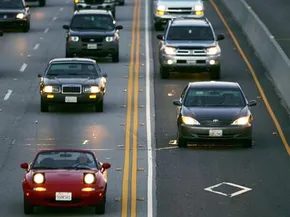
Most drivers know the sting of watching a single-occupant sedan crawl past a nearly empty lane to their left. That’s the High Occupancy Vehicle (HOV) lane. Also called the diamond lane or carpool lane, it’s the highway’s VIP section. The rules shift depending on the state, but the core requirement is usually simple: two or more people in the vehicle. Motorcycles and emergency responders get free pass, too.
The logic is straightforward. Fewer cars mean less gridlock. By forcing commuters to share rides or ride buses, the system aims to clear the outer lanes. It’s a game of incentive. Drive a bus, and you hit your stops without the usual stop-and-go nightmare. Pile three people into a minivan, and you skip the traffic jam. You can spot the lane easily. A solid white line separates it from the general traffic flow. Large, repeating white diamonds are painted down the center. Hence the nickname.
There’s an environmental angle here, too. Less idling means lower carbon emissions. It fits neatly into broader eco-friendly driving goals. But recently, the definition of “worthy” has expanded. Some states are looking at a new class of vehicles for the diamond lane. And carpooling isn’t part of the equation.
The focus has shifted to fuel efficiency. Specifically, hybrid cars. Owners of these green-tech vehicles are often granted special privileges. They get the same lane access as a full bus or a carpool van. Why? Because hybrids consume less fuel and produce fewer emissions per mile. The state’s priority isn’t just occupancy. It’s efficiency.
Problems with Hybrid Cars in HOV Lanes
The push to include hybrids in HOV lanes isn’t without friction. It creates a specific problem for the original intent of the lane.
The HOV Decal Premium and Its Unintended Consequences
The logic was simple enough: if your hybrid spits out less pollution than a gas-guzzler, it deserves the same green-driving cred as a carpool. States like California, Virginia, Arizona, and Colorado took that premise and handed out special permits. These decals grant single-occupant hybrid owners access to High Occupancy Vehicle (HOV) lanes. Connecticut and Georgia looked at the idea. They debated it. Nothing passed.
Here is the real kicker. You don’t need a passenger. You don’t need a friend, a date, or a screaming toddler in the backseat. If you drive a qualifying hybrid with that sticker, you are legally in the fast lane. No ticket. No fines. Just open road while everyone else sits in the brake lights.
For owners in these states, this is a massive win. It isn’t just about skipping the merge. It’s about the bottom line. In California, used hybrids with a valid HOV decal command a premium. Buyers were handing over an extra $4,000 on top of the standard price. Supply and demand did the heavy lifting here. The California Department of Motor Vehicles capped the decals. They issued no more than 85,000 for specific models: the Honda Insight, the Honda Civic hybrid, and the Toyota Prius. These cars do 45 miles per gallon or better. That’s roughly 19.1 kilometers per liter. Scarcity drives price.
The decals are tied to the chassis. They do not transfer. Once you peel the sticker off your windshield, it stays dead.
It sounds perfect. Until you look at the traffic.
Congestion and Crime
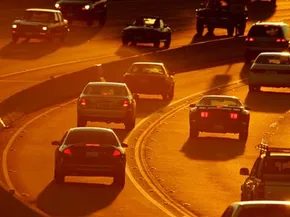
Early on, the carpool lanes turned into just another traffic jam. Drivers in California complained loudly. They blamed the surge of solo hybrid drivers clogging up the lanes meant for two or more people. By 2007, Los Angeles and Orange County saw serious backups in those designated zones.
Not everyone agreed. Counties like San Diego and Riverside didn’t see the same spike. Some analysts argued hybrids weren’t the problem at all. Population growth just meant more bodies on the road. More bodies mean more traffic. It’s a basic math problem.
There was another angle though. Crime.
Stealing those HOV stickers became a genuine issue in California. Long wait times for permits created a black market. If you couldn’t get one legally, you could steal one. It wasn’t just a nuisance. It was a property crime wave targeting the most coveted car accessories in the state.
The irony is thick. A policy designed to reduce emissions and encourage efficient driving ended up congesting highways and sparking thefts. The decals solved the commute for the individual but created headaches for everyone else.
We are left with a messy reality. Green technology offers incentives that look good on paper. They drive sales. They increase resale value. But they also shift behavior in ways that strain infrastructure. The lane is open. The sticker is on the glass. The traffic is still there.