The internet loves to panic about electric vehicles. Specifically, it loves to tell rescue crews that slicing into a crashed EV will electrocute them, or that driving a submerged hybrid through a deep puddle turns the chassis into a live wire. These stories are alarmist nonsense.
Let’s look at the data. There is zero recorded instance of a first responder being shocked while cutting apart the cabin of an EV or hybrid. Not submerged. Not in the rain. Not during a high-voltage extraction. The risk is being wildly overinflated by media outlets seeking clicks.
But does that mean the cars are immune to physics? No.
Consider an older model. Ten or fifteen years on the road. Depending on where you live, that battery pack has seen rain, snow, road salt, and humidity. Rust eats away at insulation. If a wire harness corrodes enough, could a fault occur? Is it possible for a driver to get a zap from standing water?
Automakers have spent billions engineering around these exact fears. The high-voltage systems in modern EVs and hybrids are isolated, grounded, and shut down instantly upon impact. We are going to break down the specific safety architecture built into these cars to keep you safe. You might be surprised to learn just how hard the industry has worked to make water a non-factor.
Electric Power
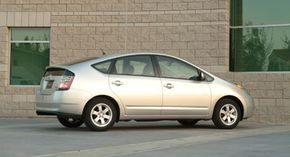
Hybrid and pure electric vehicles rely on massive battery packs to drive their motors. These aren’t your standard 12-volt lead-acid units. The stakes are higher. A Toyota Prius battery operates above 200 volts. Other models push past 300 volts. Touching those power cables or becoming part of a short circuit isn’t just painful; it’s potentially lethal.
Auto mechanics and rescue workers know this. They take precautions. But that doesn’t make EVs inherently deadlier than internal combustion engine (ICE) cars. They are just dangerous in a different configuration.
Think about it. If a gas tank ruptures, you have a fire hazard. If a high-voltage battery pack is breached, you have an electrical hazard. Both are serious. Both require respect.
Automatic Shutdown Systems
Modern EVs and hybrids are equipped with extensive safety protocols. They don’t wait for human intervention. When a collision occurs or a short circuit is detected, the systems automatically shut off power. They isolate the battery pack.
Circuit breakers play a major role here. Often located in a compartment under the hood, these devices trip during electrical surges. They disconnect the power flow.
Water adds another layer of complexity. If a car is submerged and water breaches the electrical system, the circuit breakers trip immediately. It’s a fail-safe. Even simply turning off the key interrupts the flow from the battery to the motor. The high-voltage cables go dead.
To make sure first responders don’t accidentally touch live wires, manufacturers color high-voltage cables bright orange. It’s a visual warning: stay away.
The Hydrogen Risk in Water
There is a specific risk many people don’t see coming. It involves mixing water with nickel-metal hydride battery cells.
When water contacts the chemicals inside, a reaction occurs. It forms hydrogen gas. If hydrogen builds up in an enclosed space, the consequences are severe. Disorientation. Dizziness. Explosion.
This isn’t a daily driving concern. It’s a rescue scenario. If crews are dealing with a ruptured battery, they must ventilate the wreck. Proper ventilation mitigates the risk. It’s manageable for professionals who know what to look for.
Driving Through Puddles
So, we’ve established that EVs are safe in emergencies, provided basic precautions are taken. But what about everyday hazards?
Can you get shocked or damage components by driving through a large puddle?
The answer is no. The electrical systems are sealed. The voltages are high, but the isolation is robust.
Why Your Prius Doesn’t Short Out in the Rain
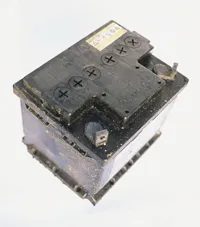
You drive a car with an electrical system every day. It runs at 12 volts. The battery is usually in the engine bay. It doesn’t short out when it rains. Water hits the terminals. It causes corrosion. That’s it. No shock. No fire. Some Chrysler models even mount the 12-volt battery behind the front tire. Right near the ground. It takes a beating from road debris and water constantly.
Hybrid and electric vehicles operate on the same basic principle of isolation. They just use different chemistry.
Battery Placement Matters
The high-voltage packs in hybrids aren’t sitting out in the open. They are tucked away.
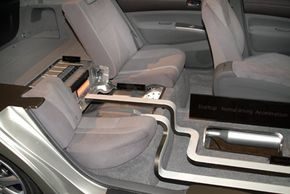
In a Toyota Highlander Hybrid SUV, the nickel-metal hydride battery pack sits under the rear seat. It is bolted to a structural cross member. Early Toyota Prius models had the pack flush against the back of the rear seat. Neither location is exposed to road spray. You aren’t splashing water on the main power source when you hit a puddle.
Some designs place the pack lower. Closer to the ground. This raises questions about waterproofing.
Sealed and Secluded
US-manufactured hybrid batteries are encased in a sealed metal shell. This shell is electrically isolated from the current flowing inside. It is usually covered by carpet or an interior panel. The metal is treated to resist corrosion. Even if the shell gets wet, the car doesn’t care.
What if water breaches the shell?
The cells inside are sealed. Maintenance-free. Nothing gets in. Nothing gets out. The chemicals inside form a gel. They won’t spill if the battery is ruptured in a crash. Water simply cannot contact the active cells under normal conditions.
The high-voltage lines carrying the current are insulated too. They are protected.
Golf Cart Proof
Look at electric golf carts. Maintenance crews hose them down regularly. They blast off grass and mud. The battery packs in those carts are in a more exposed position than in a road vehicle. The direct spray of water causes no harm.
Cars are built tougher than that.
So, drive through the puddle. The high-voltage system is sealed. The battery is gelled. The casing is coated. The risk of water intrusion shorting out your drivetrain is practically zero.
There is more to cover on how these systems handle stress and repair, but for now, the rain is just weather.