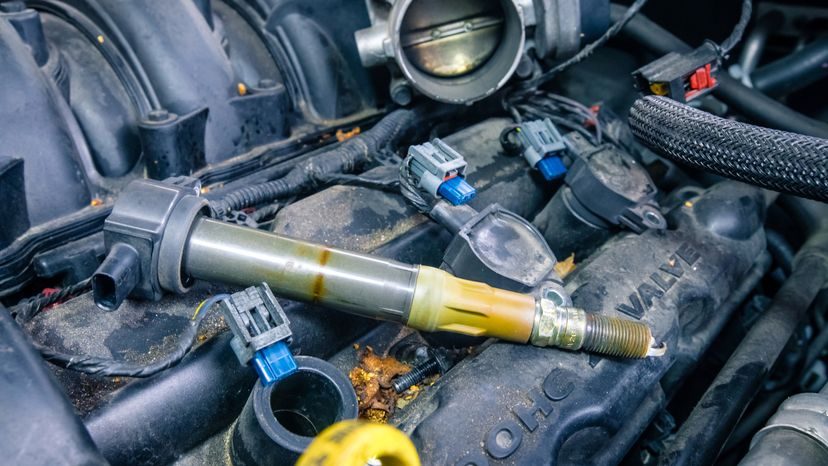
A car’s ignition system relies on a specific sequence of events to keep the engine running. It starts with an ignition coil that produces a high voltage pulse. The pulse must reach the right cylinder at the right timing. This is where the distributor cap and rotor come into play. These act as a bridge, transferring voltage from the coil to the engine’s cylinders and igniting the mixture.
The coil is connected directly to the rotor, which rotates inside the distributor cap. When the tip of the rotor passes a certain contact point on the cylinder, a high voltage pulse jumps across a small gap. It travels through the spark plug wire and eventually ignites the spark plug. This process involves a continuous high-voltage arc that causes rapid wear of components. You can’t ignore them. Must be changed often.
Mechanics of Combustion and torque
The distributor cap and rotor are only part of the ignition system. It has to work with other parts of the engine to ignite the fuel at the right timing. The goal is simple. The goal is to maximize the output of expanding gases. Ignite the mixture to develop heat. The fuel turns into exhaust gas.
This exhaust gas increases the pressure inside the cylinder. This pressure forces the piston down. The goal is to generate as much pressure as possible to maximize torque and power. Better cylinder efficiency better mileage for the car. It’s a delicate balance between physics and timing.
Why timing is everything
The real problem with coil-distributor-cylinder systems is timing. There is a short but significant delay between the generation of the spark and the actual ignition of the mixture in the cylinder. If you wait until the piston reaches the top of its stroke to create the spark, you’ve already lost. A spark should occur before the piston reaches the top.
The piston should have just reached the top of the stroke as the spark arcs across the gap between the rotor and the cylinder. This increases pressure as the piston descends on the power stroke. If you exceed this period, even if the engine starts, its startability will be poor.
How much does a distributor cap cost?
If you are facing a replacement, you should budget accordingly. According to Repair Pal, distributor cap range in price from $93 to $121. This often includes labor as well. Prices may vary by location and vehicle type, but this range is a solid starting point. This is not a trivial expense, so it is important to detect signs of failure early.
Symptoms of a distributor cap failure
How do you know when your caps and rotors are failing? These symptoms are usually auditory and physical. Your car may be difficult to start. The engine may suddenly start or stop. A distinct “yelling” sound coming from the engine compartment is also a red flag. This sound is usually spark jumping to the wrong place or sparking uncontrollably.
If your car rumbles at idle or hesitates when accelerating, the distributor cap is most likely the suspect. high-voltage activity can eats away at the carbon tracking in the cap and erodes the rotor tip. Eventually the connection is lost.
How often should it be changed?
Because of the intense high-voltage activity, the rotors and cap must be replaced relatively often. It wears easily. While not all vehicles have a set mileage, many mechanics recommend checking them as part of a routine tune-up. If you notice the signs above, don’t wait. A faulty distributor cap can cause misfires and damage the catalytic converter over timing.
What does the new distributor cap do?
Installing a new distributor cap restores proper flow of electricity. This ensures that the spark reaches the right cylinder at the right timing. The new rotor rotates freely and maintains a tight contact gap. This restores the ignition system’s ability to ignite the fuel in timing. The engine runs more smoothly. The torque returns. The mileage improves.
This is a simple mechanical fix, but requires precision. The timing must be exact. The gap must be set correctly. If you make a mistake, you back to square one. If you treat it right, your car will run like new.