Over the past five years, advanced driver assistance systems (ADAS) have been actively promoted to reach all segments of the automotive market. Today, even entry-level vehicles are equipped with an array of high-tech safety devices that sound like science fiction from a decade ago. Automatic emergency braking. Lane Keeping Assist. Adaptive cruise control. While the marketing hype is convincing, the reality is much more confusing.
These systems are not on autopilot. No matter how much you pay for the trim level, they won’t drive the car for you. These are aids. They buy you visibility. They buy your reaction time. However, their performance depends on the performance of the sensor. Sensors also have limitations.
Most modern vehicles rely on a hybrid setup. The radar sensors are hidden behind plastic in the front and rear bumpers. Optical cameras are located behind the windshield, usually near the rearview mirror. This combination covers most of the bases. The radar is independent of rain, snow and darkness. The radar housing is buried behind the plastic, so insects can’t get stuck in it. Monitor distance and speed with ice-cold radio precision.
But radar is blind to context. Unable to read lane markings. I don’t know what the difference is between a plastic bag and a brick. That’s the camera’s job. The camera classifies the objects. They look at the details. However, cameras don’t like bad weather. They hate low light. And they hate getting dirty.
ADAS testing in moderate to heavy rain
AAA decided to find out exactly how much rainfall affects these systems. They partnered with the Southern California Automotive Research Center Automobile Club. The results announced on October 14 were shocking.
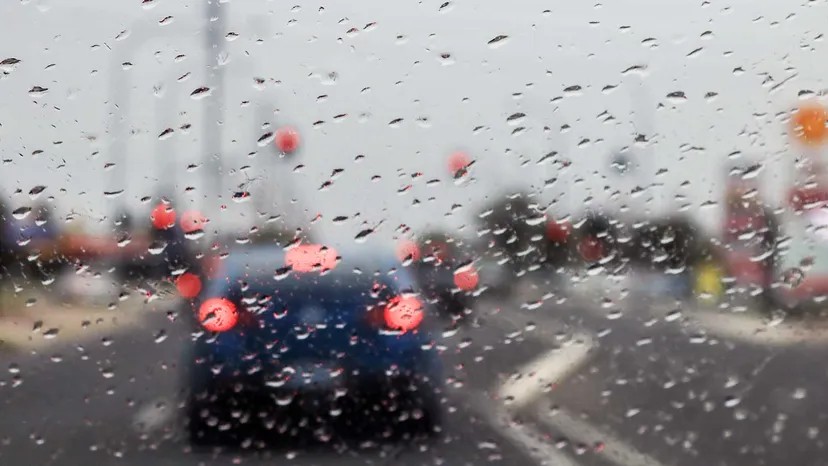
The test subjects were four common SUVs. Like most new cars, it has a radar in the bumper and an optical camera behind the glass. The test track itself is dry. The grip of the tires is optimal. The variable is water. Researchers sprayed windshields to simulate moderate to heavy rain. This differentiates the performance of the camera because the radar does not care about water on the glass.
Automatic emergency braking has produced mixed results. At 25 mph—a neighborhood speed— 17 percent of the tests ended in a crash. As the speed increased to 35 mph, the failure rate jumped to 33 percent. The radar sensor still works. They detected the obstacle. But without the input of the camera, the system hesitates or misclassifies. This is not ideal. This is not safe.
Lane keeping assist is even worse. During the same rain simulation, the test vehicle deviated from its lane 69% of the time. The radar does not see lane lines. Cameras that tried to observe them in heavy rain also failed to see them. The system loses the visual reference and cannot correct the steering.
The Bug Factor
The report included a grim detail. Researchers printed a concentrated solution of insects and dirt on windshields to simulate poor maintenance. The results? Surprisingly, this particular sludge had no negative effect on the camera.
This seems like good news. This is not true. If you can’t see the road through a dirty windshield, even a sophisticated ADAS can’t see the road. The system may have worked well in testing, but the pilots were still flying blind. Clean the glass. This is not just an aesthetic problem. This is about data integrity.
AAA has previously noted that ADAS struggles with curved lanes, heavy traffic and pedestrians at night. This new information adds weather and debris to the list.
What this means for drivers
Your car’s ADAS can help. It cannot be changed. The human brain is still the most complex computer in a computer. Handle context, intent, and nuance in ways current sensors can’t.
No lidar was used in the test vehicle. LiDAR uses pulses of light to create detailed 3D maps of the environment. They are more expensive and more complex than radar or standard cameras. The Lucid Air is the first vehicle sold in the United States to have LIDAR integrated into its safety system. Until then, radar and cameras are standard. And they have significant blind spots.
Rain doesn’t just make driving uncomfortable. It breaks the sensors. Dirt obscures the view. Speed increases failure rate. Although the technology is improving, it is not completely secure. You are still a pilot. The systems are just co-pilots with poor eyesight in a storm.